Indoor Saffron & High-Value Crops: What the Ludhiana ‘Red Gold’ Story Really Means For Small Urban Growers
Most growers see the Ludhiana saffron headlines and think the same thing: "If they can pull 12 lakh rupees per kilo indoors, I just need a grow tent and some corms." That belief is exactly how people burn money on the wrong crop, in the wrong system, at the wrong scale.
This article is not another "how to grow saffron indoors" piece. You already know saffron is expensive and technically growable in controlled environments. Instead, we are going to treat the Ludhiana Kashmiri saffron project as a benchmark case and extract what actually matters for a small urban hydroponic grower:
- What the Ludhiana model gets right technically and economically.
- Where it does not translate to a balcony, spare room, or small garage grow.
- Which alternative high-value crops map better to Kratky, DWC, and compact aeroponics/NFT.
- How to build a realistic, diversified crop strategy instead of betting everything on "red gold".
We will keep saffron as the benchmark and constantly ask: "If this was my 2–20 m² indoor space, what is actually worth growing?"
1. Common Mistakes: Copying the Headline, Not the Model
1.1 Mistake: Assuming Ludhiana-Style Saffron Profits Scale Down Linearly
The story out of Ludhiana is powerful: a group of MBA graduates in Punjab, far from the natural saffron belt, built an indoor Kashmiri saffron operation and reportedly sell for around ₹12 lakh/kg (Economic Times coverage). It sounds like plug-and-play cash.
The trap is thinking, "If 100 m² of high-tech space makes X, then my 4 m² tent will make 4% of X." It rarely works that cleanly. Your costs per square meter are often higher at small scale, and your market access is weaker.
Reality:
- Saffron is harvested in milligrams per flower; you need serious plant numbers to justify climate control, automation, and labor.
- High-value pricing only holds if you maintain consistent quality and can actually move product at a premium, not just theoretically match the wholesale rate.
- Downtime between cycles hits small growers harder, because every empty tray or tower is a higher share of your total capacity.
1.2 Mistake: Fixating On Saffron Instead Of The Underlying CEA Playbook
Ludhiana’s real achievement is not "saffron indoors" by itself. It is the controlled environment agriculture (CEA) stack they built around a finicky crop:
- Replicating high-altitude Kashmiri climate in a non-native region.
- Precisely managing temperature, humidity, light duration, and dormancy cues.
- Designing system layouts that can scale, automate, and stay consistent.
That same logic applies whether you grow saffron or microgreens. Meanwhile, companies like Nature’s Miracle are investing in more advanced CEA manufacturing and tech for vertical farms and data-heavy operations (Nature's Miracle Q1 2026 report). Their expansion highlights where the industry is going: more automation, more data, and more capital intensity at scale. That is the opposite of a small urban grower running a side business from a balcony.
If you blindly chase the "hero crop" (saffron, vanilla, wasabi, whatever is trending) without matching your system to your realities (space, budget, time, market), you get an expensive science project instead of a profitable micro-farm.
1.3 Mistake: Choosing The Wrong System Type For High-Value Crops
Not every premium crop belongs in a high-pressure aeroponic tower or an NFT rack. Many small growers make these missteps:
- Overbuilding: Investing in tall, complex vertical aeroponics for crops that do not need that level of oxygenation or depth (e.g., basil, mint) when DWC or simple NFT would do.
- Underbuilding: Trying to force deep-rooted, high-margin crops (e.g., some medicinal roots) into shallow-film NFT channels that dry out quickly or clog.
- No redundancy: A single failed pump in a fully-loaded, high-density tower can destroy your crop in hours. Saffron corms or high-value cut flowers do not tolerate that kind of shock well.
Your system design needs to be boringly reliable before you layer on premium crops.
2. Why These Mistakes Happen: Misreading The Technical & Economic Signals
2.1 The Technical Gap: Climate Replication vs Comfort-Zone Growing
Indoor saffron works when you replicate a mountain climate cycle in a box. That means:
- Cooler temperatures during certain phases (16–20 °C for vegetative and flower induction phases is often referenced in saffron literature).
- Precise control of humidity to avoid fungal issues during flower emergence.
- Photoperiod manipulation and controlled dormancy after flowering.
This kind of tight control is normal in commercial-scale CEA, where environmental control gear, automation, and monitoring get amortized over large square footage. For a 1–2 tent home grow, trying to match that complexity without the budget leads to half-measures: consumer dehumidifiers, inconsistent AC, manual vent tweaking, and inconsistent results.
By contrast, crops like basil, mint, lettuce, microgreens, and many edible flowers have much wider tolerance bands. They still benefit from stable temperatures, correct light intensity, and good airflow, but they do not punish you for minor swings. This is where most small urban growers should start if the goal is side income, not experimental bragging rights.
2.2 The Economic Gap: CEA As Manufacturing, Not Gardening
The Ludhiana team approaches saffron more like a small manufacturing operation than a hobby garden. Inputs become predictable, processes get standardized, and output is measured carefully. That is also how Nature’s Miracle and other CEA-linked firms are treating vertical farming tech: as infrastructure and manufacturing, with tight margins and the need for scale.
Small urban growers get into trouble when they:
- Ignore labor as a cost. Your time matters, especially if you have a job.
- Underestimate sales friction. Selling 50 g of premium edible flowers weekly is easy; moving 500 g of "indoor saffron" at a premium, consistently, is not.
- Do not track true system costs: lighting, pumps, nutrients, consumables, and repairs.
If you want profitability, you must think like a manufacturer in miniature: standard operating procedures, predictable cycles, consistent quality, repeatable yields.
2.3 System Choice vs Crop Physiology
Different high-value crops place different demands on your system:
- Saffron: Bulb/corm crop, seasonal cycle, needs dry-down and dormancy. Hydroponic or aeroponic setups must handle wet and dry phases, making it structurally different from always-wet leafy greens.
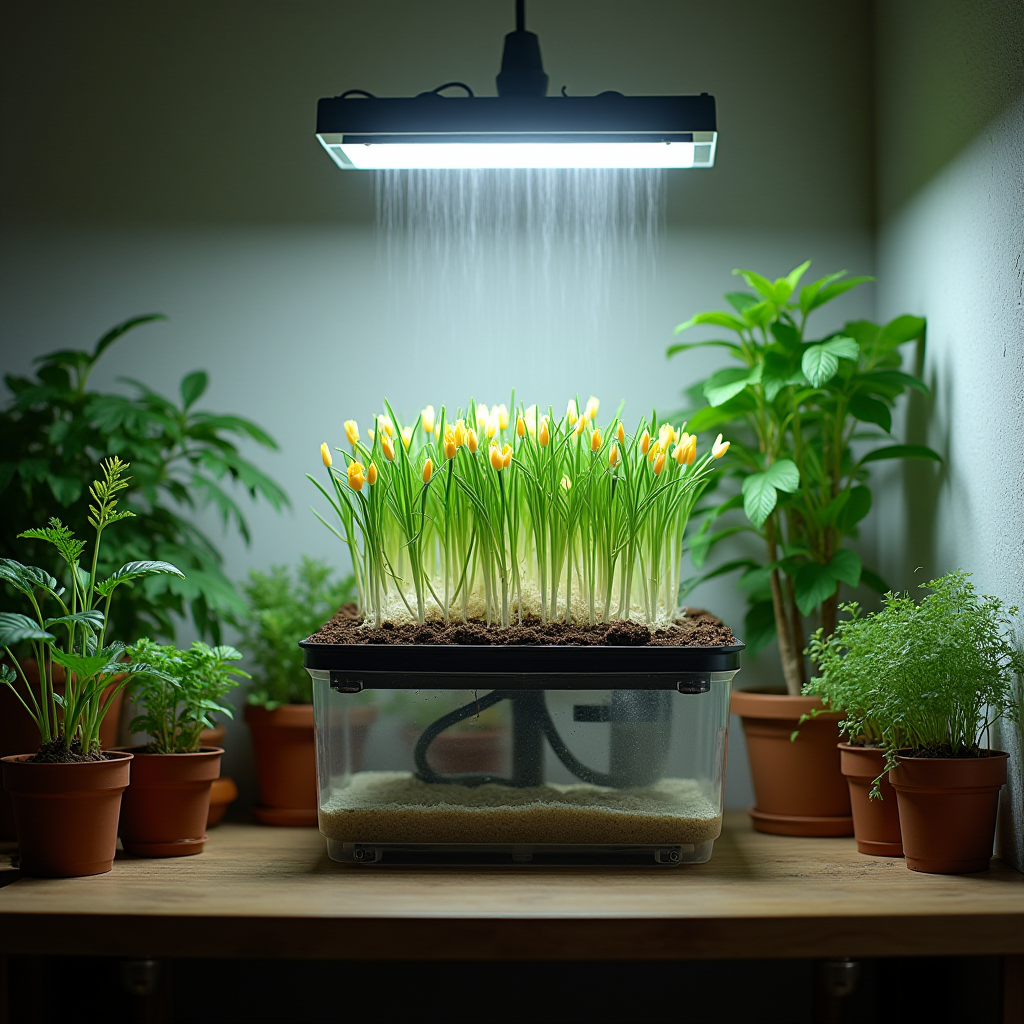
- Microgreens: Fast turnover, dense planting, low root volume. They can be grown in shallow trays, simple flood-and-drain, or even passive systems with wicks. High value per square meter when sold to restaurants or direct to consumers.
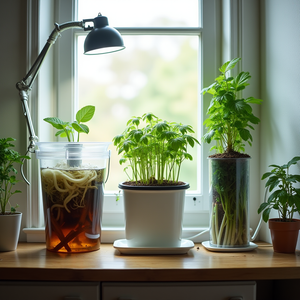
- Culinary herbs (basil, mint, coriander, etc.): Work extremely well in DWC, NFT, and Kratky, with wide environmental tolerance and steady demand.
- Edible flowers: Many are compact, can be run in DWC/NFT, and command premium prices from pastry chefs, mixologists, and caterers.
- Niche medicinal plants: Some demand stricter photoperiods, EC ranges, or longer cycles. They can pay well but increase complexity and legal obligations in some regions.
When the crop and system do not match, you fight root health, nutrient problems, and lost harvests. That is where a lot of "indoor saffron" experiments fail quietly.

3. How To Fix It: Build A High-Value Crop Strategy Using Saffron As A Benchmark
3.1 Start With A Simple Viability Checklist
Before you commit to saffron or any premium crop in your CEA system, run it through a five-part filter:
- Space: How many net pots, sites, or trays can you realistically run in your space (balcony, tent, spare room)?
- Cycle time: How many cycles per year can you turn over? Saffron might give you one primary harvest; microgreens can cycle weekly.
- Yield per cycle: How many grams (dry or fresh) per site can you expect with dialed-in conditions?
- Price and demand: What can you reliably sell to real buyers in your city, within a couple of days of harvest?
- System match: Does the crop fit your existing Kratky, DWC, NFT, or tower setup, or will it demand a full redesign?
Saffron typically scores high on price per gram but low on cycles per year and high on complexity. Microgreens and herbs score lower per gram but can win overall because of volume, speed, and lower technical demands.
3.2 Map Crops To Systems: What Actually Works Indoors At Small Scale
Here is a practical mapping for small urban growers using common systems.
Kratky (passive, jars/buckets/totes)
- Best fits: Basil, mint, lettuce, pak choi, some edible flowers (like nasturtiums), small chili plants, and test runs of niche herbs.
- Why: Zero electricity, simple to replicate, and flexible. Great for "probe" crops to test local market response before you scale.
- Watch: Reservoir volume vs plant size, light leaks (algae), and pH drift over long runs.
DWC (Deep Water Culture)
- Best fits: Fast-growing herbs, leafy greens, small-fruited peppers, compact edible flowers.
- Why: Stable root zone, high oxygenation, forgiving for nutrient strength and pH, easy to run in totes or small tanks.
- Watch: Pump redundancy (air pumps and stones), water temperature (aim for 18–22 °C if possible), and EC control to avoid tip burn.
NFT (Nutrient Film Technique)
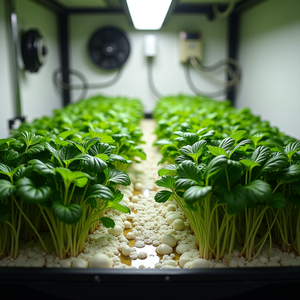
- Best fits: Lightweight root systems like lettuce, baby greens, some herbs, and select edible flowers.
- Why: High density, efficient water and nutrient use, works well in small vertical racks.
- Watch: Clogging, pump failure, and ensuring the film is not too deep (which reduces oxygen) or too shallow (which risks dry roots).
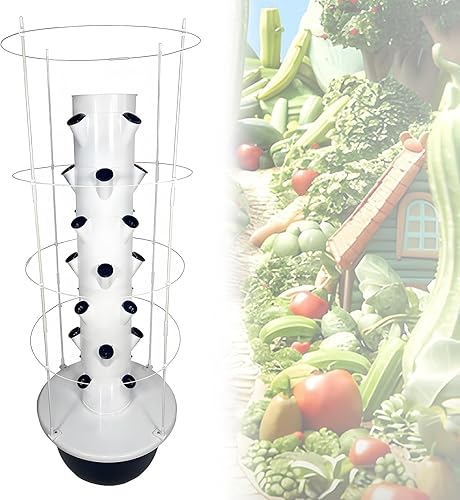
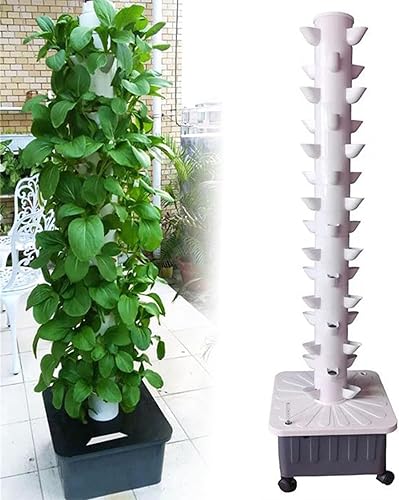
Compact Aeroponic / Vertical Towers
- Best fits: Mixed herbs, leafy greens, strawberries, and visually impressive edible flowers for tours or home display.
- Why: Excellent vertical space use, strong root oxygenation, and good for small showpiece operations where aesthetics also matter.
- Watch: Pump reliability, nozzle cleaning, timer programming, and even light distribution across the tower.
Saffron sits in an awkward place for these: it is not a classic hydro leaf crop, it needs seasonal signals, and it does not lend itself to continuous harvest like herbs or microgreens. That is why it works better as an advanced add-on, not a first commercial crop.
3.3 Diversify: Build A Crop Portfolio Around Saffron Instead Of Replacing Everything With It
If you are still fascinated by saffron (and fair enough, it is an exciting benchmark crop), structure your grow like this:
- Core cashflow crops: Microgreens, fast herbs, and maybe edible flowers in Kratky/DWC/NFT that turn over weekly or every few weeks.
- Side bet crops: A small proportion of capacity allocated to saffron or other ultra-premium crops where you are still in the R&D phase.
- R&D area: A few buckets, trays, or a micro tower where you trial new species, tweak EC/pH ranges, and test different light spectra without risking your main income.
This way, saffron becomes your "flagship experiment" rather than the single point of failure in your setup.
3.4 Put Numbers On It: A Simple Comparison Approach
When comparing saffron to other high-value options, build a basic table for your space. For example, in a 1.2 × 1.2 m tent:
- Estimate plant sites (e.g., 48 net pots in DWC/NFT, or several microgreens trays stacked).
- Estimate potential yield per harvest per site or tray.
- Estimate realistic sales price per unit in your local market.
- Multiply and compare saffron vs herbs vs microgreens vs edible flowers.
In most real-world cases, microgreens plus a rotation of high-demand herbs will beat a micro-scale saffron setup on annual profit and risk profile, even if saffron looks more glamorous on paper.
4. What To Watch Long-Term: Metrics, Niches, And When Saffron Actually Makes Sense
4.1 Track The Right Technical Metrics
Whether you are chasing saffron or microgreens, treat your grow like data, not vibes. At minimum, log:
- pH: Daily or every second day for active systems. Aim for 5.5–6.5 for most leafy greens and herbs, adjusting by species.
- EC (electrical conductivity): Keep it crop-specific. Herbs tend to run 1.2–2.0 mS/cm, leafy greens a little lower. Saffron R&D indoors is still emerging, but most bulb crops dislike very high EC.
- Water temperature: Especially in DWC; high temps kill dissolved oxygen and invite root pathogens.
- Light intensity and duration: Use a PAR meter if possible or at least manufacturer PPFD maps. Overlighting wastes power and can stress some delicate crops or flowers.
The Ludhiana saffron team did not get there by guessing. They tightened control over these variables until the crop stopped complaining. You can do the same at a smaller scale, starting with forgiving crops and gradually pushing into more demanding ones.
4.2 Track The Right Economic Metrics
On the business side, track:
- Revenue per square meter per month: Your core benchmark. Compare crops directly on this, not just per-gram price.
- Input cost per harvest: Nutrients, seeds, electricity, packaging, and delivery.
- Labor hours per harvest: Sowing, transplanting, harvesting, packing, cleaning.
- Waste rate: Unsold product, crop failures, overproduction.
When you see these numbers over 3–6 months, a pattern emerges. It usually favors simple, repeatable crops like microgreens, salad mixes, and staple herbs for small urban growers.
4.3 Find The Right Niche For Your Situation
Instead of asking, "Is saffron profitable indoors?", ask:
- "Who nearby values premium, fresh, visually impressive produce enough to pay for it?"
- "What can I deliver to them reliably every week without burning myself out?"
- "What can I grow that my local supermarkets and generic suppliers are not already doing well?"
Often, the answers look like:
- A microgreens subscription for health-focused customers.
- Edible flower assortments for a few key pastry chefs or bartenders.
- Rare herbs (lemon basil, chocolate mint, shiso, etc.) for specialty restaurants.
Saffron could sit in that mix later as a premium seasonal offering, once you have contacts who actually understand and value top-grade stigmas and are willing to pay for authenticated, consistent quality.
4.4 When Does Saffron Truly Make Sense For A Small Grower?
Indoor saffron can make sense when:
- You already run a stable CEA setup and want to dedicate an R&D corner.
- You enjoy experimentation and can afford slower payback on that section of your grow.
- You have or can develop a niche market (high-end chefs, specialty stores, or direct online sales) that understands true Kashmiri-grade saffron quality and traceability.
- You accept that your first 1–3 seasons are primarily about learning, not maximizing income.
What you should not do is tear out a working herb/microgreen system to chase sensational rupees-per-kilo numbers. Use saffron as a benchmark for what is possible with tight climate control and good marketing, not as the default crop for every small hydroponic room.
4.5 Turn The Ludhiana Story Into Your Own Playbook
Here is how to practically apply the Ludhiana saffron breakthrough to your balcony or spare room:
- Copy the discipline, not the crop. Their win comes from understanding climate dynamics, system design, and market positioning. You can apply all of that to microgreens or edible flowers.
- Use CEA to localize non-local crops. Just like they brought Kashmiri saffron to Punjab, you can bring hard-to-source herbs or flowers to your city, year-round.
- Stay modular. Design your system so one shelf, tote, or tower can be devoted to advanced R&D crops without risking your bread-and-butter production.
That is how you move from "cool hydroponic hobby" to a tight, diversified, realistic high-value crop strategy that fits your space, budget, and local demand.

As an Amazon Associate, I earn from qualifying purchases.