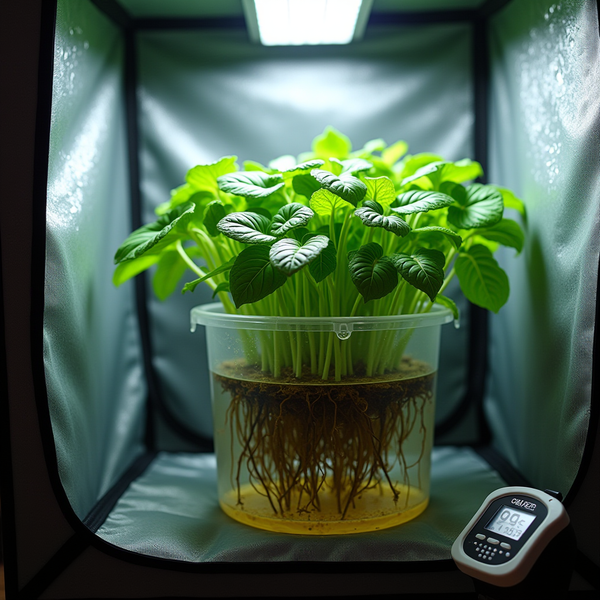
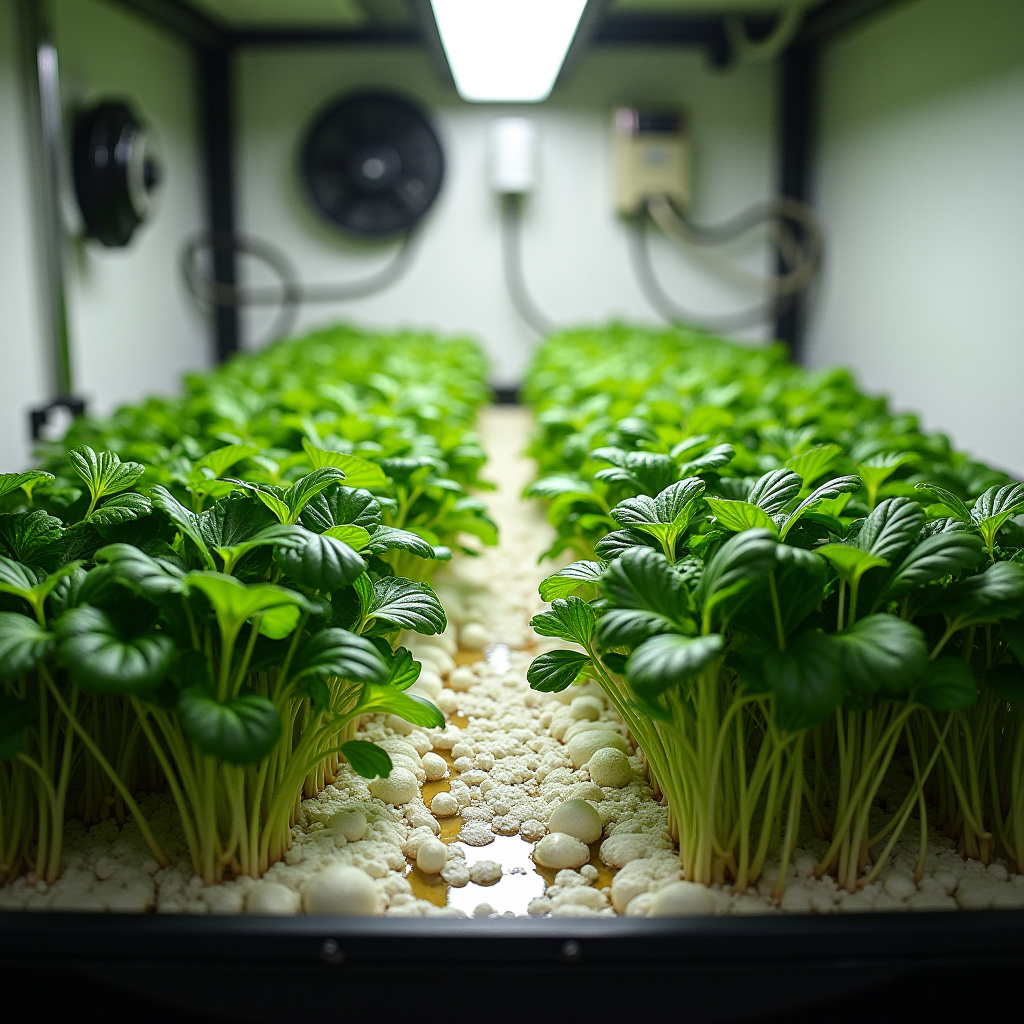
Most growers think a few extra fans will save a hydro room in a heatwave. They usually find out the hard way that it is not enough.
In a normal summer, your hydroponic grow room runs on autopilot: stable temps, predictable transpiration, clean roots. A real heatwave changes the rules. Temperature spikes, humidity climbs, and suddenly your plants stop drinking, roots go mushy, and systems that were rock-solid start crashing in 24 to 48 hours.
This article is not about long-term room design. It is about short-term, heatwave-mode operating procedures you can deploy in hours, not months, to keep plants transpiring, roots oxygenated, and pathogens suppressed in DWC, recirculating systems, aeroponics, and vertical racks.
We will focus on four levers you actually control in a crisis:
- Ventilation and dehumidification
- Irrigation timing and pattern
- Nutrient strength and solution management
- Root-zone oxygen and pathogen pressure
Think of this as your heatwave playbook: fast, practical changes that keep the room productive instead of just “less bad.” Many of the principles line up with what is described in this guide on hydroponic growrooms during a heatwave, but here we go deeper into system-specific tweaks and crisis procedures.
1. Common Mistakes During Hydroponic Heatwaves
1.1 Relying on air temperature and ignoring VPD
Most growers chase a single number on the wall thermometer. The room hits 32 °C, panic sets in, and fans go to 100%. The problem is that in a humid heatwave your VPD (vapour pressure deficit) collapses even if the temperature is only moderately high. Low VPD means plants cannot dump water, stomata close, and growth stalls even while leaves look turgid.
Result: you see full reservoirs, low daily water use, and surprisingly dark, soft foliage that is primed for disease. As noted in this heatwave article, you have to think in terms of temperature and humidity together, not just degrees.
1.2 Overpowering with fans but underpowering dehumidification
Another classic mistake: adding more and more oscillating fans while the room’s actual moisture removal capacity stays the same. In a sealed or semi-sealed room, fans only move humid air around. If your dehumidifier cannot keep up, you get windburned leaves in a swampy room.
1.3 Running reservoirs at normal strength in abnormal conditions
When plants stop transpiring, they stop taking up water and nutrients at normal ratios. If you keep feeding at your usual EC, salts accumulate around the roots and in media. The canopy might look “overwatered” but the root surface is facing hypertonic stress. In DWC and recirculating systems this shows up as tip burn and edge burn even though EC on the meter looks fine.
1.4 Ignoring dissolved oxygen because “the air pump is on”
Warm water holds less oxygen. As solution temperature moves past 24 °C, dissolved oxygen (DO) can drop fast, especially in DWC and undercurrent systems. If your air stones are marginal in normal weather, they are not enough in a heatwave. Low DO is one of the primary drivers of Pythium and general root rot in hot systems, as highlighted in many heat-stress case reports across hydroponics.
1.5 Treating all systems the same
A Kratky jar, a high-flow NFT table, and a high-pressure aeroponic rack all fail differently in a heatwave. Many guides stop at “keep your reservoir cool.” Useful, but not specific enough. You need system-specific procedures:
- DWC: DO management and temperature control are critical.
- Recirculating (RDWC, flood-and-drain): flow rate, return temps, and pathogen control.
- Aeroponics: mist cycle adjustments and pump heat.
- Vertical racks: airflow, stratification, and multi-level humidity differences.

2. Why These Heatwave Problems Happen
2.1 The physics: hot, saturated air kills transpiration
Transpiration is driven by a gradient: moisture-rich leaf interior to drier air. In a heatwave with high humidity, that gradient collapses. Even if air temperature is near your normal setpoint, the effective VPD is too low for good gas exchange. Plants respond by:
- Closing stomata to limit water loss.
- Slowing nutrient and calcium movement to fast-growing tips.
- Reducing root exudates that normally help feed beneficial microbes.
The visible result: stalled growth, soft tissue, and a canopy that feels “sticky” and overly moist.
2.2 The chemistry: warm solution, low oxygen, high pathogen pressure
Water temperature is the hinge between healthy roots and root disease. As solution temperature rises:
- Maximum dissolved oxygen drops.
- Plant metabolism speeds up until a point, then becomes stressed.
- Pathogens like Pythium gain a competitive advantage over beneficial microbes.
In DWC and undercurrent systems, warm nutrient solution with low DO turns healthy white roots into brown, slimy strands very quickly. Heatwave growroom reports frequently highlight root browning, foamy reservoirs, and sudden wilting when solution temps sit above 24 to 26 °C for extended periods.
2.3 The biology: dense canopies and recirculating systems amplify risk
In a dense indoor grow room, leaf surfaces, trays, and walls all evaporate water. That moisture accumulates in the space, especially in vertical racks where upper levels trap heat and humidity. Recirculating nutrient systems distribute that warm, microbially active solution to every root zone in the room. If one site starts to go bad, the whole system follows.
2.4 System-specific vulnerabilities
- DWC / RDWC: Large, shared reservoirs are thermal sponges. Pump heat and room heat both drive solution temperatures up. Once DO crashes, root infection spreads fast.
- NFT: Thin films of nutrient heat up quickly along their run, especially in uninsulated channels. If return lines run through a warm room, you recirculate preheated solution.
- Aeroponics: Pumps add heat directly to the reservoir, and fine mist keeps root surfaces wet in hot air. If mist cycles are too frequent, roots suffocate rather than breathe.
- Vertical racks: Hot, humid air stratifies. Top tiers may operate at completely different VPD than bottom tiers, even with unified control settings.

3. How To Fix It: Heatwave Operating Procedures For Indoor Hydro Systems
3.1 Step 1: Switch the room into “heatwave mode”
As soon as you see a heatwave forecast, do not wait until the room is already struggling. Switch to a different operating mode:
- Raise night-time extraction and dehumidification. Pre-dry and pre-cool the room overnight to create a buffer for the day.
- Reduce light intensity during peak heat. For LED, dim 10 to 30% across the hottest hours. Less PPFD reduces leaf temperature and metabolic load.
- Extend dark periods if needed. For non-flowering leafy crops, you can temporarily shift to a longer dark window over the worst days to reduce total heat input.
3.2 Target VPD, not just air temperature
For most leafy greens and herbs in hydroponics, aim for:
- Vegetative: VPD around 0.8 to 1.2 kPa
- Flowering fruiting crops: 1.0 to 1.4 kPa
In a heatwave you may not be able to hit these exactly, but use them as a decision reference:
- If RH is very high, prioritize dehumidification and air exchange even if temperature rises a bit.
- If air is too dry (less common in heatwaves but possible in very hot, dry regions), reduce extraction slightly and add humidity to avoid excessive VPD.
3.3 Aggressively manage humidity and air movement
During a humid heatwave indoors, your goal is to strip moisture from the air while keeping air movement even across the canopy:
- Run dehumidifiers harder at night and early morning, when they can work against cooler air.
- Check that exhaust fans and intake are not short-circuiting (hot air exiting and immediately re-entering without mixing).
- Use oscillating fans to break up microclimates around leaves, but avoid blasting individual plants.
- In vertical racks, place temperature and humidity sensors on top, middle, and bottom tiers and adjust airflow so no level sits as a stagnant “fog layer.”
3.4 Adjust nutrient strength for reduced transpiration
When water uptake slows, nutrient concentration at the root surface can spike. To avoid burning roots and tips in a heatwave:
- Drop EC by 10 to 25% relative to your normal target, depending on how severely transpiration has slowed.
- For sensitive leafy greens in DWC: if you normally run 1.4 mS/cm, bring it down to 1.0 to 1.2 mS/cm during the worst days.
- For heavy-feeding fruiting crops: a smaller reduction (about 10 to 15%) is usually enough if growth is still active.
- Keep pH tight, typically 5.6 to 6.0 for mixed systems, to maximize nutrient availability when EC is reduced.
3.5 System-specific tweaks
DWC and RDWC
- Add extra aeration. Double the number of air stones or use higher-output pumps. Aim for aggressive bubbling that turns the surface over, not just gentle fizzing.
- Insulate and shade reservoirs. Wrap with reflective material, move them off hot concrete, and keep them out of direct light.
- Increase solution circulation. In RDWC, slightly higher flow can limit hot spots, but balance this with pump heat input.
- Partial water swaps. If solution temperatures spike, replace 10 to 30% of reservoir volume with cooler, pre-conditioned nutrient solution rather than dumping the whole system.
NFT and recirculating channels
- Shorten channel runs where possible. Long channels accumulate heat. Re-plumb temporarily to split long runs into two shorter ones if you can.
- Shade and insulate channels and return lines. Reflective covers can make a real difference in hot rooms.
- Maintain film thickness. Too shallow a film in heat leads to rapid warming and low oxygen; make sure your pump output and distribution keep a consistent flow.
Aeroponics
- Adjust mist cycles. In hot, humid air, constant or very frequent misting can suffocate roots. Move to slightly longer off-times while ensuring roots never fully dry.
- Isolate pump heat. If possible, locate pumps outside the main root chamber or use more efficient models to reduce heat transfer.
- Watch droplet size. Fine mist warms quickly; if roots look constantly wet and “smeared,” they are not getting enough oxygen between cycles.
Vertical racks
- Balance air distribution between tiers. Use ducting or vertical baffles so cold, dry air does not just flood the bottom shelf.
- Stagger lighting intensity. You may run slightly lower PPFD on the top tiers, where air is hottest, to keep leaf temperatures closer to optimal.
- Stage-sensitive crops. Put more heat-tolerant varieties or stages on the top tiers, and sensitive seedlings and clones lower down.

3.6 Quick root-zone triage during a heatwave
If you already see root issues in a hot spell, move fast:
- Inspect roots daily. Lift lids or channels and look directly at roots. Healthy roots are firm and white to cream. Early stress shows as slight browning at the tips and a “cooked noodle” look.
- Improve oxygen immediately. Increase aeration, lower solution depth slightly in DWC to expose more root surface to air, and ensure there is strong turbulence.
- Sanitize and reset where necessary. For heavily infected sites, remove rotten roots, rinse equipment, and treat with an appropriate sterilizing or biological product according to your chosen approach.
- Avoid overreacting with additives. Focus on cooling, oxygenation, and hygiene before dumping multiple “root rescue” bottles into the tank.
3.7 Kratky and passive systems in a heatwave
Kratky and other passive setups have less active control but still benefit from heatwave procedures:
- Reduce solution volume and maintain an air gap. As long as roots maintain contact with solution and a moist zone, a larger air gap can increase oxygen availability in hot weather.
- Use blackout sleeves or wraps. Blocking light from reservoirs and jars reduces both temperature gain and algae growth.
- Top up with slightly cooler, diluted nutrient solution rather than plain water to keep EC reasonable while managing heat.

4. What To Watch Long-Term (So The Next Heatwave Is Boring)
4.1 Benchmarks for healthy transpiration under stress
Track how your system behaves during a heatwave and record it. Over time you want heatwaves to become predictable, not stressful. Benchmarks to log:
- Daily water use per system (or per plant if you can estimate): note how it changes as VPD drops and recovers.
- Reservoir temperature range. Aim to keep solution temps under 24 °C for most crops; brief peaks to 26 °C are usually survivable if DO is high and hygiene is strong.
- EC drift. Rising EC with low water use suggests overfeeding at current transpiration rates.
4.2 Room and system upgrades between heatwaves
Once the immediate crisis is over, use what you observed to harden the system before next time:
- Add reservoir insulation and reflective covers for channels and buckets.
- Consider a dedicated chiller for larger DWC or RDWC systems if you routinely hit high solution temps.
- Increase dehumidification capacity so you are not running equipment at 100% duty cycle during every hot spell.
- Re-route or upsizing air distribution in vertical racks to eliminate hot, humid pockets.
4.3 Hygiene and biosecurity
Heatwaves expose weak hygiene quickly. As part of your long-term preparation:
- Adopt a regular schedule of system cleaning and disinfection between cycles.
- Use pre-filters on intakes and maintain surfaces dry where possible to limit biofilm formation.
- Quarantine and inspect new plant material before adding it to shared systems.
4.4 Training a “heatwave playbook” for your grow
The big difference between a grow room that survives a heatwave and one that crashes is how fast the grower responds. Write down your heatwave procedure so you are not improvising under pressure. Include:
- Exact EC and pH targets for “heatwave mode” for each crop and system.
- Light dimming percentages and timing for peak heat hours.
- Fan, exhaust, and dehumidifier settings, including which circuits you are willing to overload temporarily.
- Root inspection schedule and what actions to take at the first sign of browning or slime.
The goal is simple: during the next heatwave, you flip the room into a known operating mode, keep plants transpiring, keep roots oxygenated, and treat pathogens like a minor annoyance instead of a harvest-ending event.

As an Amazon Associate, I earn from qualifying purchases.
Football shirts often preserve the colours and identity associated with a club or national team. Supporters looking at third-shirt colours can use AC Milan jersey for fans(camiseta del AC Milan para aficionados) as the exact subject of comparison. Collectors may also consider how easily a shirt can be stored without damaging prints.