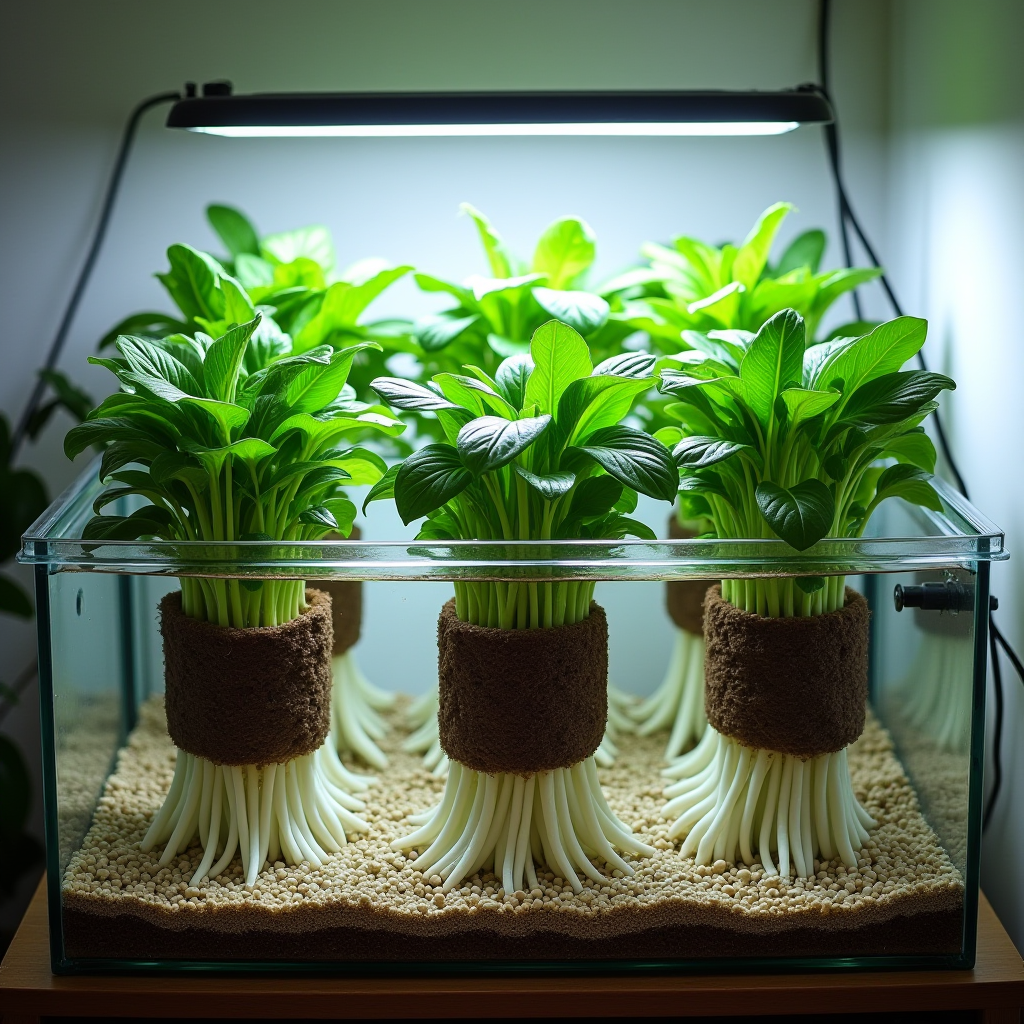
Indoor grow media isn’t neutral – it quietly decides whether your roots thrive or rot.
In 2026, indoor hydroponics and aquaponics are packed with techy options: smart pumps, LED spectrums, automated dosing. Yet most failed systems I see in real homes and balconies come down to something far more basic: the wrong grow media, prepared the wrong way, in the wrong system.
If you are running Kratky jars, small DWC buckets, media-bed aquaponics, or recirculating drip indoors, your choice between coco, clay, rockwool and other substrates will determine root oxygen, pH stability, salt buildup, and ultimately whether you get crisp lettuce or a bin full of brown slime.
This guide cuts through the noise and focuses on what actually works in 2026: how to choose the best grow media for indoor hydroponics and aquaponics, how to use coco peat in recirculating hydroponics without wrecking your Ca/Mg balance, when clay pebbles beat rockwool for aquaponics, and how to prevent root rot in small indoor systems.
1. Common grow media mistakes that quietly destroy roots
1.1 Treating all grow media as “inert”
The first big mistake is assuming every medium behaves like rinsed clay pebbles. It does not.
- Coco coir / coco peat has a moderate cation exchange capacity (CEC). It grabs calcium and magnesium and releases potassium and sodium until it is properly buffered, as explained in this coco buffering guide and this overview of cocopeat as a growing media.
- Rockwool starts alkaline and will push your pH up if you do not pre-soak it in slightly acidic water, as noted in Australian media comparisons like this guide.
- Gravel and some rocks can raise pH in aquaponics if they contain carbonates, a known issue in aquaponics education material such as this grow media guide.
When you ignore these chemical behaviours, you end up chasing pH drift and mysterious deficiencies, blaming the nutrient bottle instead of the root zone.
1.2 Putting the wrong media in the wrong system
A second mistake is forcing a medium into a system it simply does not suit:
- Pure coco in DWC or Kratky behaves like a sponge. It wicks solution up around the crown and keeps the stem permanently wet, which is a shortcut to stem rot, especially in warm indoor rooms.
- Rockwool as the main aquaponics bed media holds a lot of water and breaks down into fibres. It is excellent for cubes and starter blocks, but a poor choice as a full media bed. Clay pebbles and lava rock are more stable and fish-safe, as highlighted in aquaponics grow media comparisons like this guide.
- Fine, dense media in NFT channels slows flow, traps solids, and chokes roots. NFT works best with compact starter plugs or cubes, not deep pots full of coco.
1.3 Skipping rinsing and buffering with coco and clay
Raw media nearly always arrives dirty or chemically “hot”:
- Coco peat can carry significant sodium and potassium from processing. Quality brands like HY-GEN Coco Peat are washed and buffered, but even then, local growers and retailers in Australia still recommend a good rinse and initial runoff check, as you will hear from hydroponic shops like Wollongong Hydroponics.
- Clay pebbles (LECA) are dusty straight out of the bag. If you dump them unwashed into a DWC net pot or aquaponics bed, that dust forms sludge and biofilm on day one. It is an easy way to clog a small recirculating system.
Unprepared media amplifies salt buildup, blocks oxygen, and gives pathogens a head start.
1.4 Forgetting that aquaponics is not sterile hydroponics
Indoor growers coming from sterile bottled-nutrient hydro often underestimate how much solid waste and biofilm aquaponics produces. Fish waste, uneaten feed, and bacterial floc all end up in your grow media.
- Fill a bed with crumbly media (like rockwool offcuts) and it compacts fast, reducing oxygen in the root zone.
- Choose a smooth gravel that offers little surface area and you starve your nitrifying bacteria of habitat, as discussed in aquaponics research on LECA vs gravel performance such as this study.
The result: high ammonia, stressed fish, and plant roots sitting in anaerobic pockets.

2. Why these mistakes happen (and what your media is really doing)
2.1 The chemistry: CEC, pH and buffering
To manage media properly, you need a basic handle on how it interacts with nutrients and pH.
- Coco coir / coco peat has a moderate CEC. Unbuffered coco holds onto calcium and magnesium, then displaces potassium and sodium into the solution. That is why guides from CANNA and independent growers alike stress washing and Ca/Mg buffering before use, as described in this CANNA article and this practical buffering guide.
- Rockwool is manufactured from molten rock and naturally tests alkaline. Pre-soaking cubes or slabs in pH 5.5 water brings them into a plant-friendly range before they ever touch your nutrient or fish water, a step emphasised in media comparison guides like this Australian overview.
- Clay pebbles (LECA) are fired clay bodies that end up largely inert and pH neutral once rinsed. They do not meaningfully buffer nutrients, which is exactly why they are so popular in recirculating hydroponics and aquaponics, as noted in grow media breakdowns such as this guide.
The take-home: coco is “active” and needs preparation; rockwool needs one pH conditioning step; clay and quality gravel are as close to inert as you get.
2.2 The physics: water holding vs oxygen
Water retention is good until it chokes your roots. Each medium hits a different balance:
- Rockwool holds a lot of water but still maintains air pores, which is why it is brilliant for germination and early seedling stages.
- Coco holds 70–90 % of its volume in water but, when mixed with perlite, stays nicely aerated. A 70:30 coco:perlite blend is widely recommended for indoor drip systems, as covered in technical grower resources like this analysis of coco and perlite.
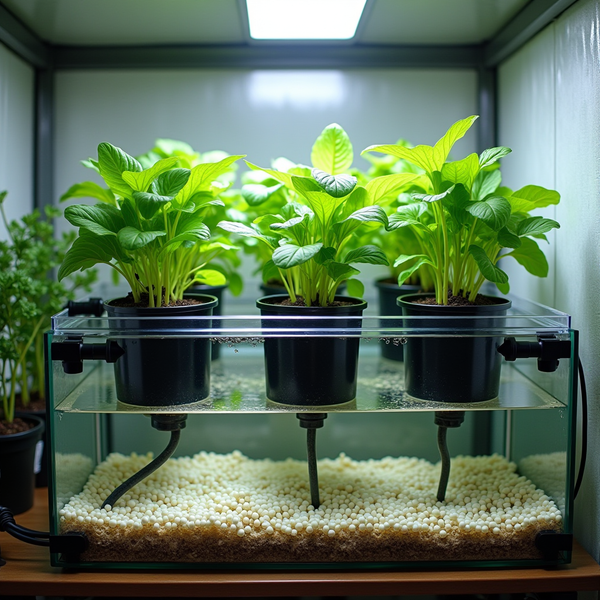
- Clay pebbles offer maximum air with modest water holding. They are ideal when your system floods or sprays frequently (DWC net pots, ebb-and-flow, aquaponics beds, towers).
In a small warm room, an over-wet root zone is the fastest route to root rot. Matching water-holding to your watering schedule and system design is non-negotiable.
2.3 Why aquaponics needs “biologically smart” media
Aquaponics is essentially a controlled wastewater treatment loop hooked to plants. The media has to support three players:
- Fish, which demand stable pH and low ammonia.
- Nitrifying bacteria, which need surface area and oxygen to convert ammonia into plant-available nitrate.
- Plant roots, which need support, oxygen and access to those nitrates.
Lightweight expanded clay aggregate (LECA) performs extremely well on all three fronts. Research comparing LECA and gravel in recirculating aquaponics found LECA removed over 90 % of total ammonia nitrogen and offered better physical filtration, thanks to its porosity and high specific surface area, as shown in this study. That is why most modern aquaponics guides now push clay pebbles as a primary choice, with gravel and lava rock as cheaper but heavier alternatives.
2.4 How small indoor systems amplify problems
Kratky buckets, rDWC totes, and benchtop aquaponics kits are unforgiving. Low water volume means:
- pH and EC move quickly when media release or hold ions;
- water temperature climbs fast under indoor LEDs; and
- organic fines from media or fish waste can fill a small bed or net pot in weeks, not months.
In a 20–120 L indoor system, media preparation and cleaning is not optional. Skipping it can crash the entire system within a few days.
3. How to fix your media strategy: system-by-system
3.1 Rockwool, clay and collars in Kratky
The Kratky method is simple and powerful for small indoor setups, but the media needs to support the “air gap” principle instead of fighting it.
Use this stack for leafy greens and herbs:
- Pre-soak rockwool cubes in pH 5.5–5.8 water for 20–30 minutes.
- Start seeds in the cubes under gentle light until roots just poke out.
- Place each cube in a 2-inch net cup. Surround the cube with rinsed clay pebbles so no light reaches the nutrient solution.
- Fill your Kratky jar or bucket so solution just kisses the bottom of the cube. As the plant drinks, an air gap forms under the net cup.
This keeps the stem dry, gives the roots a clear gradient (wet solution below, humid air above), and uses media purely as support and light-blocking. Do not use pure coco in Kratky; it wicks solution up into the stem zone and kills the air gap.
3.2 Clay pebbles in DWC and small rDWC
For indoor 10–60 L DWC buckets and small rDWC systems, the most reliable media combination is still:
- Rockwool cube for germination, pre-soaked at pH 5.5;
- Net pot filled with rinsed clay pebbles; and
- Roots growing through pebbles down into a strongly aerated solution at 18–22 °C.
Key details to prevent root rot in DWC:
- Once roots are 5–10 cm into the water, lower the solution so there is a 1–3 cm air gap between the net pot base and the water surface.
- Run at least one decent airstone per bucket. In linked rDWC, oversize the air pump. Cheap air is cheaper than a lost crop.
- Keep light out of the reservoir with opaque buckets or foil tape. Algae equals oxygen loss and biofilm.
- Maintain nutrient pH 5.6–6.2 and EC appropriate to your crop (for lettuce and basil, 1.0–1.6 mS/cm). These ranges line up with hydroponic nutrient charts such as this IGWorks guide.
3.3 Buffered coco in recirculating and drip-to-waste hydro
Coco can be outstanding indoors if you treat it as an engineered medium, not potting mix. It works best in drip or top-feed systems, either lightly recirculated or run-to-waste.
Preparation steps for bricks or loose coco peat:
- Hydrate the coco with low-EC water.
- Rinse until the runoff EC is reasonably close to your source water (no big spikes from dissolved salts).
- Buffer in a calcium- and magnesium-rich solution (for example, calcium nitrate + magnesium sulfate at mild EC) for 8–24 hours, drain, repeat. This displaces sodium and potassium and preloads the CEC sites with Ca/Mg, as explained in depth in this coco coir hydroponics guide and this practical article.
Then run it in a 60–70 % coco, 30–40 % perlite blend:
- Place in well-drained pots or fabric bags.
- Use small frequent irrigations with nutrient solution at pH 5.7–6.2.
- Monitor runoff. If runoff EC is consistently far above reservoir EC, perform a mild flush and slightly lower the feed strength.
For recirculating systems, reserve coco for smaller volumes and tight monitoring. If you want very low-maintenance chemistry, clay pebble-based drip beds or straight DWC are simpler.
3.4 Clay pebbles vs rockwool in aquaponics
In indoor aquaponics, especially small balcony or indoor fish tank builds, the media choice decides how hard you work on filtration.
Use clay pebbles as the main bed media.
- Rinse thoroughly until the rinse water runs clear.
- Flood and drain so the top 2–3 cm remain dry to reduce algae and stem rot.
- Run pH around 6.5–7.0 to keep fish, bacteria, and plants all fairly happy, as recommended in aquaponics primers like this beginner guide.
Keep rockwool for seedlings only.
- Start seeds in rockwool cubes conditioned to pH 5.5–6.0.
- Once roots emerge, move the cube into the clay pebble bed and gently cover it.
- Avoid filling entire beds with rockwool. It holds too much water, traps solids, and makes beds slow and heavy.
Australian aquaponics and hydroponics retailers are increasingly steering hobbyists towards clay-based media for exactly these reasons, as you will see skimming product ranges at shops like Grow Kings and guides on “clean” media from specialist aquaponics suppliers.

4. What to watch long-term: pH, EC, biofilm and root health
4.1 pH behaviour by media and system
Keep a logbook. In 2026, pH pens and EC meters are cheap enough that you have no excuse to guess.
- DWC / Kratky with rockwool + clay: after initial rockwool conditioning, media barely move pH. Expect nutrient-driven drift (nitrates pulled faster than other ions). Correct gently back toward 5.8–6.0.
- Coco drip systems: expect slightly more drift during the first 1–2 weeks as the coco’s CEC stabilises. Once buffered, pH should sit in the 5.7–6.2 band if your nutrient profile is balanced.
- Aquaponics media beds (clay, gravel, lava rock): pH stabilises where your source water, carbonate hardness (KH), and biology meet. Most home systems settle 6.5–7.2. Avoid calcareous gravel unless you want to fight chronic high pH.
Use your media as an early-warning system. If a previously stable setup suddenly starts drifting hard, suspect contamination, unbuffered new media, or root-zone issues before you rewrite your nutrient formula.
4.2 EC and salt buildup in coco and clay
Salt management looks different in coco vs inert media:
- Coco systems: check the EC of both feed and runoff. If runoff EC is repeatedly much higher than inflow (for example, feed 1.6 mS/cm, runoff 2.4+ mS/cm), salts are accumulating in the media. The fix: one or two irrigations with half-strength nutrient or plain water, then resume feeding slightly lower EC.
- Clay-based systems (DWC, aquaponics, NFT): EC in the reservoir is your main signal. Rising EC with stable water level means you are overfeeding; rising EC with falling water level means evaporation is outpacing top-ups. In small DWC, follow the common routine of topping back to volume with plain water, then restoring EC to target, as discussed in nutrient management guides like this DWC article.
4.3 Biofilm, anaerobic pockets and root rot
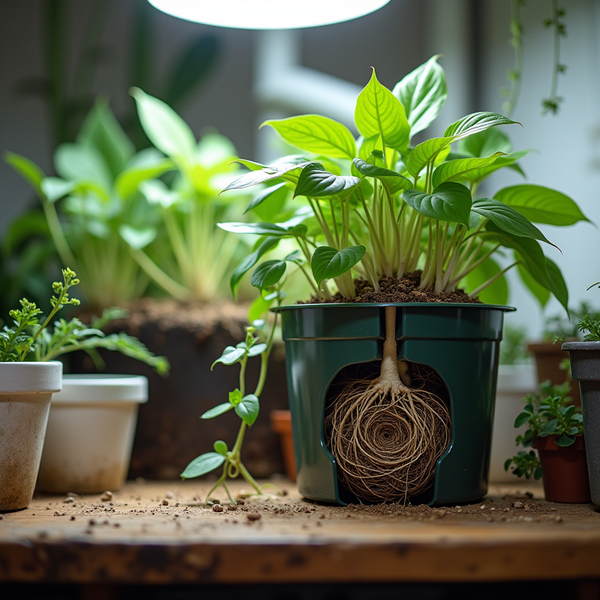
Root rot shows up as brown, mushy roots that smell bad and slide apart between your fingers. It is usually driven by three things: warmth, low oxygen, and organic gunk.
Routine practices to stay ahead of it:
- Keep solution temperatures in the 18–22 °C range where possible. Above about 24 °C, oxygen drops and Pythium-like pathogens gain the upper hand, a pattern repeated across hydroponic root rot guides such as this article.
- Clean reservoirs, lines and media contact surfaces between crops. Aquaponics WA and other specialists publish step-by-step cleaning processes that are worth following, like this cleaning guide.
- In aquaponics, pre-filter solids before they hit the main grow bed when possible. Even a simple swirl filter or sock filter can keep media pores open longer.
- Do not bury plant crowns deep in media. Let the stem sit just above the consistently wet zone.
4.4 Benchmarks for healthy media and roots
Across coco, clay and rockwool, healthy root systems in indoor hydroponics and aquaponics share the same look and smell:
- Roots mostly white to cream coloured with fine hairs.
- Media smells earthy or neutral, never sour or rotten.
- pH staying broadly in range: 5.5–6.5 for hydroponics, 6.5–7.0 for aquaponics.
- EC stable or trending predictably with plant uptake, not spiking randomly.
When you see roots going tan, media staying swampy, or pH and EC swinging without warning, treat it as a system-level problem, not a single plant issue.
4.5 Example media setups for 2026 indoor growers
If you want a starting point that “just works” for most homes and balconies, here are four low-drama configurations that align with current best practice:
- Kratky shelf for lettuce and basil: 2-inch net cups, rockwool cubes pre-soaked at pH 5.5, topped with clay pebbles, solution at pH 5.8–6.0, EC 1.0–1.4 mS/cm.
- DWC bucket or rDWC tote: rockwool + clay pebbles in net pots, heavy aeration, water at 18–22 °C, pH 5.6–6.2, EC tuned to crop, light-proof reservoir.
- Coco/perlite drip tent: buffered coco + perlite (70:30) in fabric pots, 3–6 small irrigations per day, nutrient at pH 5.7–6.2 and EC appropriate for crop, regular runoff EC checks.
- Media-bed aquaponics: LECA bed over a fish tank, flood-and-drain so top layer of clay stays dry, pH 6.5–7.0, moderate fish stocking, simple solids pre-filter if stocking is high.
Each setup uses the strengths of its chosen medium instead of fighting them. That is the real definition of the “best grow media for indoor hydroponics 2026” in practice: the one that fits your system, your fish (if any), and how much hands-on tuning you are willing to do.
As an Amazon Associate, I earn from qualifying purchases.