Why Your Hydroponic Houseplants Fail Indoors: Evidence-Based Repotting, Root-Zone & System Design Tips for 2026
The Problem: Your Semi-Hydro Houseplants Keep Crashing
“LECA prevents root rot.” “Semi-hydro is idiot-proof.” “If the plant rotted, it must have been the nutrients.”
Those are the myths. The reality: a huge number of houseplants moved into LECA, passive hydro, or DWC-style setups crash within months. The leaves yellow, roots turn brown, algae blooms in the reservoir, and the grower walks away convinced hydroponic houseplants are “too finicky.”
The failure point usually isn’t the nutrient bottle. It’s the root zone: how you repot, how the container is designed, how long solution sits, and how much oxygen your roots actually get. In other words, this is a root-engineering problem, not a magic-substrate problem.
This guide will walk you through the biggest mistakes indoor growers make when converting houseplants to semi-hydro or simple hydro, why they happen, and exactly how to fix them in 2026 using evidence-based root-zone design, media choices, and repot timing.
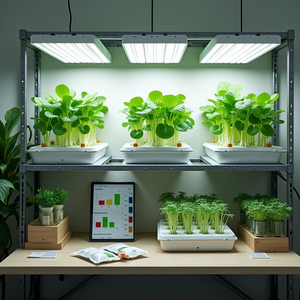
We’ll focus on aroids (Philodendron, Monstera, Anthurium), herbs-as-decor, and small ornamental fruiting plants in semi-hydro and simple passive or DWC-like systems. No multi-row NFT rigs or commercial setups – just the root zones sitting in pots and jars on your shelves.
Common Mistakes: Where Semi-Hydro Houseplants Go Wrong
Mistake 1: Converting at the Wrong Time (or When the Plant Is Already Crashing)
Many growers repot into LECA or semi-hydro as a last resort when the plant is already in decline from soil root rot. That is the worst time to throw it into an inert medium with constant moisture.
When the plant is weak, it can’t quickly grow new, semi-hydro-adapted roots. The few healthy roots left get overwhelmed by pathogens and osmotic stress from the new solution. Research and practical guides on repotting stress advise working with plants when they are actively growing and not under major stress, to let the plant rebuild root mass quickly after disturbance, as noted in this guide.
Mistake 2: Leaving Soil Packed in the Root Ball
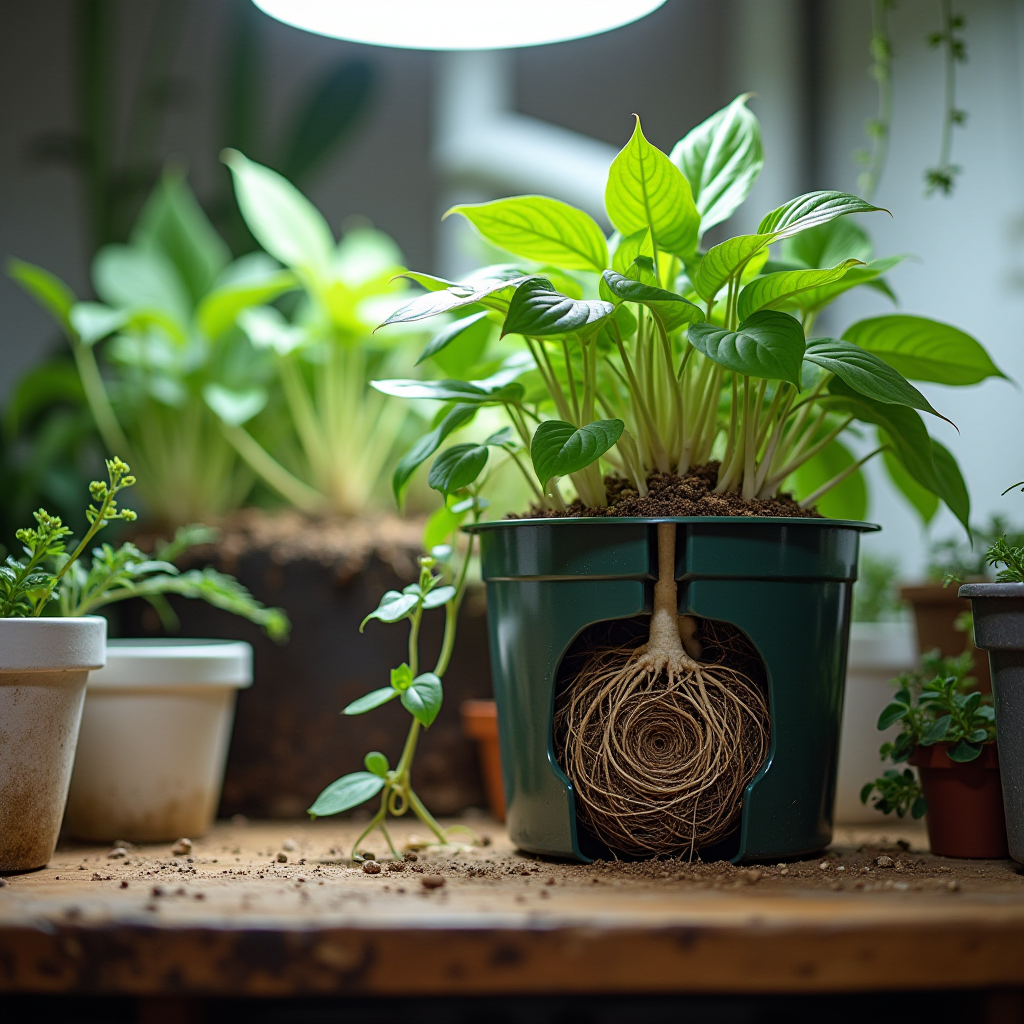
Half-soil, half-LECA root balls are a classic failure. Soil left deep in the root mass stays wet for days in a semi-hydro pot. Those pockets go anaerobic fast, and rot spreads from the old soil zone into new hydro roots.
This is the same issue traditional container growers are trying to avoid when they break up old root balls during repotting: trapped old medium behaves very differently than the fresh one around it, which stresses roots and causes local waterlogging.
Mistake 3: Oversized, Stagnant Reservoirs
Many houseplant hydro setups mimic big Kratky or DWC buckets without the oxygenation hardware. Deep, still reservoirs under a living-room pot may look “low maintenance,” but once roots fill the pot, the lower half of the root system is sitting in slowly deoxygenating solution.
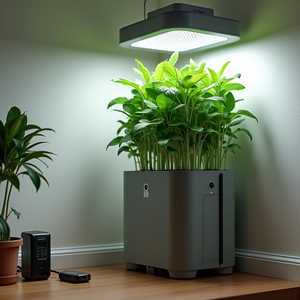
WIRED’s look at countertop hydro systems highlights that even “plug-and-play” units rely on active circulation and aeration to keep water moving and oxygenated, plus opaque plastics to limit algae growth (source). Static, deep reservoirs under your ficus aren’t getting that help.
Mistake 4: Treating Houseplants Like Lettuce (Nutrient & EC Mismanagement)
Houseplant growers often copy nutrient recipes for lettuce or basil in fully hydroponic systems. ECs in the 1.8–2.4 mS/cm range, which can be fine for fast-growing leafy greens under intense LED lighting, are too hot for slower-growing indoor ornamentals. Tip burn, salt crusts on LECA, and brittle roots show up within weeks.
On the flip side, some semi-hydro guides recommend “just use liquid houseplant fertilizer” without any EC reference. That leads to random dosing, wildly variable salt levels, and constant pH swings.
Mistake 5: Wrong Media Mix for the Plant’s Root Type
LECA is not a one-size-fits-all medium. Large-pore, low water-holding pellets work beautifully for many aroids, but fine-rooted ornamentals, some herbs, and small fruiting plants often like slightly higher moisture and better cation exchange capacity.
Modern mineral blends (LECA + pumice + zeolite) and “PON-style” mixes are popular in 2026 because they balance aeration, moisture, and buffering. However, mixing slow-release fertilizers into these blends while also adding hydro nutrients is a fast path to EC creep and nutrient burn.

Why These Mistakes Happen: The Root-Zone Physics
Cause 1: Confusing “Hydroponic” With “Waterlogged”
Hydroponics isn’t about bathing roots in water; it’s about delivering water, nutrients, and oxygen in a controlled way. In semi-hydro, the medium should create an oxygen-rich upper zone and a moisture-rich lower zone. When reservoirs are too deep or the pot has no overflow, you lose that gradient.
In a basic passive semi-hydro pot, the LECA at the bottom stays saturated, the middle zone is moist but airy, and the top is slightly drier. That vertical stratification is the entire point. Overfill the reservoir, and you erase the oxygen zone.
Cause 2: Pathogens Love Static, Warm Nutrient Soup
Once roots and organic films (biofilms) build up in a static reservoir, dissolved oxygen steadily drops while microbes consume oxygen and release CO2. At the same time, nutrient levels and pH drift. Without periodic solution changes, the reservoir becomes a warm, low-oxygen, high-pathogen environment.
Research and grower experience in DWC and Kratky systems show that maintaining root-zone temperatures around 18–24°C and high dissolved oxygen is critical for preventing Pythium and similar root diseases. Passive semi-hydro relies on shallow, partially aerated reservoirs to maintain that without pumps; deep, stagnant pots break that assumption.
Cause 3: Roots Need Time to Rebuild After Disturbance
Repotting is always a controlled attack on the root system. As Garden Culture notes, minimizing repot frequency and avoiding heavy root disturbance outside active growth reduces stress and improves plant recovery (source).
When you strip soil and prune roots heavily, then put the plant straight into a constantly moist, nutrient-charged medium, those damaged roots are forced to function in a completely different environment. If the plant isn’t in active growth, it can’t quickly lay down new root tissue adapted to semi-hydro, and the damaged roots rot before replacements form.
Cause 4: Houseplants Have Slower Metabolism Than Food Crops
Most houseplants grow slower than lettuce under high light and high CO2. Their nutrient uptake is slower, their transpiration lower, and their tolerance for high EC narrower. Overfeeding an indoor Philodendron like a commercial lettuce crop means salts accumulate in the solution and on LECA faster than the plant can use them.
That leads to classic symptoms: burnt leaf tips, crisp margins, and brittle roots that snap when you handle the plant. Meanwhile, the high salt concentration dehydrates root cells and makes them more vulnerable to pathogens.
Cause 5: Media Mis-Match to Root Type and Environment
Aroids with thicker, coarse roots can handle large air pockets and fast-draining LECA, especially in moderate room humidity. Fine-rooted herbs or compact ornamentals may suffer in the same setup if the upper root zone dries between top-ups.
Likewise, in dry, heated apartments, pure LECA can dry too quickly at the top, creating a large dry band between the moist zone and the root crown. The plant’s active roots end up either too dry or forced deeper into a less oxygenated zone nearer the reservoir.

How to Fix Them: Practical Semi-Hydro Repotting & Root-Zone Design
Step 1: Choose the Right Time to Repot (and When Not To)
- Repot in active growth: Aim for late spring to mid-summer indoors, when light and temperatures are high and the plant is pushing new leaves.
- Avoid deep winter conversions unless you have strong grow lights and stable warmth. Slow growth equals slow root replacement.
- Do not “rescue” a plant by tossing it into LECA when it is already collapsing from soil rot. Instead, clean and prune the roots, rehab in water or moist sphagnum until you see fresh, white roots forming, then move to semi-hydro.
Step 2: Strip Soil Properly and Sanitize Roots
Think like a surgeon, not a casual repotter. Any soil left behind will act like a wet, anaerobic sponge inside your otherwise airy medium.
- Remove the plant and break the root ball. Use your fingers to gently crumble the soil away.
- Use a water bath: Swish roots in a bucket of lukewarm water, changing water as needed, until no soil remains lodged between roots.
- Inspect roots under good light.
- Healthy: firm, white to light tan.
- Rotting: brown/black, mushy, hollow, or slimy.
- Prune rot with sterile scissors. Disinfect blades with alcohol or a dilute bleach solution between cuts.
- Optional: brief dip in a mild fungicide or 3% hydrogen peroxide diluted 1:10, then rinse lightly. This reduces pathogen load without soaking the roots in harsh chemicals.
Step 3: Design the Root Zone – Pot & Reservoir Layout
Use a simple double-pot design: an inner pot with holes for drainage and an outer cachepot that acts as the reservoir. This is essentially a passive, semi-hydro Kratky hybrid that keeps roots in a moist but oxygenated medium.
- Reservoir height: 2–5 cm (about 1–2 inches). Enough to keep LECA wicking but not so deep that most roots live underwater.
- Overflow hole: Drill a small hole in the outer pot at your target reservoir height. This prevents overfilling during top-watering.
- Opaque walls: Use tinted or opaque containers, or wrap clear pots with tape or foil. This keeps out light and algae.
- Ventilated top zone: Leave the top 2–3 cm of LECA slightly drier. This creates an oxygen-rich layer and discourages fungus gnats.
For plants that naturally climb or prefer airy roots (Monstera, Philodendron), use taller, narrower pots. This creates a longer vertical gradient from wet at the bottom to dry at the top, giving roots more zones to choose from.
Step 4: Select the Best Medium for Your Plant
Option 1: Pure LECA (Baseline for Most Aroids)
- Preparation: Rinse thoroughly until water runs clear, then soak 12–24 hours in slightly acidic water (pH ~5.5–6.0) or weak nutrient solution. This removes dust and neutralizes alkaline residues.
- Best for: Philodendron, Monstera, Syngonium, many climbing anthuriums, vining pothos, Scindapsus. These tolerate large pore spaces and enjoy high oxygen at the roots.
- Environment: Works best where humidity is moderate and temperatures are stable (around 20–26°C).
Option 2: LECA + Pumice or Perlite (70:30)
- Why: Adds slightly more water retention while maintaining high porosity. Pumice and perlite also reduce LECA “rattle” and help lock roots in place.
- Best for: Smaller aroids, compact Calathea relatives, fine-rooted ornamental herbs like decorative thyme or oregano under lights.
- Note: Still fully inert, so you control all nutrition via solution.
Option 3: LECA + Zeolite (80:20)
- Why: Zeolite adds cation exchange capacity, lightly buffering nutrients and smoothing pH swings.
- Best for: Plants sensitive to micronutrient fluctuations or those that show chlorosis easily (some Anthurium and variegated aroids).
- Watch: Zeolite makes flushing salts slightly slower; ensure regular top-down rinses to avoid buildup.
Avoid mixing slow-release fertilizers into any of these blends if you’re also using liquid hydro nutrients. That double-dosing is a common cause of silent salt buildup.
Step 5: Potting Technique – Seat the Plant and Flush
- Base layer: Add LECA to the inner pot up to just above the future waterline.
- Position the plant: Spread roots over the LECA, pointing them downwards and outwards.
- Backfill: Gently pour LECA around the roots, tapping the pot so pellets settle into gaps. Do not compact hard; you want air pockets.
- Initial flush: Top-water thoroughly with plain, room-temperature water until it drains from the bottom or overflow. This seats the medium and removes remaining dust.
- First fill: Add nutrient solution to the reservoir height. Do not flood the whole pot.
Step 6: Acclimation – Ease the Plant Into Semi-Hydro
If you blunt-force a newly converted plant with full-strength nutrients and deep water, expect setbacks. Instead:
- Use 25–50% nutrient strength for the first 2–4 weeks.
- Run a shallow reservoir at the low end of your design (closer to 2 cm).
- Let the upper LECA cycle between moist and just barely damp by occasionally allowing the reservoir to fall to zero before refilling.
- Watch for new roots: Semi-hydro-adapted roots are often thicker, whiter, and more robust than the older soil roots. Once you see them, you can deepen the reservoir slightly and move towards normal nutrient strength.
Step 7: Nutrients, EC, and pH – Houseplant-safe Targets
Keep it simple but measured. Even minimal gear – a digital EC/TDS meter and a pH pen – transforms guesswork into control.
- Target EC for converted houseplants:
- Early conversion phase: 0.4–0.8 mS/cm.
- Established, actively growing plants: 0.8–1.2 mS/cm.
- Very fast-growing vines under strong light: up to 1.5–1.8 mS/cm if leaves stay clean and roots look healthy.
- Target pH: 5.5–6.5, with 5.8–6.2 as a practical sweet spot.
- Measurement frequency:
- Weekly checks for small semi-hydro pots.
- Every 2–3 days for DWC or larger reservoirs.
Use complete hydroponic nutrients designed for recirculating systems, not soil feeds. Add parts in the order recommended by the manufacturer, and never mix concentrates before dilution to avoid precipitation.

What to Watch Long-Term: Maintenance, Media Refresh & System Transitions
Maintenance Schedule for Semi-Hydro Houseplants
- Every 1–2 weeks:
- Top-water from above with fresh nutrient solution until runoff. This flushes salts and refreshes the root zone.
- Check reservoir level and top up to your overflow line.
- Every 2–4 weeks:
- Dump and replace the reservoir completely. Do not just keep topping up forever.
- Quickly rinse inner pot and LECA if you see slime or heavy algae.
- Every 6–12 months:
- Remove plant, rinse LECA thoroughly, and inspect roots.
- Trim dead roots, refresh any media that has crushed or broken down, and reset the pot with fresh LECA if needed.
When to Repot Again (Within Semi-Hydro)
Unlike soil, inert media doesn’t “go bad” quickly, but roots and salts accumulate.
- Repot when:
- Roots fully circle the pot and there’s no media left; the plant stays wet far longer than before.
- You see repeated salt crusts and pH drift even with regular flushing.
- Root mass becomes so dense in the lower zone that it pushes LECA up and out.
- Approach the repot like the first conversion: gentle root cleaning, pruning, fresh LECA, and a short acclimation period with lower EC.
Hybrid Setups: Kratky Jars & DWC Buckets for Houseplants
If you want to experiment beyond passive pots:
- Kratky jars:
- Great for decorative herbs and small ornamentals. Use an air gap between net pot and solution, and keep jars opaque.
- Top up with half-strength nutrient solution when the level drops below half. Do a full change every 3–4 weeks.
- DWC buckets:
- Reserve for plants under dedicated lighting and with reliable power. Use air stones, keep EC moderate (around 1.0–1.5 mS/cm for most ornamental foliage), and change the solution every 2–3 weeks.
- Keep root-zone temperature below ~24°C where possible to maintain dissolved oxygen.
Root-Rot Prevention Checklist for 2026 Indoor Hydro Houseplants
- Strip all soil at conversion; never leave compacted cores.
- Design reservoirs shallow with clear overflow levels.
- Keep containers opaque to block light and algae.
- Flush top-down regularly and fully replace solution every 2–4 weeks.
- Maintain EC in a houseplant-safe range and avoid mixing slow-release fertilizers with hydro nutrients.
- Keep pH between 5.5 and 6.5 and re-mix if it drifts hard.
- Control root-zone temperature around 18–24°C and avoid hot, stagnant corners.
- Repot during active growth, not as an emergency last step.
If you treat your indoor hydroponic houseplants like small, high-value systems instead of decorative afterthoughts, semi-hydro stops being risky and becomes one of the most stable ways to keep roots healthy long-term.
As an Amazon Associate, I earn from qualifying purchases.