Deep Water Culture vs Plug-and-Play Kits vs Towers: How 2026 Systems Really Compare for Beginner Indoor Growers
Common Mistakes Beginners Make When Choosing A 2026 Hydroponic System
Most first-time indoor growers think the “best hydroponic system 2026 for beginners” is whatever has the most pods, the flashiest tower, or the prettiest LED bar. That is exactly how you end up with a loud, leaky, overstuffed unit in your living room that you secretly hate.
Scroll TikTok or Instagram right now and you’ll see it all:
- 60 pod Kratky/DWC hybrids on Facebook being filled edge-to-edge with lettuce and herbs.
- Vertical tower systems misting dozens of plants in a tiny footprint on TikTok and Reels, like the Agrotonomy demos in this clip.
- Compact countertop plug-and-play kits on YouTube and shorts, often reviewed against DIY DWC in videos like Hoocho’s comparisons in this video and this follow-up.
- Aquaponics questions like the Reddit post where a grower asks if their small kit will work “if I just add fish” without redesigning for biofiltration and stocking density, as seen in this thread.
The hardware keeps getting cheaper and prettier. What hasn’t improved is how well those systems are matched to real-world constraints: noise, leaks, power cuts, crop choice, heat, and your actual willingness to tinker.
Let’s break the confusion down into the core mistakes, why they happen, and how to avoid them.
Mistake 1: Treating All “Pods” As Equal
A 9-pod countertop unit, a 20–30-site tower, and a 60 pod hydroponic kit are not interchangeable. Each pod lives in a different environment:
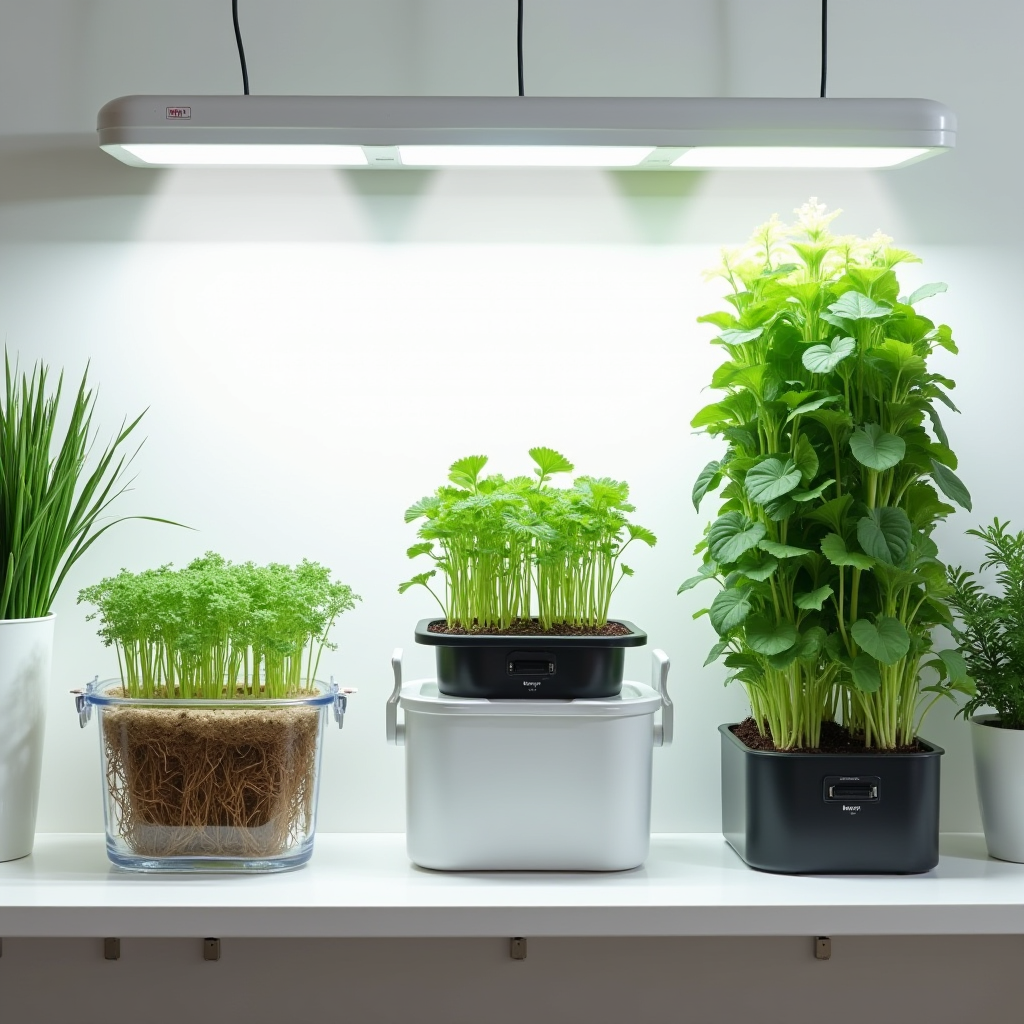
- DWC bucket/tote: Roots sit in a large, aerated reservoir. Huge buffer against pH and EC swings.
- Passive Kratky container: Roots sit in a static solution with an air gap. No pumps, no noise.
- Tower/aeroponic column: Roots hang in air and film or mist of nutrient runs past them on a timer.
- All-in-one kits: Usually a small reservoir trying to feed too many sites under one light.
Beginners see “60 pods” and assume 60 full-size plants. In reality, those systems are best run at half capacity with small, quick crops. Overloading them is why so many owners report stunted growth, constant top-ups, and wild pH drift in Facebook groups like the 60-pod build shared in this post.
Mistake 2: Assuming You Can Just “Add Fish”
The Reddit aquaponics noob asking if their decorative kit will “work with fish” is a classic example. A small hydroponic or plug-and-play kit is designed around:
- Clean nutrient salts, not fish waste.
- No biofilter or only minimal media volume.
- Specific flow rates and oxygen levels for roots, not for fish stocking density.
In that thread, commenters correctly point out that without a proper biofilter and a stable fish tank, ammonia and nitrite spikes will kill fish long before plants struggle. Trying to convert a small hydroponic kit directly into aquaponics almost always means:
- Overstocked fish.
- Inadequate filtration and cycling.
- No margin for error when you miss a top-up or pump fails.
Mistake 3: Ignoring Noise, Power, And Leak Risk
This is where Hoocho’s DWC vs circulating comparisons are useful: his videos show how simple, oversized DWC often beats fancier setups for stability and noise. New growers regularly underestimate:
- Pump hum transmitted into benches and walls.
- Drip noise from towers in quiet apartments.
- Leak paths from poorly sealed bulkheads and cheap plastic.
Plug-and-play kits shine in marketing, but their small reservoirs and tight plumbing mean a single clogged emitter, loose fitting, or timer glitch can stress plants in a few hours.
Mistake 4: Choosing A System That Doesn’t Match Your Crop
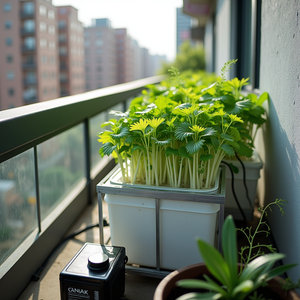
Most of the 2026 hype footage - from TikTok vertical demos to Instagram balcony builds like the one in this post - shows fast leafy greens and herbs. Then someone buys the same system and tries to run:
- Large, top-heavy tomatoes in a slim tower.
- Peppers in tiny Kratky cups.
- Heavy cucumbers in a 9-pod countertop unit.
The system isn’t “bad” - the crop is a mismatch. DWC and larger buckets excel with bigger plants because you can give each root zone real volume and oxygen. Towers and dense kits shine with small-rooted, quick crops.

Why These Mistakes Happen (And What’s Really Going On In 2026 Beginner Systems)
Marketing Is Built Around Capacity, Not Reliability
Retail listings and social clips focus on headline numbers:
- “60 pod hydroponic kit”
- “20/28/36 Holes Vertical Aeroponic kit”
- “30 Pods Hydroponics Tower”
The constraints that actually decide whether a beginner has a good time are buried:
- Reservoir volume versus plant count.
- Pump duty cycle and noise.
- Access for cleaning, top-ups, and pH/EC checks.
Many 60 pod hydroponic kit designs combine a relatively small reservoir with a tall, branched distribution system. That creates tight tolerances: you must keep water levels, EC, and pH in a narrow band while the system is less forgiving of blockages or air-locks than a single big DWC tub.
The Physics Behind “Forgiving” vs “Fussy” Systems
From a grower’s perspective, the biggest difference between DWC, towers, and plug-and-play hybrids is how much buffer they give you against your own mistakes.
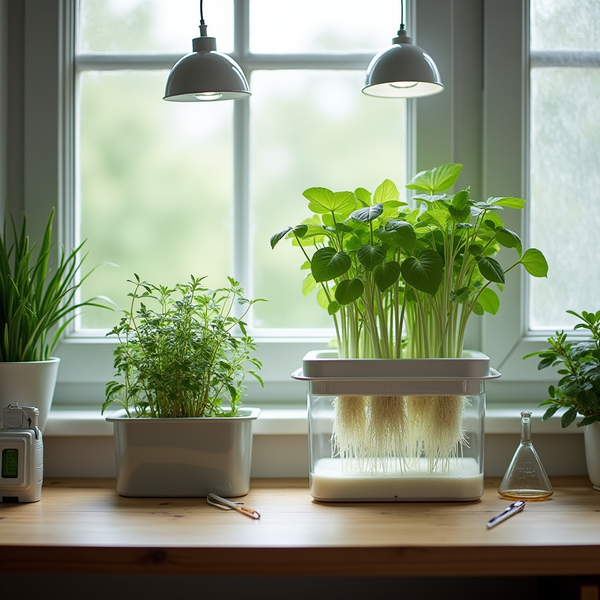
- DWC (Deep Water Culture): Lots of water, constant oxygen. A 40–80 L tote, Kratky/DWC hybrid, or “bubbler” bucket changes slowly. If your pH drifts or your EC is a bit off, plants rarely crash overnight. If the air pump stops, roots have some time, especially in cooler water.
- Towers and aeroponics: Minimal root-zone volume, very high oxygen when running, extremely fast stress when something fails. If the pump or timer stops under strong lights, roots can dry and cook in under an hour.
- Passive Kratky: Very stable if you sized the reservoir correctly and choose short-cycle crops. No moving parts means no mechanical failure modes, but if you undersize volume, it quietly runs dry.
- Plug-and-play countertop kits: Small volumes and thin plumbing. They self-circulate every few minutes on small pumps, but pH and EC can swing quickly because there isn’t much water to buffer change.
That’s why experienced DWC growers like Hoocho often prefer fewer, larger systems with good air and simple plumbing: the water mass buys you time and stability, which is exactly what a beginner needs.
Social Media Rewards “Showpiece” Systems, Not Serviceability
On TikTok and Instagram, towers and aesthetic balcony builds dominate because they look impressive. The Agrotonomy videos are a great example of towers used well and maintained carefully.
What you rarely see:
- The grower scrubbing biofilm out of internal channels.
- Disassembling a tower to fix a hidden leak.
- Trying to get a cheap timer to survive a humid grow tent.
This creates a skewed expectation where beginners underestimate maintenance overhead. Towers and dense kits have more parts:
- Pumps, manifolds, and drippers.
- Multiple seals and joints.
- LED driver, integrated timers, app control in some “smart” units.
Every part is a failure mode. DWC: bucket + lid + airstone. Passive Kratky: container + lid. That simplicity is why many growers end up migrating back to “boring” tubs after a year with towers.
Aquaponics Adds Biological Complexity You Can’t See
Hydroponic beginners control nutrients by measuring EC and adjusting a salt mix. Aquaponics adds:
- Ammonia from fish waste.
- Nitrite and nitrate from bacterial conversion.
- Carbonate hardness and pH shifts from that biology.
In the Reddit aquaponics question, the main missing piece wasn’t hardware, it was understanding that you need a cycled biofilter sized to your fish load, not just a pump and a few plant pots. That’s a big leap for someone who hasn’t yet dialed in simple hydroponic pH 5.8–6.2 and EC 1.2–1.8 for lettuce.

How To Fix System-Choice Mistakes Before You Buy
Step 1: Decide If You Want “Training Wheels” Or A Workhorse
For an indoor hydroponic system for small apartments, you should be brutally honest:
- If you want training wheels (low effort, low risk, mostly herbs): buy one good countertop kit and maybe a few Kratky jars. Accept the limited scale.
- If you want a workhorse (consistent salads and herbs, potential to scale): start with a simple DWC tub, then add either a tower or a 60-pod kit later if you still want capacity.
For most people asking “DWC vs tower hydroponics comparison” in 2026, the correct move is:
- First system: DWC or DWC/Kratky hybrid.
- Second system: Tower or 60 pod hydroponic kit if you want the aesthetics and capacity.
Step 2: Match System Type To Your Constraints
If you live in a small apartment (noise and leaks matter):
- Best fit: Countertop unit (6–12 pods) + 1 DWC tote under a bench or on a balcony.
- Avoid: Large towers with external reservoirs in carpeted spaces unless you’re comfortable with plumbing and maintenance.
- Consider: Pure Kratky for a bedroom or office - truly silent, no pump hum.
If you want maximum plants in minimum floor space:
- Best fit: Quality tower (20–30 sites) or well-built 60 pod hydroponic kit, run at 50–70% capacity.
- Key requirements: Reliable pump, accessible plumbing, and either integrated lighting or space to hang real grow lights.
If you’re tempted by aquaponics:
- First do: At least one full crop in simple hydroponics where you log pH, EC, and temperature.
- Then consider: A dedicated small aquaponic system with a proper fish tank and biofilter, rather than hacking a plug-and-play hydro kit.
Step 3: Choose Your Method By Crop Type
Think in categories rather than individual plants:
- Fast leafy greens & herbs (lettuce, basil, mint, cilantro, pak choi):
- Best: Kratky tubs, DWC rafts or buckets, small towers, or countertop kits.
- Watch for: EC ~1.2–1.8, pH 5.8–6.2, warm reservoirs above 24 °C causing root issues.
- Compact fruiting crops (strawberries, small chillies):
- Best: Towers in cooler rooms, larger DWC buckets if you can stake plants and manage EC 2.0–2.5.
- Heavy feeders & large plants (big tomatoes, cucumbers):
- Best: Individual or paired DWC buckets or large Kratky containers (20–40 L per plant) with strong support structures.
- Avoid: Stuffing these into 60-pod hybrids or tall towers with tiny cups.
Step 4: Force Every System To Pass The “Failure Mode” Test
Before you buy, ask four blunt questions:
- If the power goes out for 2–4 hours, what happens?
DWC in a cool room usually survives. Towers and small kits under hot lights may not. Kratky doesn’t care. - If a fitting leaks, where does the water go?
Can you contain a spill in a tray or secondary tub, or will it go straight into floorboards and downstairs neighbours? - Can I clean every part that touches nutrient?
Long, opaque, glued manifolds are biofilm traps. You want removable, scrub-able parts. - How often do I have to touch it?
For a true “indoor hydroponic system for small apartments”, the honest limit for most people is 5–10 minutes every second day. Oversized DWC wins here.
Step 5: Keep Nutrient, pH, And EC Management Simple
Regardless of hardware, the rules stay the same:
- Use a complete hydroponic nutrient formulated for greens and general veg.
- Mix into low-PPM tap or RO blend, one bottle part at a time.
- Aim for EC 0.8–1.4 for seedlings and young greens; 1.4–1.8 for mature lettuce; up to ~2.3 for established fruiting plants.
- Let pH drift gently inside 5.5–6.5 instead of chasing it daily.
Smaller reservoirs in 60-pod hybrids and countertop units will swing faster, so plan more frequent checks and full changes. Bigger DWC tubs can often run 1–3 weeks between full dumps if topped up with plain water and tracked with EC.

What To Watch Long-Term: Noise, Leaks, Expansion, And Real-World Fit
Noise Profile Over Months, Not Days
New pumps are quiet. Six months of continuous duty, mineral buildup, and slightly misaligned feet later, they can be a different story. Before you commit a tower or kit to a bedroom or shared living room, consider:
- Mounting: Soft rubber feet or foam under pumps and reservoirs to decouple vibration.
- Location: Avoid walls that transmit hum into neighbouring rooms.
- Backup plan: If a pump’s noise becomes unacceptable, can you replace it with a higher-quality aquarium or utility pump easily?
Kratky and non-aerated Kratky/DWC hybrids have a huge advantage here: they’re silent. A simple DWC tub with an oversized, decently built air pump is a close second if you isolate it properly.
Leak And Flood Risk As Systems Age
Plastic isn’t forever. UV from grow lights, nutrient salts, and stress on fittings will eventually find weak points. With towers and plug-and-play kits:
- Inspect all bulkheads and joints every few weeks.
- Put the main reservoir in a secondary tray, especially on wood floors.
- Consider a small leak alarm in critical spots.
DWC and Kratky containers are simpler, but still:
- Use food-grade totes or buckets that can handle constant moisture.
- Light-proof them to prevent algae that softens plastics.
Expansion Path: Where Do You Go After System #1?
Consider where you’ll be in a year if you enjoy this:
- Start-with-DWC path: Add another tote, a small tower, or a 60 pod hydroponic kit while keeping the initial DWC as a stable “safety” system that always produces.
- Start-with-countertop path: Use it as a seedling and herb unit, then graduate your larger plants into buckets or a DIY DWC table.
- Start-with-tower path: Be prepared to add at least one DWC or Kratky tub as a backup whenever you travel or want lower maintenance.
If your goal is a long-term, resilient indoor hydroponic system for small apartments, a mixed ecosystem is ideal: DWC or Kratky for reliability, plus one “showpiece” tower or high-density kit.
Beginner Aquaponics vs Hydroponics: When (And If) To Switch
Finally, address the aquaponics itch:
- Start hydroponic: Get comfortable with pH, EC, and basic plant health. Use stable systems (DWC/Kratky) so you can see issues clearly.
- Prototype aquaponics separately: When you do move to fish, follow advice like the commenters in the Reddit thread: proper fish tank, biological filtration, and time to cycle the system before you stock it.
- Do not repurpose your only food system into a fish test-bed. Keep a pure hydro unit running so you’re never learning fish and plant troubleshooting at the same time.
Quick Decision Matrix
Use this as a rapid filter when shopping in 2026:
- I want herbs and salad for 1–2 people, minimal tinkering:
Countertop kit + a few Kratky jars. - I want to learn hydroponics properly and scale later:
40–80 L DWC tote (8–12 sites) with a quality air pump. - I want a vertical showpiece with many plants:
20–30 site tower or 60 pod hydroponic kit, but plan to run 50–70% of sites at a time with fast crops. - I want fish and plants together:
Learn hydro first, then build or buy a dedicated entry-level aquaponics system.
Match that to your space, noise tolerance, and maintenance appetite, and you’ll avoid 90% of the regret purchases currently appearing in Reddit and Facebook posts.

As an Amazon Associate, I earn from qualifying purchases.