Rescuing Failing Aquaponics Systems in 2026: How to Diagnose Sick Fish, Crashing Nitrates and Dying Beds Before It’s Too Late
Common Mistakes: Why “Healthy Numbers” Still End In A Crash
Most aquaponics failures in 2026 are not caused by bad system designs. They are caused by growers trusting the wrong numbers, cleaning the wrong parts, and reacting too slowly when the fish start telling the truth.
A recurring pattern from recent r/aquaponics posts is almost identical to this thread: a system that ran fine, nitrates sat around 40 ppm, plants were happy. Then over a few weeks:
- Nitrates drift from 40 ppm down to 5 ppm or even zero.
- Fish develop excess slime, cloudy patches, or start flashing.
- Beds thin out, growth stalls, or plants suddenly yellow.
- The grower is stuck asking: “Is this disease, underfeeding, a dead biofilter, or my cleaning routine?”
That is the situation this guide is built for. The system used to work. Now it is slowly crashing.
Let’s walk through the big mistakes that turn a wobble into a full system wipeout.
Mistake 1: Reading Nitrate In Isolation
Dropping nitrates trigger panic, but nitrates alone never tell the whole story. A mature aquaponic system will often run between 5 and 80 mg/L NO3 without issues, as long as ammonia and nitrite are controlled and plants are balanced, consistent with overviews like Britannica’s description of aquaponic nutrient cycling.
The mistake: reacting to low nitrates without checking ammonia (NH3/NH4+) and nitrite (NO2-) first.
- Scenario A: NO3 low, NH3/NO2 at 0 → usually underfeeding or too many plants.
- Scenario B: NO3 low, NH3 or NO2 above 0 → biofilter is stressed or crashing.
Those two situations need completely different responses. Guess wrong and you either starve the plants or poison the fish.
Mistake 2: “Cleaning” The Biofilter Like A Kitchen Sink
On Reddit you will see a familiar confession: “I pulled the media and rinsed it until it looked brand new. A few days later my fish were gasping and my nitrates tanked.”
Nitrifying bacteria, which convert ammonia to nitrite and then nitrate, are surface dwellers. They live on your media, in your pipe slime, even in the brown film on your sump walls. If you scrub or chlorinate all that away in one hit, the system behaves like it was never cycled.
The typical pattern after an aggressive clean:
- Ammonia rises.
- Nitrite follows.
- Nitrate drops because there are fewer nitrifiers to finish the process.
- Fish show slime-coat stress and gill irritation.
Mistake 3: Misreading Slime-Coat Problems As “Just Parasites”
Thick, milky slime, cloudy patches, or flashing are often blamed on parasites first. They can be parasites, but in aquaponics, water quality stress is more common than a dedicated parasite outbreak.
If multiple fish develop slime issues at once, right after a water change, heavy cleaning, pH swing, or pump failure, you are almost always looking at:
- Ammonia burn.
- Nitrite toxicity.
- pH shock.
- Low dissolved oxygen.
The mistake is dosing medications into the main loop before you fix the actual chemistry. That can damage the biofilter even further and push the crash over the edge.
Mistake 4: Treating Aquaponics Like Raw Hydroponics When You “Supplement”
Kratky and deep water culture (DWC) hydroponics are used to dialing EC up and down with salt-based nutrients. Aquaponics is a living, microbe-driven system. When growers start correcting “low nitrates” in a mature aquaponic loop by dumping in hydroponic nutrients, three things often happen:
- EC climbs beyond what fish can tolerate.
- Imbalances appear (e.g. high potassium, low calcium, no buffer).
- Biofilter bacteria are forced to adjust to harsher osmotic conditions.
The result can be nice-looking plants and very unhappy fish, at least for a while. If your system started life as pure aquaponics, you need to treat supplements as surgical tools, not a new feeding program.

Why These Mistakes Happen (And What They Really Mean)
Once a system is running, it is easy to relax and treat the test kit like a box-ticking exercise. To rescue a failing system, you need to read trends and relationships, not isolated numbers.
What Dropping Nitrates Are Actually Telling You
Nitrate (NO3) sits at the end of the nitrogen cycle. If your nitrates are sliding from 40 ppm to single digits, one of three things is happening:
- Case 1: Underfeeding or light fish load
Ammonia = 0, nitrite = 0, nitrates slowly fall, plants show pale new growth and overall yellowing. The biofilter is fine. You’re simply not generating enough nitrogen to keep up with plant demand. - Case 2: Biofilter collapse or stall
Ammonia > 0, nitrite > 0, nitrates low or drifting down. The bacteria converting ammonia to nitrite and nitrate are damaged or overwhelmed. This is common after aggressive media cleaning, chlorine exposure, temperature crashes, or pH drops below about 6 where nitrifiers underperform. - Case 3: Dilution and shock
After a big water change or heavy rain, nitrate concentration falls. If the new water is much colder, chlorinated, or has very different pH, the biofilter can also take a hit.
Your rescue plan depends on which of these cases you are in. Guessing is how systems die.
Why Fish Show Slime-Coat Issues Before Everything Else
Fish skin and gills are the early-warning system for your loop. When water quality slides, fish increase mucus production to protect tissues. On the outside, that looks like:
- Thickened slime coat.
- Cloudy patches on flanks or head.
- Flashing against pipes or media.
- Clamped fins and hanging near inlets.
Water quality problems, especially ammonia and nitrite spikes, are among the most common triggers in closed recirculating systems, as echoed across many grower reports and aquaculture texts. True parasite outbreaks tend to start with a subset of fish, often after new stock is introduced, and diversify into more specific signs like visible spots or ulcers.
How “Good Intentions” Damage Biofilters
Most biofilter crashes are human-made:
- Washing all media in hot or chlorinated tap water.
- Scrubbing every surface until it looks brand new.
- Running strong oxidizing cleaners through the plumbing.
- Dosing the entire system with fish medication designed for bare-glass aquariums.
Nitrifying bacteria are slow growers compared to heterotrophs. Once you knock them down, you are back in “cycling” mode. The system may take days to weeks to fully re-stabilise, and during that time fish are living on a knife edge.
Why Kratky / DWC Add An Extra Layer Of Confusion
When you bolt DWC rafts or Kratky-style tubs onto an aquaponic loop, you merge two worlds:
- Aquaponics, where nutrient levels are produced biologically and constrained by fish health.
- Hydroponics, where you usually chase ideal EC and pH directly.
Growers used to pure hydro often see low nitrates and immediately think “I need to bump EC.” In a fish-driven system, your first moves should be feed rate, stocking density, and biofilter health, not a bag of salts.

How To Fix A Failing Aquaponics System: Step-By-Step
Now the practical part. You have fish looking off, nitrates dropping, plants unhappy. This is your rescue protocol.
Step 1: Snapshot The System (Within 15 Minutes)
Before touching anything, take measurements and notes:
- Ammonia (NH3/NH4+).
- Nitrite (NO2-).
- Nitrate (NO3-).
- pH.
- Water temperature.
- EC or TDS (if you have a meter).
Then observe:
- Fish: gasping, flashing, clamped fins, hanging at the surface or in corners.
- Water: clarity, off smells (rotten egg smell points to anaerobic zones).
- Plants: yellowing pattern (new vs old leaves), burnt tips, wilting.
Write it down. A single reading matters less than how those numbers move over the next 24 to 72 hours.
Step 2: Classify The Nitrate Problem
Use your snapshot to classify which scenario you are in:
- Underfeeding / undersized fish load
NH3 = 0, NO2 = 0, NO3 low, plants generally pale. Fish look fine. Biofilter is likely healthy. You need more nitrogen input, not more cleaning. - Biofilter stress or crash
NH3 > 0.25 mg/L or NO2 > 0.25 mg/L. NO3 lower than usual. Fish may be gasping, showing red gills, or producing excess slime. The filter bacteria are compromised and you are effectively re-cycling the system. - Dilution and shock
Numbers changed after a major water change, rain event, or pump outage. Nitrate dropped because you physically removed it or slowed production. You may also see temperature or pH swings.
Step 3: Stabilise Fish First
Fish are the limiting factor. Plants can wilt and recover; dead fish do not bounce back.
- Maximise dissolved oxygen: Add or upsize air stones, venturi inlets, or splashing returns. If you are running DWC, make sure rafts are not choking surface gas exchange.
- Reduce feeding: If ammonia or nitrite are above 0, cut feed to a light ration or pause entirely for 24 to 72 hours. Healthy, adult fish can handle short fasts.
- Consider system salt (if plants allow): Non-iodized sodium chloride at 1 to 3 g/L (0.1 to 0.3%) helps with nitrite toxicity and slime-coat support. Dissolve fully in a bucket and add slowly to a high-flow area. If you grow salt-sensitive crops (strawberries, some herbs), consider a separate hospital tank instead.
- Dim stress: Reduce light intensity over the fish tank, avoid banging or sudden movements, and skip netting/handling unless it is for emergency relocation.
Step 4: Protect And Rebuild The Biofilter
While the fish stabilise, your main job is biofilter triage.
- Stop aggressive cleaning immediately: No more scrubbing media or pressure-washing grow beds.
- Keep media wet and aerated: If you need to stop flow temporarily, keep biofilter media submerged in oxygenated water or trickling, not drying on a bench.
- Use only dechlorinated water: Any top-ups or partial changes must be fully dechlorinated and temperature-matched.
- Stabilise pH: Nitrifiers prefer around pH 7 to 8, but most aquaponics systems run 6.6 to 7.2 as a compromise. If you are under 6.4 and seeing ammonia or nitrite, start slowly buffering up using potassium bicarbonate or a combination of calcium carbonate and potassium compounds. Move pH no more than about 0.2 to 0.3 per day.
- Seed bacteria where possible: Adding a small amount of mature media from a healthy system, pond, or aquarium can shorten recovery. Commercial nitrifying bacteria products can help, but do not expect instant fixes; they still need time and proper conditions.
Step 5: Manage Ammonia & Nitrite During Recovery
While the biofilter regrows, you are managing a temporary toxicity problem.
- Partial water changes: 10 to 30% at a time, dechlorinated, temperature- and pH-matched. Especially important if ammonia > 0.5 mg/L or nitrite > 0.5 mg/L.
- Frequent testing: Check ammonia and nitrite daily, or twice daily if levels are high. Do not increase feeding until both are back at 0 for several days in a row.
- Maintain strong aeration on biofilters: Whether it is a moving bed, media bed, or dedicated bio-reactor, oxygen is fuel for nitrification.
Step 6: Bring Nitrates Back Into The Healthy Zone (Safely)
Once ammonia and nitrite are at 0 and stable, you can start pushing nitrates back into a productive range.
- Increase feed rate gradually: Add 10 to 20% more feed every few days while watching for uneaten food and any uptick in ammonia. The goal is to reach a steady-state nitrate level (often 5 to 40 ppm for mixed-plant systems) where plants are vigorous but fish are not overloaded.
- Match plant load to fish output: If you have massive beds of hungry fruiting crops but a light fish load, temporarily thin plants, add more greens, or reduce planting density while your biofilter rebuilds.
- Surgical supplementation (if you know what you are doing): Rather than dumping in complete hydroponic salts, consider plant-side supplements such as chelated iron, potassium bicarbonate, or calcium sources that also help with pH stability. Apply in small, measured doses and track EC so you do not creep into a range that stresses fish.
Step 7: Handle Slime-Coat And Suspected Disease Correctly
If slime-coat issues persist after water quality is stabilised, you may be dealing with parasites or opportunistic bacteria on top of initial stress.
- Hospital tank over medicating the main loop: If you need to use medications, set up a separate, well-aerated tank using water from the main system and treat fish there. This protects your plants and biofilter.
- Focus on supportive care in the main system: Clean, well-oxygenated water, low stress, and adequate but not excessive feed give fish a chance to recover without nuking the microbiome.
- Watch progression: If only new fish are affected or you see specific signs like white spots (ich) or cottony lesions (fungal/columnaris), targeted treatment becomes more important. Where possible, get a local fish vet, lab, or experienced aquaculturist to confirm diagnosis.

What To Watch Long-Term: Keeping A “Once-Crashed” System Stable
Once you have pulled a system back from the edge, your risk of another crash is higher for a while. The fix is not more gear; it is disciplined monitoring and gentle adjustments.
Set Non-Negotiable Test Benchmarks
For a mixed-media or DWC aquaponic system running leafy greens and light fruiting crops, sensible long-term targets are:
- Ammonia: 0 mg/L.
- Nitrite: 0 mg/L.
- Nitrate: typically 5 to 80 mg/L, depending on plant load and harvest cycle.
- pH: 6.6 to 7.2 for most species combinations.
- Temperature: matched to your fish species; many warm-water species (tilapia) like 22 to 28°C, cool-water fish (trout) much lower.
- EC/TDS: whatever your system naturally runs at with comfortable fish and strong plants. Do not chase an arbitrary hydroponic EC chart unless you know exactly how it interacts with fish tolerance.
Log these weekly at a minimum. During or after a rescue, daily logging is worth the effort.
Adopt “Filter-Safe” Cleaning Habits
Think of your system as a distributed biofilter, not just the canister or barrel labelled “filter.”
- Rinse mechanical filter pads or screens in system water, not chlorinated tap water.
- Rotate cleanings so you never sterilise every component at once.
- Accept some biofilm on pipes and tank walls as normal and useful.
Plan For Power And Pump Protection
A pump or aeration failure can take a mature system from stable to crashing in hours. Build in redundancy and alerts where you can:
- Use separate circuits for pump and air where possible.
- Consider battery-backed air pumps or simple UPS units for critical aeration.
- Set reminders to clean pump intakes and check for partial blockages.
Dial In Kratky / DWC Add-ons Without Stressing Fish
If you are running Kratky or DWC beds on aquaponic water:
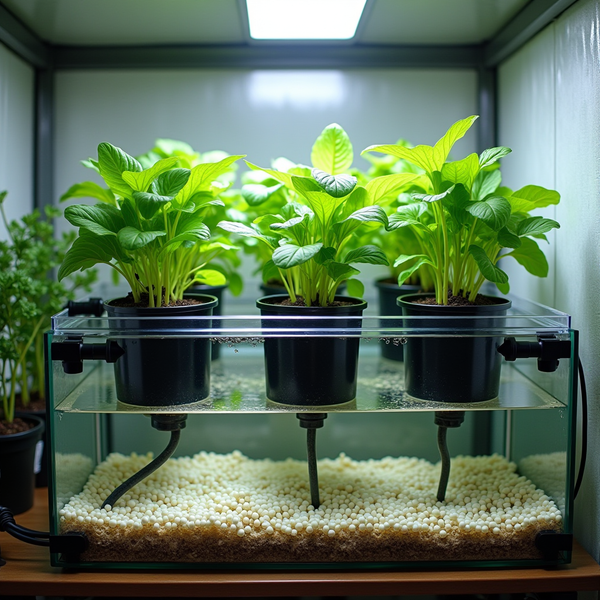
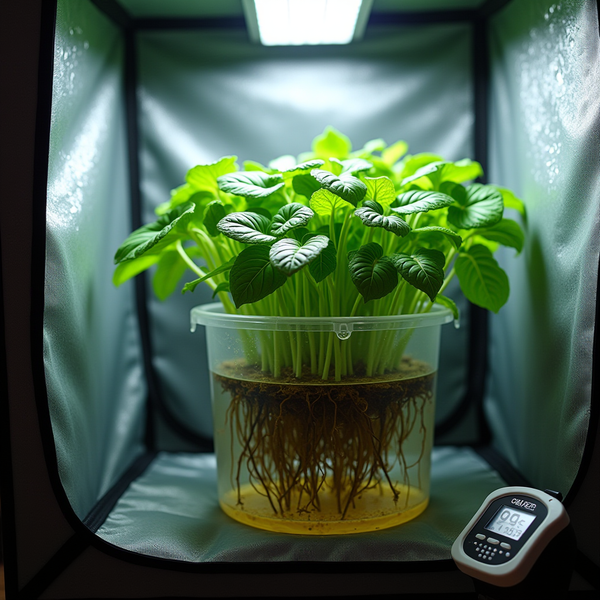
- Maintain a proper air gap under net pots in Kratky bins so roots have both water and oxygen.
- In DWC, keep a dedicated air stone grid under the rafts for root health.
- Measure EC in DWC/Kratky zones. If it climbs over time due to evaporation, top up with plain, dechlorinated water, not nutrient concentrate.
- If you need to fine-tune pH for these beds (for example, running 5.8 to 6.2 for demanding greens), keep them hydraulically separated from the fish loop. Adjust pH only in the plant side, not in the main fish tank.
Use Plant Symptoms As A Secondary Sensor
Plants are slower to respond than fish but give useful trend data:
- Uniform yellowing from the bottom up often points to nitrogen deficiency.
- Interveinal chlorosis on new growth often hints at iron or micronutrient issues.
- Tip burn with otherwise dark foliage can indicate high EC or specific ionic imbalances.
Combine plant observations with your water tests and fish behaviour for a three-way diagnostic loop. That is how you catch a slow crash while it is still easy to fix.
Evidence, References & Why This Works In The Real World
Aquaponics works because it ties together three biological engines: fish, plants, and microbes. As overviews like this Britannica explainer describe, fish waste provides ammonia, nitrifying bacteria convert it to nitrate, and plants capture that nitrate while returning cleaner water to the fish.
When systems crash in mid-life, the root cause is nearly always one of the following:
- Biofilter disruption (cleaning, chemicals, pH or temperature shock).
- Mismatch between fish input and plant demand (under- or overstocking, underfeeding, or massive plantings).
- Infrastructure failures (pumps, aeration, or power outages) that ripple into water quality issues.
The rescue process in this guide is built around how that biology actually works:
- Test-driven triage: You stabilise the system by targeting ammonia and nitrite first, because those are immediately toxic to fish and direct indicators of biofilter performance.
- Biofilter preservation and gentle recovery: By avoiding harsh cleaning, keeping media aerated, and stabilising pH, you protect the nitrifiers that keep the entire nitrogen cycle turning.
- Controlled reloading: You only ramp feed and stocking back up after the biofilter can handle it, using nitrate as a “pressure gauge” for system capacity.
- Isolated treatments: When medications are necessary, moving fish to a separate hospital tank preserves the microbial and plant life that makes aquaponics different from bare-glass aquariums.
This is exactly the pattern you see in successful recovery stories on communities like r/aquaponics: the growers who save their systems are the ones who stop guessing, start testing, and make small, targeted moves instead of panicked system-wide changes.
If your nitrates are dropping, your fish are looking rough, and you are not sure whether to feed more, clean more, or shut it all down, step through the framework above in order. Treat it like a live lab: measure, adjust, record, and let the biology catch up. That is how you turn a slow-motion crash into a controlled recovery instead of a restart.
As an Amazon Associate, I earn from qualifying purchases.