Hydroponics in Tiny Apartments: Evidence‑Based Design for Balconies, Windowsills and Indoor Corners
Most apartment growers think they need either a big balcony or an expensive tower to make hydroponics worth it. The new UC Master Gardener “Hydroponics Gardening in Small Spaces” project shows the opposite: with the right layout, a few repurposed containers on a balcony or windowsill can quietly crank out greens on par with much larger systems in real trials.
This article translates those balcony‑scale results into concrete patterns you can copy as a renter: slim DWC tubs vs micro‑NFT rails, how to park a reservoir so it never annoys your neighbors, and crop mixes that research teams actually got to harvest in cramped, imperfect spaces.
1. Common apartment hydroponic mistakes
1.1 Treating “small space” as a mini version of a full grow room
Most balcony hydroponic garden setups you see online are just shrunken versions of commercial systems: open reservoirs, oversized pumps, and plumbing that assumes you own the building if it leaks.
What UC’s small‑space work makes clear is that balconies, windowsills and indoor corners behave differently:
- Weight limits and railing loads matter.
- Wind exposure can dry out roots and knock over top‑heavy systems.
- Shifting shade patterns make “full sun crop lists” unrealistic.
- Building rules often restrict drainage, visible clutter, or permanent fixtures.
The result: people buy big gear, cram it into a tight space, then fight leaks, noise and inconsistent crops.
1.2 Picking the wrong system type for the space
The UC Master Gardener Orange County hydroponics project was designed specifically for people without yards, using simple Kratky containers on balconies and indoor ledges to grow leafy greens successfully as documented by UC ANR. Their message is clear: the system must match the micro‑site.
Common mismatches:
- Shaded balcony, power outlet available: Grower buys a big static Kratky tub designed for full sun and wonders why lettuce stretches and tastes bland.
- Sunny, windy balcony, no outlet: Grower installs active DWC with a long extension cord; pump noise and cord routing annoy neighbors and landlord.
- Narrow windowsill: Grower forces a deep tote there; roots thrive, but the system is heavy and one accidental bump could dump nutrient solution indoors.
1.3 Under‑sized, unstable reservoirs
In tiny spaces, growers often use containers that “just fit” instead of ones that hold enough solution. That is a problem for hydroponics. UC water‑quality work shows how fast pH and EC shift in small volumes as plants feed and water evaporates in urban food production systems. Too little volume means:
- pH swings outside the 5.5–6.5 target range.
- EC spikes above ideal 1.5–2.5 mS/cm for leafy greens as summarized in UC hydroponics guides.
- Rapid temperature shifts that stress roots.
Combine that with a wobbly stand or narrow railing and you have a nervous grower, unhappy neighbors, and mediocre plants.
1.4 Ignoring balcony microclimates
UC’s small‑space outreach and Grozine’s balcony coverage both point out that balconies are not “outdoor lite” for DWC and indoor vs outdoor hydroponics:
- Some balconies bake and swing widely in temperature.
- Others are shaded all day, relying on reflected light.
- Wind channels between buildings can knock over tall towers.
When you ignore that and copy a generic “full‑sun patio” build, you get stretched plants, salt‑stressed roots, or systems that need constant nursing.

2. Why these mistakes happen (and what UC’s data says instead)
2.1 Most advice assumes space, not constraints
Classic hydroponic system design starts with “what yields do you want?” and works backward. The UC Master Gardener small‑space project flipped that: they started with balcony‑sized, upcycled containers and asked “what can we reliably harvest here?” Grozine’s coverage highlights:
- Repurposed totes and buckets used as Kratky reservoirs.
- Layouts sized to fit narrow patios and balconies.
- Crop choices restricted to what actually thrived in that footprint.
Through that lens, the “mistakes” above are just the wrong starting question. In a tiny apartment, you design for stability, quiet operation and neighbor‑proof safety first, then fill the remaining capacity with plants.
2.2 Misunderstanding passive vs active water culture
UC outreach materials and Kratky fact sheets describe the Kratky method as a non‑circulating, passive system where a single filling of nutrient solution carries a crop like lettuce through to harvest without pumps or water changes in their Kratky hydroponics handout. That is ideal for balconies and windowsills with no outlets.
DWC, by contrast, suspends roots in an aerated reservoir and must have constant airflow from a pump as Grozine’s DWC guide explains. On an exposed balcony this means more noise, more failure points, and more planning around weather.
When growers treat Kratky like “DWC without a pump” or treat DWC like “Kratky with bubbles,” they mis‑size reservoirs and misjudge risk. UC’s small‑space trials keep it simpler: passive Kratky for the lowest‑risk locations, compact DWC only where power and stability are available.
2.3 Underestimating how fast small reservoirs drift
In their water‑quality guidance for hydroponics and urban food production, UC specialists stress that pH and EC are most volatile in small volumes, especially with warm temperatures and fast‑growing crops in Southern California case studies. The same nutrient recipe behaves very differently in:
- a 60 L tote under partial shade, vs
- a 10 L storage box in full sun on a balcony rail.
Rapid evaporation spikes EC; root exudates and uptake shift pH. That is why UC hydroponics materials emphasize starting with low‑salinity water and keeping pH in the 5.5–6.5 window and EC near 1.5–2.5 mS/cm for leafy greens in their Orange County hydroponics overview.
2.4 Over‑ambitious crop selection
UC’s balcony‑scale project intentionally focused on leafy greens and herbs, in line with broader research that marks them as the best fit for passive systems and small spaces in UC’s hydroponics summaries. Fruiting crops like tomatoes and peppers work in DWC or recirculating systems, but they demand higher EC, more volume, more trellising, and stronger light as Grozine’s DWC articles point out.
When balcony growers start with big plants in small, under‑aerated reservoirs, poor results are not “hydroponics failing” but a design mismatch that UC trials largely avoid.
3. How to fix it: balcony‑first, windowsill‑first design patterns
3.1 Step 1: Classify your space in 30 seconds
Before you choose a system, pin down four things. Do this once; it defines 80% of your design.
- Light class
- Bright sun 4–6+ hours on clear days.
- Bright shade 2–4 hours or strong reflected light.
- Low light less than 2 hours; you will need LEDs for reliable vegetables.
- Floor space
- Rail‑only: Just the balcony rail and a narrow ledge.
- Corner: 60–80 cm square patch in one corner.
- Strip: 30–40 cm wide strip along the wall.
- Power
- No outlet nearby.
- Outlet within 2–3 m.
- Exposure
- Sheltered: low wind, overhead cover.
- Exposed: strong wind or driven rain.
Now map that type to a system.
3.2 System selection blueprint
Pattern A: No power, any light, minimal risk tolerance
- Best fit: Kratky jars, slim Kratky tubs, or rail‑mounted passive planters.
- Where UC data points: UC Master Gardener trials used repurposed containers with simple Kratky lids to grow leafy greens on balconies, patios and indoor ledges without electricity as highlighted in Grozine.
Concrete layout:
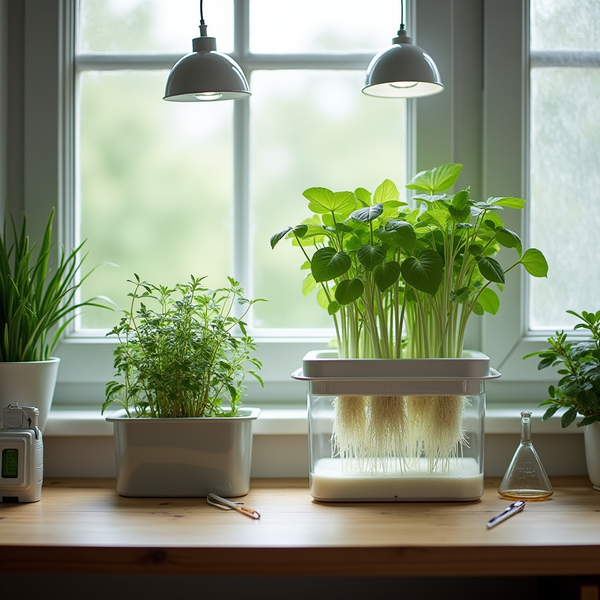
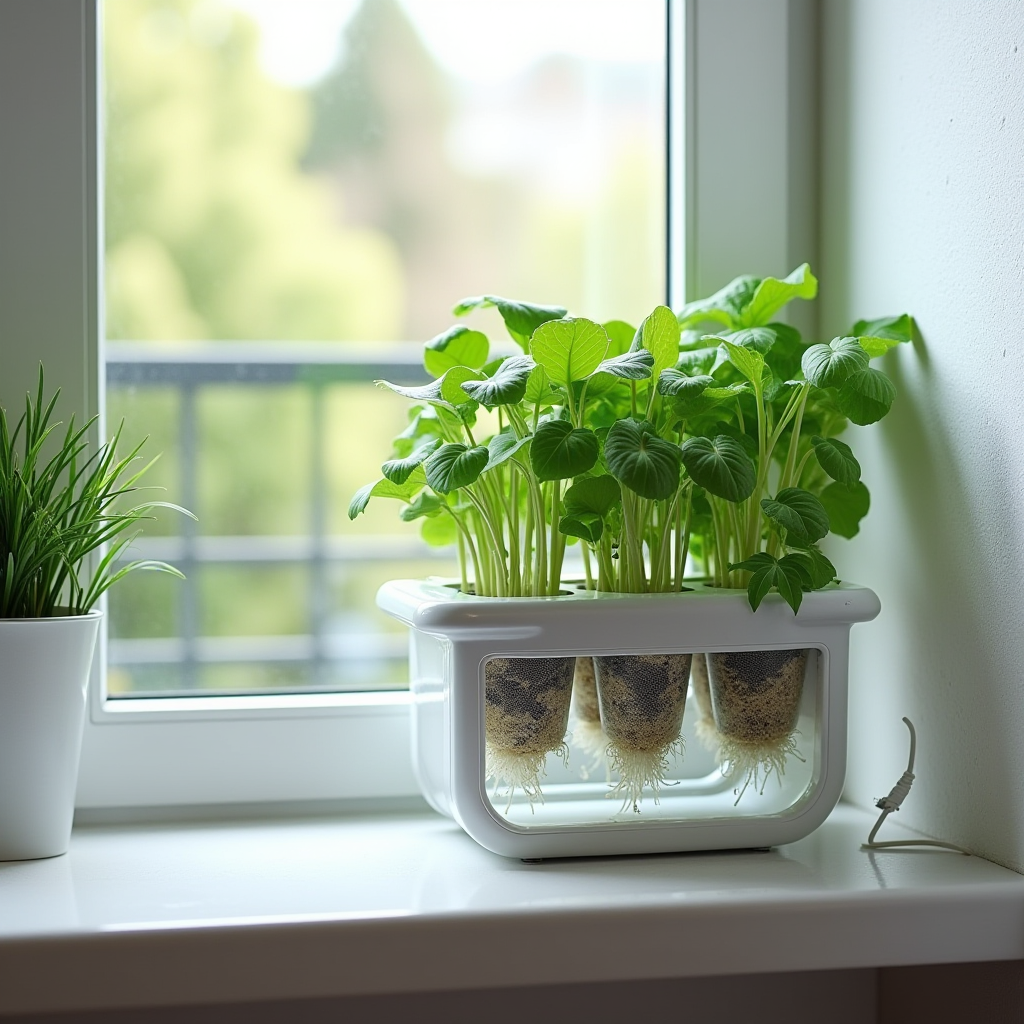
- Windowsill: Three to six wide‑mouth jars or small tubs with Kratky lids for basil, lettuce and cilantro.
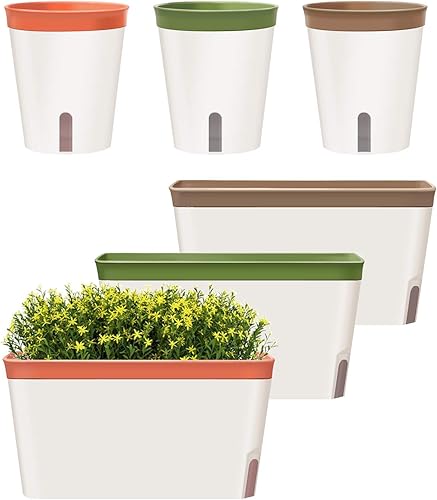
- Balcony rail: A 60–80 cm long, 15–20 cm deep opaque trough with 4–6 net cups, secured to the rail with brackets.
- Indoor corner near a window: A two‑tier wire rack with Kratky tubs on each shelf, plus a compact LED if light is marginal.
Pattern B: Power available, corner or strip, moderate risk tolerance
- Best fit: Compact DWC tub or bucket system.
- Where UC & Grozine point: DWC is recommended as a productive, relatively simple water‑culture method wherever there is steady light and basic environmental control in Grozine’s DWC overview.
Concrete layout:
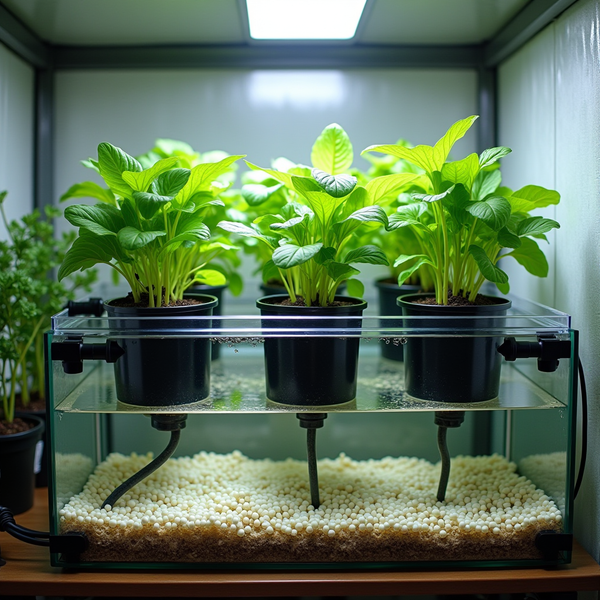
- Balcony corner: One 40–60 L light‑tight tote with 4–6 net pots; air pump sits on a shelf above the waterline so it cannot siphon back in a power cut.
- Indoor corner: Single DWC bucket or tote under a dedicated LED, with herbs and leafy greens only.
- Strip along wall: Two small DWC tubs (about 20–30 L) instead of one huge one, to spread weight and reduce spill risk.
Pattern C: Power available, strong light, vertical clearance
- Best fit: Micro‑NFT rails or a compact tower.
- Where data points: Vertical hydroponics articles and systems like HydraTower show that stacking leafy greens vertically on balconies can produce many plants in a tiny footprint, as long as you accept pump, plumbing, and maintenance overhead in Grozine’s vertical hydroponics guide and HydraTower coverage.
Concrete layout:
- Balcony corner: 1 small tower or a pair of stacked NFT rails draining to a floor‑level reservoir tucked into the corner.
- Indoor corner with grow tent: Short tower or staggered rails inside the tent, connected to a covered reservoir.
3.3 Sizing reservoirs for stability, not just fit
Use this rule set, derived from UC water‑quality ranges and practical balcony experience:
- Leafy greens & herbs in Kratky: Aim for 3–4 L of solution per plant for a full grow cycle; more in hot, windy locations.
- Leafy greens in DWC: 5–8 L per plant, depending on heat and plant size.
- Compact fruiting crops in DWC: 15–20 L per plant minimum, and only if you have the structure and light.
Always keep reservoir height below your lowest risk line:
- Below balcony door frame, so a spill stays outside.
- Below rail height, so wind cannot flip it outward.
- Supported by load‑bearing points, not flimsy tiles.
UC’s Simple Outdoor Hydroponics sheet reminds balcony growers that even “a bucket or two” is enough to produce food safely if the containers are robust and placed where they cannot tip in their patio hydroponics guide.
3.4 Making reservoirs quiet and neighbor‑proof
Your design goal: if the system fails, the only casualty is the crop.
- Contain spills: Put DWC totes or towers inside a slightly larger tray or boot mat with a 2–3 cm lip.
- Anchor everything: Strap tall systems to balcony rails or walls; use brackets rather than just hooks.
- Silence pumps: Put air pumps on foam pads, hang them from cords, or place them in a ventilated box to cut vibration noise.
- Hide the hardware: Run tubing along railings or walls with clips so nothing dangles into shared space.
These are the details that keep strata, landlords and downstairs neighbors on your side.
3.5 Light and airflow tricks for tricky balconies
From UC balcony‑scale outreach and Grozine’s indoor/outdoor comparisons, a few patterns emerge:
- Shaded balconies:
- Use light‑colored walls and reflective surfaces behind plants to bounce light into the canopy as noted in outdoor blackout growing tips.
- Add a small LED bar above the row for 4–6 hours to hit a realistic daily light integral for greens.
- Stick to lettuce, spinach, Asian greens and shade‑tolerant herbs.
- Wind‑exposed balconies:
- Use lower, heavier reservoirs instead of tall towers.
- Install a simple windbreak (mesh, lattice) at rail height.
- Choose compact, non‑vining crops so they do not act like sails.
- Hot balconies:
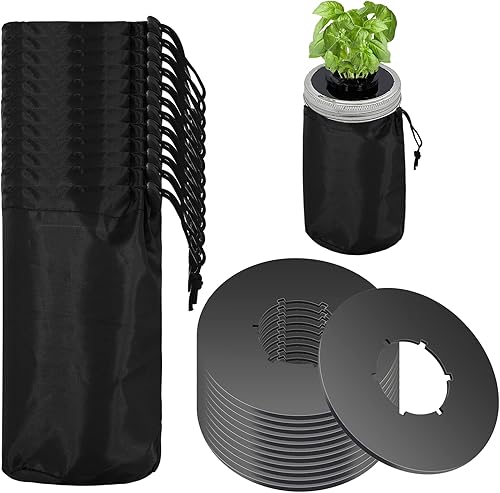
- Shade the reservoir, not the plants: reflective covers or white lids keep nutrient temperature down.
- Run darker‑leaf greens and herbs; avoid cool‑loving lettuce in peak heat.
- Top up with cool water more often to keep EC and temperature in check.
4. What to watch long‑term: crops, maintenance and benchmarks
4.1 Crop mixes that work in real tiny‑space trials
UC’s Kratky‑based balcony project and related hydroponics research agree with Grozine’s system tests: tiny apartments favor crops that give you weight and flavor per litre, not per plant.
Tier 1: Always reliable in Kratky or DWC tubs as UC’s leafy‑green Kratky work shows:
- Loose‑leaf lettuce and salad mixes.
- Spinach, arugula, Asian greens (tatsoi, pak choi).
- Fast basil varieties, cilantro, parsley.
Tier 2: Good, but choose compact cultivars as herb‑specific hydro guides note:
- Mint, oregano, thyme, chives.
- Small chard and kale types in deeper tubs.
Tier 3: Only when your system is proven in DWC grow reports:
- Dwarf tomatoes and peppers in DWC buckets.
- Compact cucumbers on tied trellises.
For a first balcony build, mimic UC’s project: all leafy greens and herbs in repurposed Kratky containers, then layer DWC or a small tower on top once you have the basics dialed in.
4.2 pH, EC and top‑up habits
Hydroponic water‑quality guidance from UC and others converges on simple maintenance benchmarks:
- pH target: 5.5–6.5 for mixed leafy greens and herbs as UC hydroponics guidelines outline.
- EC target: 1.5–2.0 mS/cm for greens; 2.0–2.5 mS/cm for heavy‑feeding herbs or compact fruiting crops as summarized in EC charts.
Practical routine for tiny reservoirs:
- Check pH and EC every 2–3 days; daily in hot weather.
- Top up with plain water to your original fill line when level drops by about 25–30%; this keeps EC in range.
- Adjust pH with very small doses of acid or base; aim for nudges, not swings.
- Fully change solution every 2–3 weeks in DWC; in Kratky, refill when a crop finishes.
4.3 Visual benchmarks for healthy balcony plants
Use these quick checks instead of guessing:
- Roots: Creamy white to light tan, no slimy feel, no sulfur smell.
- Leaves: Even green on new growth; pale new tips with dark older leaves often signal low EC or specific deficiencies.
- Solution: Clear and free of heavy algae; a faint tint from nutrients is fine.
- Growth rate: For lettuce in a well‑lit Kratky tub, you should reach harvest in about 5–7 weeks from transplant, matching the 50‑day target used in Kratky demonstrations for low‑cost leafy production.
4.4 Seasonal adjustments for apartments
UC extension programs and Grozine’s outdoor hydroponics coverage note that in many climates you can run outdoor balcony hydroponics most of the year with small tweaks in their indoor vs outdoor tips:
- Cool seasons: Run lettuce and cool‑season greens outdoors; bring herbs indoors at night if frost is possible.
- Hot seasons: Shift more production to shaded windowsills or indoor corners with LEDs; use heat‑tolerant greens and herbs outside.
- Stormy periods: Temporarily move DWC buckets indoors; leave only low, heavy Kratky tubs outdoors.
The payoff: instead of constantly rebuilding your system, you glide through the year by changing crops and locations while the core gear stays the same.

Wrapping it up: a renter‑proof blueprint
The UC Master Gardener “Hydroponics Gardening in Small Spaces” project, and Grozine’s coverage around it, give us something balcony growers rarely get: proof that very modest hydroponic layouts work on real apartment balconies, not just in labs or glossy marketing shots.
If you want an apartment hydroponics system design that behaves itself and actually produces, follow this sequence:
- Classify your space for light, floor area, power and exposure.
- Pick a system pattern designed for that type: passive Kratky first, then DWC or vertical if the site and your tolerance allow it.
- Size reservoirs for stability and easy pH/EC management, not just for available inches.
- Choose a crop mix biased toward leafy greens and herbs until your system runs on autopilot.
- Use UC‑backed ranges for pH (5.5–6.5) and EC (1.5–2.5 mS/cm) as your guardrails.
Start with one quiet, well‑anchored tub on a balcony or windowsill. Once that produces a couple of rounds of greens without drama, you will know exactly what kind of expansion your space and your lifestyle can support.
As an Amazon Associate, I earn from qualifying purchases.