Most remote sites copy restaurant menus into a grow room. That is why their hydroponic systems underperform.
If you try to grow everything everyone likes, you burn power, overload staff, and still end up with gaps in harvest and morale. The crews thriving in Antarctica and aboard long-duration missions follow a different rule: treat fresh produce as a tightly engineered system, not a wish list.
In this guide we turn lessons from Australian Antarctic stations and spaceflight research into a concrete, year-round hydroponic crop and harvest plan sized for small, closed environments: expedition bases, vessels, remote mines, and off-grid homesteads. You will get a proven crop mix, weekly sow/harvest cadence, and food-safe standard operating procedures (SOPs) that non-experts can run without tanking yield or safety.
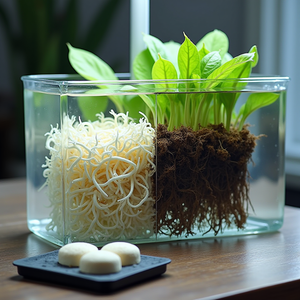
We will focus on compact hydroponic formats that suit tight spaces and limited maintenance windows: Kratky for passive redundancy, Deep Water Culture (DWC) for bulk greens, simple NFT channels for leafy crops, and stackable microgreen trays.
1. Common mistakes when designing year-round hydroponic menus in remote sites
1.1 Growing what people "like" instead of what the system can support
Fresh reporting from Australia’s Casey station shows a small, controlled-environment farm consistently pushing out around 12 kg of produce a week (sometimes up to 17 kg) for a winter crew of ~20 people, using just 30 m² of grow space and 3–4 hours of labor per day, by leaning into fast, high-yield crops like leafy greens, cucumbers, herbs, and tomatoes rather than chasing every possible vegetable [ABC report].
By contrast, most first-time remote deployments over-allocate to slow, energy-heavy fruiting crops (large peppers, vining tomatoes, strawberries) and under-allocate to the things that deliver weekly morale boosts: salad greens, crunchy cucumbers, herbs, microgreens, and a small rotation of “treat” crops.
1.2 Designing for peak yield instead of predictable weekly harvest
It is easy to fill a room with lettuce and brag about a huge one-time harvest. It is harder to maintain 3–5 kg of fresh greens and herbs every week, all year, without feast-famine cycles. Many systems ignore staggered sowing and recovery time for operators, so transplant and harvest days become overwhelming, followed by long gaps.
1.3 Ignoring psychological value in crop selection
Spaceflight researchers are blunt: crews do not just need calories, they need a psychologically supportive food system. That means color, aroma, and some “luxury” variety, not just functional bulk greens, as argued in this review of Mars mission food systems. Many remote-garden plans hit nutritional targets but neglect herbs, edible flowers, and occasional fruiting crops that break menu fatigue.
1.4 Over-complicated systems for non-expert operators
In Antarctica, the winter crew includes people with no horticulture background, yet the farm still runs. Why? Because the system is modular, with simple subsystems that can be isolated, cleaned, and rebooted without taking down everything at once. A common mistake is deploying a single, highly integrated system that fails hard when one pump, one timer, or one valve acts up.
1.5 Food safety as an afterthought, not a design constraint
Closed, remote environments have almost no tolerance for food-borne illness. Yet many small sites run “casual” sanitation: shared knives, no clear “dirty/clean” flow, and inconsistent disinfection of reservoirs and tools. What works in a backyard is unacceptable in a polar station or vessel galley.
1.6 No clear DLI/EC bands by crop class
Finally, system designers often throw all crops under the same light and nutrient recipe. That works until basil stalls at 150 µmol/m²/s while lettuce burns at 350 µmol/m²/s under a fixed photoperiod. Without defined daily light integral (DLI) and EC bands by crop class, you chase problems instead of preventing them.
2. Why these mistakes happen in remote and off-grid hydroponics
2.1 Menu planning is separated from system design
Most projects start with an equipment list, not a menu. Someone specs lights, pumps, and a nutrient brand, then asks later, “What should we grow?” That is backwards. In Antarctica, the food system designers start from the crew’s nutritional and morale needs, then size crop mixes and infrastructure to hit those goals reliably, as highlighted in the Casey station coverage here.
2.2 No clear per-person yield targets
Without a target like “3 kg fresh veg per person per week, with 1.5 kg as greens,” it is impossible to know if the crop plan is appropriate. Systems are either oversold (“We will replace all fresh food!”) or underbuilt (“A few trays in the corner will be ‘nice to have’”).
2.3 Underestimating operator time and skill
On long missions or winter-overs, crew time is the limiting resource, not reservoir size. If your schedule demands two hours of precise pruning and mixing daily, it will break. Systems that lean on Kratky tubs, simple DWC basins, and pre-portioned nutrient concentrates can be managed by non-specialists in 30–45 minutes per day, with a deeper 2–3 hour sanitation block once a week.
2.4 No separation between “production” and “experiment” zones
Operators often mix reliable staple production (lettuce, bok choy, herbs) with “fun” trial crops (melons, dwarf peppers) in the same plumbing loops. That creates conflicting needs for pH, EC, and training, and makes food safety harder to document. Antarctica and space-analogue projects increasingly treat experimental crops as separate modules: different reservoir, different risk.
2.5 Weak or ad hoc sanitation protocols
Many teams assume that because hydroponics uses no soil, contamination risk is low. In reality, biofilm and cross-contamination can build fast in warm, nutrient-rich water. Without defined clean-in-place cycles, disinfectant strengths, and tool-handling rules, remote farms end up with chronic root disease or sporadic GI issues without a clear cause.
2.6 Lighting and nutrient specs copied from hobby guides
DIY guides are tuned for maximum growth, not predictable, efficient output in a resource-constrained habitat. Copying a “1000 µmol/m²/s at 18 hours” recipe into a remote base is a power problem waiting to happen. Remote crews need DLI-based design: enough light for steady growth with minimum waste, and EC bands that tolerate minor mixing errors without burning or stalling crops.
3. How to fix it: crop mix, weekly cadence, and SOPs that work year-round
3.1 Step 1: Set yield targets per person and per square meter
Using the Casey station numbers as a real-world anchor (about 12 kg/week from 30 m²), we can define pragmatic targets for small, closed sites:
- Baseline target for remote crews: 3–5 kg fresh produce per person per week.
- Practical production density: 3–5 kg/week per m² of active grow area with modern LEDs and tight scheduling, assuming mixed crops.
- Minimum viable footprint: For 6 people at 3 kg/person, aim for 4–6 m² of canopy in efficient vertical or rack systems.
Do not aim to grow all calories. Aim to replace the highest-impact fresh items: salads, garnish, crunchy sides, and occasional fruiting “boosters.”
3.2 Step 2: Build an evidence-based crop mix
For remote and off-grid hydroponics, use a four-layer menu stack:
- Layer 1: Leafy staples (50–60% of area)
Leaf lettuce, romaine, pak choi, tatsoi, chard, kale, spinach (if temps allow). These give predictable volume and fiber. - Layer 2: Herbs & aromatics (15–20%)
Basil, coriander, parsley, chives, dill, mint. These transform stored staples and support crew morale. - Layer 3: Microgreens (10–15%)
Radish, broccoli, mustard, sunflower, pea shoots. Extremely fast, nutrient-dense, and flexible: they cover gaps when other crops slip. - Layer 4: Select fruiting crops (10–20%)
Compact cucumbers, cherry or dwarf tomatoes, dwarf peppers, maybe strawberries if power and time allow. These are “treat” crops for psychological support.
The Casey station grow list (lettuce, herbs, cucumbers, tomatoes, beans, and more) shows that cucumbers and tomatoes are feasible in tight, controlled environments when kept compact and well-trained [ABC]. For remote sites, prioritize cucumbers and cherry tomatoes over heavy, low-yield fruits.
3.3 Step 3: Choose system types to match each crop layer
- Leafy staples: DWC rafts in insulated tubs or NFT channels on racks. DWC wins for simplicity and thermal stability in cold climates.
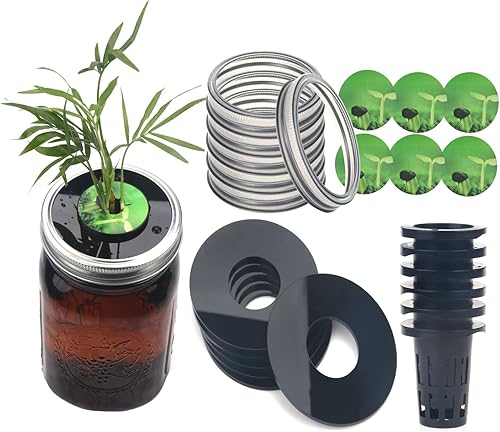
- Herbs: Kratky jars or small DWC modules. Kratky provides passive backup if power is unreliable.
- Microgreens: Flood-and-drain or hand-watered coco/coir mats on shallow trays; even passive capillary mats can work.
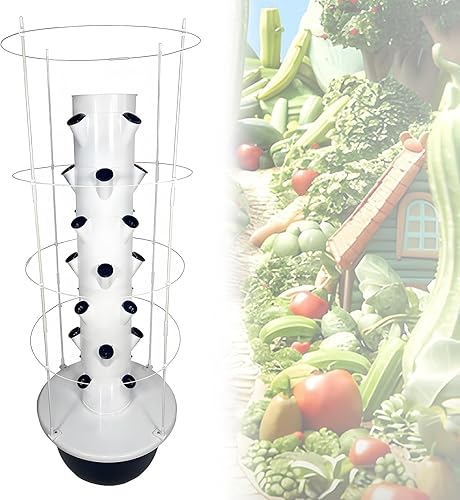
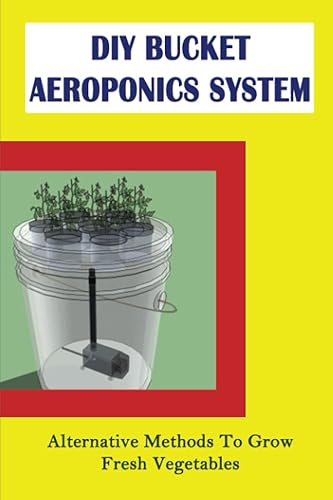
- Fruiting crops: Bucket DWC, simple drip-to-waste, or compact recirculating systems (e.g., small vertical towers) with their own reservoir and tuning.
Key design rule: keep fruiting crops on a separate loop so you can run higher EC and different pH without trashing your lettuce.
3.4 Step 4: DLI and EC bands by crop class
Use DLI-driven lighting and clear EC bands for each layer:
- Leafy greens (lettuce, Asian greens):
DLI 12–17 mol/m²/day (e.g., 200–250 µmol/m²/s for 16 hours)
EC 1.2–1.8 mS/cm
pH 5.8–6.2 - Herbs:
DLI 15–22 mol/m²/day (e.g., 250–350 µmol/m²/s for 16 hours)
EC 1.4–2.0 mS/cm
pH 5.8–6.3 - Microgreens:
DLI 8–14 mol/m²/day (150–200 µmol/m²/s for 12–16 hours)
EC 0.8–1.4 mS/cm (light feed; many can germinate on plain water)
pH 5.8–6.2 - Fruiting crops:
DLI 20–30 mol/m²/day (400–600 µmol/m²/s for 12–16 hours, cultivar dependent)
EC 2.0–3.0 mS/cm
pH 5.8–6.3
Verify against your nutrient manufacturer’s chart and adjust for cultivar, but keep the bands narrow enough that any operator can hit them with a handheld EC/ppm and pH meter.
3.5 Step 5: Weekly sow/harvest cadence that non-experts can run
Use a simple, modular schedule built around one main “crop day” per week plus short daily checks.
Daily (15–30 minutes)
- Check reservoir volumes, temperature, EC, and pH for each loop. Log values.
- Visual check for wilting, tip burn, algae, or unusual smells in the grow area.
- Quick harvest of microgreens and herbs for meals.
Weekly “production day” (2–3 hours)
Anchor your production around lettuce and microgreens, then slot herbs and fruiting crops around them.
- Leaf lettuce: Sow 2–3 sowing trays per week per 6 crew, aiming for 60–80 heads in rotation. Harvest 3–5 weeks after transplant depending on variety and DLI.
- Cut-and-come-again greens (kale, chard, pak choi): Transplant once, harvest outer leaves weekly for 4–6 weeks.
- Herbs: Stagger plantings every 2 weeks; harvest with a 30–50% cut each time to keep plants regrowing.
- Microgreens: Start 4–6 trays per week (for a 6-person crew), each harvested at 7–12 days. They are your buffer if other crops slip.
- Fruiting crops: Seed or transplant on a monthly rhythm. Once in production, plan a 2–3 times per week harvest routine, but pruning and training can be grouped into the weekly block.
Example weekly rhythm for a 6-person crew
- Monday: Main sowing day (lettuce, herbs, microgreens). Transplant seedlings and clean one DWC or NFT module.
- Wednesday: Light tasks (pruning, tie-up, fruit thinning). Small microgreen harvest.
- Friday: Major harvest for weekend (lettuce heads, cut-and-come greens, herbs, microgreens). Check inventory and adjust next Monday’s sowing.
Document this in a one-page checklist with quantities and target dates so any crew member can keep the cycle going if the “grow lead” is unavailable.
3.6 Step 6: Food-safe SOPs for small, closed environments
Here is a practical, low-friction hygiene workflow tuned for remote bases and small spaces.
3.6.1 Zoning and flow
- Zone A: Dirty (incoming supplies, unpacking, initial washing).
- Zone B: Clean handling (pruning, final rinse, packing for kitchen).
- Zone C: Growing area (plants, reservoirs, plumbing).
Movement should flow A → C → B or A → B, but never backwards with the same tools or gloves. Color-code aprons, gloves, and bins per zone to prevent cross-contamination.
3.6.2 Tool and surface disinfection
- Use a food-safe disinfectant (e.g., 50–200 ppm free chlorine or peracetic acid solution, following local regs) in labeled spray bottles.
- Before and after harvest, spray and wipe all benches, scissors, and knife handles.
- Set a weekly deep-clean task: drain one reservoir loop at a time, scrub with detergent, rinse, then sanitize with your chosen disinfectant before refilling.
3.6.3 Water and nutrient safety
- Source water: Pre-filter and, if possible, UV-treat or otherwise disinfect source water before it reaches reservoirs. In ships and mines, tap water may already be chlorinated; let it gas off or filter carbon before nutrient mixing.
- Reservoir management: Top off with treated water only. Full drain and replace at least every 2–4 weeks for leafy loops, more often if organic additives are used.
- EC/pH logs: Daily logs help spot contamination: a sudden EC drop or strange pH drift can signal root issues or leaks.
3.6.4 Harvest handling and traceability
- Harvest into labeled, food-grade bins. Mark crop, date, and loop (e.g., “Leafy A, 2026-03-10”).
- Rinse with potable water in Zone B if desired. Spin or drain-dry; avoid long soaks.
- Keep a simple record of who harvested and which loop. If a problem arises, you can trace and isolate it instead of shutting down the whole system.
3.6.5 Crew training in short, repeatable modules
Convert your SOPs into laminated, step-by-step cards:
- Daily check & log (one card).
- Weekly harvest & sowing routine (one card).
- Reservoir sanitation procedure (one card per loop).
- Food-safe harvest and packing (one card).
If a new crew member can follow the cards and keep yields stable for two weeks, your system is robust enough for real remote operations.
4. What to watch long-term: resilience, redundancy, and crew morale
4.1 Resilience: plan for partial failure, not perfection
A realistic remote system assumes that at some point you will lose a pump, mis-mix a tank, or have a power interruption. Design your crop layout so losing one module is an annoyance, not a crisis. For example:
- Split leafy greens across two or three independent DWC or NFT modules.
- Keep a small Kratky reserve: 10–20 jars of backup herbs or lettuce that can cruise through outages without air pumps.
- Maintain a “microgreen reserve” of seeds and trays that can be started anywhere with minimal infrastructure.
4.2 Nutrient and seed logistics
For remote or off-grid sites, assume resupply every 6–12 months:
- Choose stable, dry nutrient salts over large volumes of premixed liquid, and pre-portion them for your standard reservoir sizes.
- Standardize on 1–2 leaf lettuce cultivars, 1–2 Asian greens, and a small herb palette that all thrive under the same environment.
- Store seed in cool, dry, opaque containers. Keep at least one extra full rotation (e.g., 6 months of seed beyond planned mission duration).
4.3 Menu variety and psychological support
Spaceflight and Antarctic experience agree on this: variety matters more than maximum yield once you hit a basic volume threshold [Universe Today]. Build a rotating schedule:
- Alternate lettuce textures (butterhead, romaine, crisphead).
- Swap in seasonal herb “focus weeks” (basil-heavy Italian week, coriander-heavy curry week).
- Rotate a small fruiting-crop trial (new cherry tomato, snack cucumber, or dwarf pepper) every mission or every season.
Log crew feedback. Adjust crop ratios every 2–3 months based on what actually gets eaten.
4.4 Data tracking for non-expert operators
Do not overcomplicate data logging. A simple spreadsheet or notebook capturing these points is enough to optimize over time:
- EC, pH, and reservoir temperature for each loop (daily).
- Approximate harvest weights by crop type (weekly).
- Seeded and transplanted counts per batch.
- Any issues (tip burn, disease, equipment faults) and actions taken.
Within a few months you will see patterns: which crops underperform at your DLI, which weeks need extra sowing, where your sanitation routine might be slipping.
4.5 When to scale up or down
Finally, revisit your footprint and crop mix every 3–6 months:
- If benches are regularly full but harvest weights are low, check DLI and EC; you may be light- or nutrient-limited.
- If you hit your per-person target routinely and waste is creeping up, reduce sowing or re-allocate space to more herbs and “treat” crops.
- If daily maintenance is stretching beyond 45 minutes, consolidate modules or simplify fruiting-crop management.
Year-round hydroponic menus in remote environments are not about squeezing every gram from every watt. They are about hitting dependable weekly harvests, protecting food safety, and supporting the humans doing hard work in hard places.
As an Amazon Associate, I earn from qualifying purchases.