Urban Hydroponics That Survive Load‑Shedding: Low‑Power System Design, Backup Power, and Crops That Still Perform (South Africa 2026)
“If the power goes off, your system is dead” is one of the most persistent myths about hydroponics in South Africa. It is also wrong.
With the right design, you can keep greens growing through Stage 6 load‑shedding in a flat, on a Cape Town rooftop, or in a converted garage - without needing a container full of batteries. The trick is to engineer for outages from day one: low‑watt circulation, passive oxygenation, realistic light targets, and backup power sized to what actually matters.
Cape Town’s recent hydroponic pilots have shown how urban farms can slot into dense neighborhoods and underused spaces, creating jobs and local food supply even under water and power stress, as highlighted in this Cape Town urban farming project report. Similar work on controlled‑environment agriculture and urban farms at SMU shows that compact systems can be highly productive if the engineering is sound, not overcomplicated as discussed here. And experience from solar irrigation projects in Kenya confirms the same pattern: smart load management beats sheer system size for resilience as seen in this solar irrigation case.
In this guide we are going to be clinical about it. We will walk through the common design mistakes that cause South African urban hydroponic systems to crash the moment Eskom drops, why they happen, how to fix them, and what to watch over the long term. The focus is city spaces (roofs, rooms, containers, balconies) and 2026 realities: load‑shedding schedules, water tariffs, theft risk, and community‑run operations.
1. Common mistakes in South African urban hydroponic design under load‑shedding
1.1 Treating hydroponics like it needs continuous, high‑power everything
Most failed urban systems start here: assume you need big pumps, strong air blowers, and high‑intensity LEDs running at full tilt for 16 hours a day. That works fine on a stable grid. Under Stage 4–6 load‑shedding with surprise trips, it is a liability.
The real problem: every extra watt multiplies what you must cover with batteries, inverters, or solar. An overspecified system becomes financially impossible for a community project or a micro‑enterprise in a township, and it still goes dark when backup fails.
1.2 Choosing the wrong hydroponic method for an unreliable grid
In a city with repeated 2–4 hour cuts, the choice of system is more important than the choice of nutrient brand. Many pilots copy high‑flow NFT or aeroponic towers from Europe or North America and then try to “fix” them with batteries.
The issue: NFT and aeroponics need near‑continuous pumping. If flow stops, roots dry or suffocate very quickly. Under load‑shedding, this is asking for crop failure.
1.3 Ignoring water temperature, oxygen, and DLI when power goes off
Two quiet killers during outages are hot nutrient solution and insufficient oxygen. In small urban systems with shallow reservoirs and no shading, DO (dissolved oxygen) drops fast when the air pump dies, especially in summer.
On the lighting side, many growers chase a “perfect” PPFD chart and forget that plants care about daily light integral (DLI) over 24 hours. Missing a few hours of light is survivable if the total photons over the day and week stay within a reasonable range. This is exactly where clever scheduling can save you battery money.
1.4 Sizing backup for the whole farm instead of critical loads
Another common mistake is trying to back up every light, fan, and pump. The battery quote arrives, and the project dies before it starts.
In reality, only a few loads actually need to survive a standard load‑shedding block:
- Aeration or minimal circulation for DWC/recirculating systems.
- Reduced‑intensity lighting for the most vulnerable crops (seedlings, young greens).
- Any critical control electronics if your system depends on them.
1.5 Not designing for Cape Town‑specific constraints
Imported container farm templates ignore some hard South African realities:
- Water is expensive, and restrictions are always on the horizon. Dump‑and‑refill strategies waste money.
- Theft and vandalism are real risks: exposed PV panels, loose cabling, and easy‑grab batteries invite trouble.
- Community operations mean multiple operators with varying technical background. If your system can only be run by one “guru”, it will fail when that person is unavailable.
2. Why these failures happen (and what the research tells us)
2.1 Over‑engineering instead of resilience engineering
Cape Town’s experimental hydroponic projects have shown that compact systems can fit into underused spaces like rooftops and courtyards, but they only work when simplicity is built in as this project analysis explains. When system designers import high‑spec European layouts, they tend to assume a reliable grid, cheap water, and skilled technicians.
In South African cities, those assumptions are false. This is the same pattern seen in solar irrigation rollouts in East Africa: systems that succeed are the ones matched to local loads, operators, and repair capacity as shown in solar irrigation case studies from Kenya.
2.2 Misunderstanding outage time vs plant tolerance
Most growers overestimate how much continuous power plants actually need, and underestimate how long their system can safely “coast”. A deep‑water reservoir at 20 °C with good pre‑aeration can often ride through 2–4 hours without air pumps on leafy greens before real damage sets in. A thin NFT film on a hot afternoon may start losing plants in under an hour.
Without hard numbers on reservoir volume per plant, water temperature, and oxygen levels, people default to worst‑case assumptions and throw expensive hardware at the problem instead of changing the system architecture.
2.3 Chasing maximum yield instead of reliable yield
Academic work on indoor farms, like the sustainable urban farming research at SMU, points out that high‑intensity, fully climate‑controlled systems give excellent yields but at the cost of heavy energy demand as discussed here. In a city with cheap, steady power, that trade‑off can be profitable.
Under chronic load‑shedding, the game changes. Pushing for maximum grams per square meter with high‑PPFD lighting and aggressive environmental control makes the farm fragile. A moderate‑intensity, low‑power layout that tolerates outages and still delivers consistent harvests is a better fit for township or community projects.
2.4 Forgetting how operations actually work in a community setting
Most project failures I see in South Africa are operational, not technical. Nutrients run out because nobody checked stock. A pH probe drifts for months because nobody knows how to calibrate it. Load‑shedding schedules change, and no one updates irrigation or light timers.
That is why high‑automation solutions without clear manual fallbacks are risky. When the fancy controller dies or a sensor fails, growers need simple, low‑tech ways to keep plants alive until parts or support arrive.

3. How to fix it: A low‑power, outage‑ready design playbook
3.1 Pick the right method for the grid you actually have
Kratky: your “no‑power” backbone
For South African cities with aggressive load‑shedding, Kratky should not be an afterthought. It should be one of your core methods.
- Power use: zero for water movement; only lights if indoors.
- Best in: balconies, windowsills, rooftop greenhouses, and side rooms with decent light.
- Crops: lettuce, spinach, Asian greens, basil, coriander, parsley, spring onions, and many herbs.
Design tips:
- Use opaque or covered containers (painted black then white, or wrapped) to block light and prevent algae.
- Give each plant generous solution volume: 3–8 liters per head of lettuce is a good starting point for urban setups.
- In Cape Town’s summer, shade reservoirs and give them airflow to control solution temperature.
- Plan your nutrient level so roots always have a good air gap by mid‑cycle; this is your passive oxygenation.
DWC: low‑power workhorse that tolerates outages
DWC is your best bet for “serious” urban production without crazy energy demand.
- Power use: air pump plus optional small circulation pump.
- Strengths: large nutrient volume per plant, stable pH and EC, and better tolerance to short aeration drops.
- Best in: container farms, garages, and rooms where you can control light and basic climate.
Design for resilience, not just yield:
- Use fewer, larger reservoirs (for example, 200–500 L totes) to buffer temperature and chemistry.
- Run several small air pumps instead of one big unit; that gives redundancy and easier DC backup.
- Keep stocking density slightly below maximum, so each plant has more root space and oxygen.
- Insulate or shade reservoirs and avoid dark, heat‑absorbing plastic in direct sun.
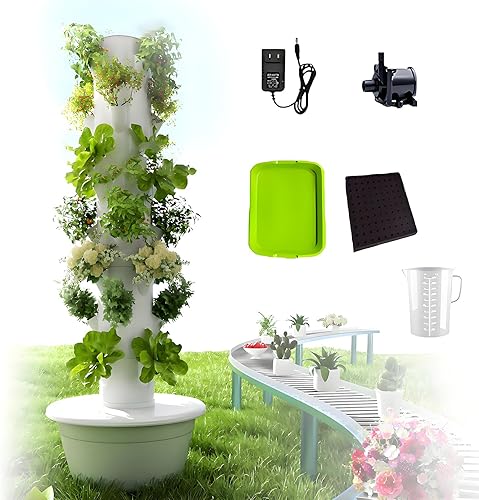
What about NFT and aeroponics?
You can use NFT or aeroponic towers in South Africa, but only if you:
- Have rock‑solid backup power for the circulation pump.
- Install moisture‑holding wicks or media in the root zone as a safety buffer.
- Treat them as a higher‑risk, higher‑maintenance part of your farm, not the backbone.
3.2 Engineer your loads around Stage 4–6 load‑shedding
Step 1: Separate loads into tiers
Define two categories:
- Tier 1 – Critical loads
- Essential aeration or circulation (for DWC/NFT).
- Minimal lighting for seedlings and high‑value crops.
- Any control device that, if off, would damage plants (for example, a timer that fails “on” and overheats LEDs).
- Tier 2 – Non‑critical loads
- Full‑intensity lighting on mature crops.
- Fans and dehumidifiers (nice to have but not vital for a few hours).
- Mixing pumps, RO systems, and other heavy intermittent loads.
Step 2: Make Tier 1 as small as possible
Before you buy a single battery, do this:
- Swap to efficient DC air pumps and the smallest practical circulation pumps.
- Choose high‑efficiency LED bars (2.5–3.0 µmol/J) and arrange them so you can dim or switch off zones.
- Use reflective walls and light‑colored surfaces to make lower light levels go further.
For a small room or container with 200–400 heads of leafy greens, you can often get Tier 1 down to:
- 20–50 W total aeration/circulation.
- 60–150 W of “survival” lighting focused on seedlings and very young plants.
Total: in the 80–200 W range, which is realistic to support for 2–4 hours with a modest battery.
3.3 Use DLI to your advantage when lights go off
Plants integrate light over the day. If you know your target daily light integral (DLI), you can adjust your schedule to fit around load‑shedding.
- For lettuce and many leafy greens, a DLI of around 12–17 mol/m²/day is usually fine.
- Herbs like basil often benefit from 15–20 mol/m²/day, but they tolerate short dips.
Practical strategies:
- Run slightly higher light intensity just before and after expected outages to compensate for dark windows.
- Use longer but lower‑intensity photoperiods in winter to keep peak wattage lower.
- When an unexpected cut hits, prioritize backup light only for young plants; mature leaves can coast for a few hours.
3.4 Design backup power for real numbers, not fear
Once you have your Tier 1 wattage, sizing backup is just arithmetic.
Example: small urban DWC farm, critical load of 120 W (80 W lights, 40 W pumps), and you want 4 hours of cover.
- Energy needed = 120 W × 4 h = 480 Wh.
- Add 30% for inverter and battery inefficiencies: ~624 Wh.
- Usable capacity: a 12 V 100 Ah LiFePO₄ battery (~1.2 kWh usable) gives a comfortable margin.
Add one small pure‑sine inverter or a hybrid inverter if you are pairing with solar. Wire only Tier 1 loads to the backed‑up circuit. Everything else drops when Eskom does.
3.5 Passive oxygenation and manual SOPs for worst‑case events
Even with good backup, assume there will be days when it all goes wrong: extended outages, inverter failure, or theft. Build in physical and operational fallbacks.
System design:
- Oversize reservoirs and keep vertical water depth under root zones reasonably deep.
- Use large, coarse air stones so that when pumps run, DO is high to start with.
- Keep solution temperatures down using shading, insulation, and avoiding unventilated metal containers in sun.
Manual SOPs (standard operating procedures):
- Train staff to gently agitate or stir DWC reservoirs by hand during long outages to refresh oxygen at the root zone.
- Have pre‑measured backup nutrient solution at correct EC ready for quick top‑ups if plants show stress.
- Stick a laminated “load‑shedding protocol” on the wall: who does what when the power icon goes red.

3.6 Nutrients, pH, and EC: stable chemistry under unstable power
Good nutrient management makes your system much more forgiving when pumps and lights cut in and out.
Targets for typical leafy‑green urban systems:
- EC: 1.2–1.8 mS/cm for lettuce and most salad greens; 1.4–2.0 mS/cm for herbs like basil and coriander.
- pH: 5.5–6.2 for most crops.
Practical habits:
- Check EC and pH at least three times a week; daily is ideal in hot weather.
- Top up with plain water first (ideally low‑EC) to correct level; only add nutrients when EC drops below target.
- Keep a simple logbook so any operator can see trends: if pH is drifting up every day, they know to watch it closely during a heat wave.
- Use high‑quality hydroponic nutrients with clear N‑P‑K and micronutrient specs; do not improvise with garden fertilizer.
Stable solution chemistry means roots are less stressed and can handle temperature spikes and short oxygen dips better.

4. What to watch long‑term: crops, microgrids, and city realities
4.1 Crop choices that fit constrained energy
If you want to survive load‑shedding and still make money or feed a community, plant for fast turnover and low risk.
Good candidates:
- Lettuce and salad mixes: short cycles, broad market, tolerant of moderate light variation.
- Spinach and Swiss chard: resilient, cut‑and‑come‑again harvests, can tolerate stronger light and brief stress.
- Herbs (basil, coriander, parsley, mint): good value per kilogram, but watch bolting in hot conditions.
- Microgreens: minimal root mass, short cycles, and low water use; can thrive in simple rack systems.
More demanding crops like tomatoes, peppers, and cucumbers can work, but put them on separate systems (drip to coco or perlite) with their own power and nutrient strategy so they do not compromise your core leafy‑green operation.
4.2 Microgrid design that matches an urban farm, not a suburban house
A typical residential solar install is designed for fridges, TVs, and geysers. An urban farm’s loads are different: low but time‑sensitive. Treat it as a small commercial microgrid.
Key principles:
- Size PV primarily to recharge batteries between load‑shedding windows and to cover daytime lighting and pumps.
- Use a hybrid inverter that can prioritize critical farm loads and shed non‑essentials automatically.
- When space allows, mount panels in a way that is hard to steal: welded frames, secure bolts, or integrated rooftop structures.
For a compact 20–40 m² indoor farm, 1–3 kW of PV plus 2–5 kWh of LiFePO₄ storage is often enough to cover Tier 1 loads through standard outages, with the grid or a small generator as a last resort for multi‑day storms.
4.3 Water management under tariffs and restrictions
Hydroponics already uses less water than soil, but in Cape Town and other South African cities, every kiloliter is watched.
Practical water strategies:
- Run closed‑loop recirculating systems for main production zones; collect and reuse drainage from drip systems where possible.
- Plan scheduled nutrient changes based on plant uptake and EC drift, not rigid calendar intervals.
- If you use RO, capture the reject water for cleaning or pre‑watering soil beds outside.
Where budget allows, capturing condensate from dehumidifiers or cooled surfaces back into your reservoir loop can shave water use further, a trick used in more advanced controlled‑environment farms.
4.4 Theft‑proofing and community operations
Security is part of system design in South African cities.
Simple measures that make a big difference:
- House inverters and batteries in a locked, ventilated enclosure inside the building or container.
- Hide critical wiring and avoid exposed copper “ladders” up walls.
- Mount rails, racks, and tanks so they are difficult to remove without tools.
On the human side:
- Standardize your nutrient recipes, EC and pH targets, and checklists so any trained operator can take over.
- Rotate tasks like calibration, reservoir checks, and system inspections so knowledge is spread, not locked in one person.
- Use simple visual boards (traffic‑light charts for EC, pH, and reservoir level) so non‑technical staff can spot issues early.
4.5 A practical template for a Cape Town 2026 urban farm
Putting it all together, a robust starter layout might look like this:
- Space: 30–50 m² in a garage, community hall room, or container, plus rooftop or yard space for PV.
- Systems:
- Tier 1: 2–3 racks of Kratky tubs for 150–250 heads of leafy greens per cycle.
- Tier 2: 1–2 DWC reservoirs (200–300 L each) running 150–300 heads on a 30–40 day cycle.
- Power: 1.5–3 kW PV, 2–4 kWh LiFePO₄ battery, hybrid inverter with separate critical load board.
- Lighting: high‑efficiency LED bars, zoned and dimmable, with a pre‑programmed “load‑shedding mode”.
- Monitoring: one good pH meter, one EC meter, thermometer probes in each reservoir, plus a simple spreadsheet or notebook log.
- Operations: clear SOPs for load‑shedding, nutrient mixing, weekly inspections, and monthly system cleaning.
This is not a fancy showpiece farm. It is a practical, repairable, low‑power machine for turning kilowatt‑hours and kiloliters into leaves you can sell or eat, even when the grid is unstable.

As an Amazon Associate, I earn from qualifying purchases.