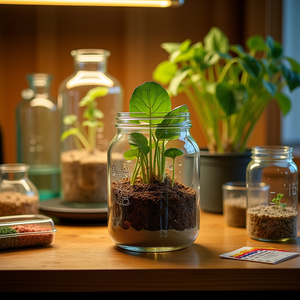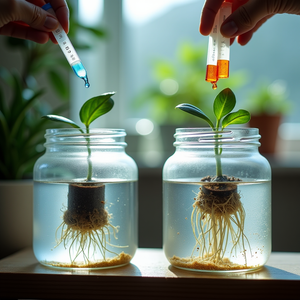
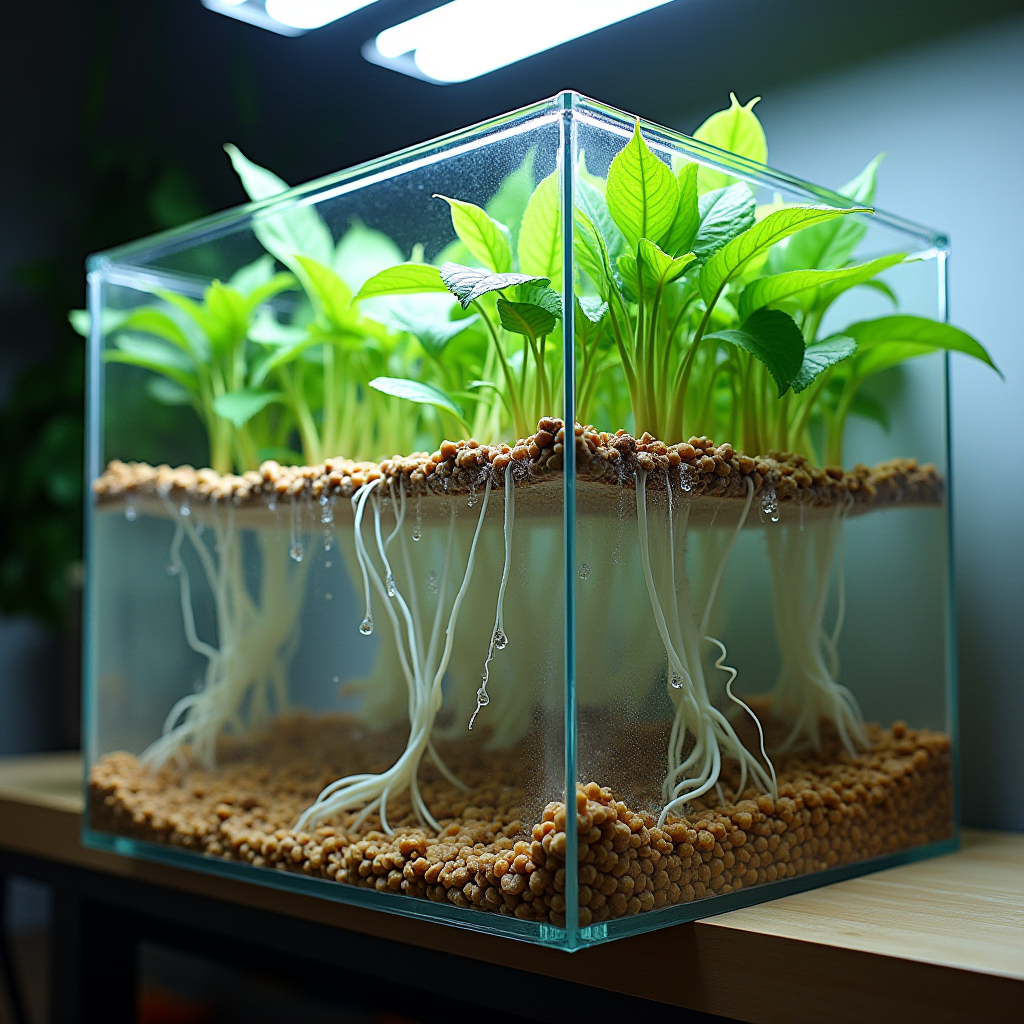
Hook: If your Kratky lettuce keeps slumping in warm rooms, smelling swampy, and wearing a coat of slime, it is not the variety - it is your dissolved oxygen. Add a small flood-and-drain media bed and you turn a stagnant tub into a stable, oxygen-rich system that resists hydroponic root rot and grows cleaner, crisper greens.
The problem
- Warm indoor spaces drop dissolved oxygen and stall roots.
- Static Kratky reservoirs accumulate fines and bio-gunk that coat roots.
- pH and EC drift faster in small tanks with no biological surface area.
- Result: leggy tops, brown roots, algae, and yo-yo nutrients.
What is really going wrong
The classic Kratky method relies on a falling waterline to create an air gap for root oxygenation. It works beautifully for cool rooms and fast-turn greens, but in warm apartments that air gap is not enough to keep roots happy all day, and the static solution invites slime. As noted in this overview of Kratky and other systems, Kratky is passive by design. By contrast, ebb and flow hydroponics periodically floods then drains a media bed, and the drain phase recharges oxygen around roots as explained in this guide and this flood and drain explainer. DWC solves oxygen with airstones, but it depends on constant aeration, as noted in this DWC and system comparison.
The simple upgrade: add a timed ebb and flow media bed
Borrow a page from aquaponics without going full recirculating DWC. Drop in a small tray of media, pump nutrient solution up on a timer, let it drain back by gravity. You get three wins at once:
- Oxygenation: Each drain cycle pulls fresh air into the bed and boosts dissolved oxygen around roots, a core benefit of flood and drain hydroponics noted here.
- Mechanical capture: Media traps fines and slime before they glue to roots.
- Biofilm surface: Tons of protected surface area for beneficial biofilm that helps stabilize a small hydro loop.
When you should add ebb and flow to Kratky
- Room runs warm and you see sagging midday even with adequate nutrients.
- Persistent brown or slimy roots despite light-proofing.
- pH and EC drift hard day to day, or you get sudden tip burn after top-offs.
- You want healthier greens without the noise and upkeep of airstones.
Parts list
- Existing Kratky reservoir (bucket or tote) with net pots.
- Shallow tray or tote to act as the media bed, plus bulkhead, standpipe, and screen.
- Submersible pump sized to fill the bed in 5-10 minutes.
- Digital timer with 1-minute resolution.
- Media: expanded clay, gravel, or coarse sand blend.
- Return plumbing: the bed drains back to the Kratky reservoir by gravity.
Media choices that work
- Expanded clay (LECA): Light, clean, high porosity, easy to rinse and reuse. Great oxygen and biofilm habitat.
- Gravel 3-8 mm: Cheap and stable. Heavy, but perfect for balconies where wind is a factor. Rinse thoroughly.
- Coarse sand or grit 1-3 mm: Superb fines capture. Use in a lower layer with a mesh separator to avoid clogging. Do not use play-sand fine grades in a standpipe bed.
Build it in 30 minutes
- Set the media bed above or next to your Kratky reservoir so it can drain back by gravity.
- Install a bulkhead and standpipe in the media bed. Cover the standpipe intake with a coarse screen or slotted cup.
- Plumb the pump from the reservoir up to the bed. Drill a 2 mm anti-siphon hole near the pump outlet to stop back-siphon at shutoff.
- Fill the bed with rinsed media. Set standpipe height so the flood line sits 2-3 cm below the media surface to limit algae.
- Program the timer and test 3-4 cycles. Verify flood height, drain speed, and that all water returns to the reservoir.
For a visual of flood and drain hardware, see this step-by-step ebb and flow guide and this overview.
Flood height and cycle timing
- Flood height: 2-3 cm below media surface. For fresh transplants, temporarily raise floods or top-water until roots reach the cycle zone.
- Cycle timing to start: 10-15 minute flood every 2-3 hours during lights-on, 1-2 cycles overnight. Warm rooms can benefit from shorter, more frequent cycles such as every 1.5-2 hours. These patterns align with common flood and drain practices described in this guide and this how-to.
- Pump sizing: Aim to fill the bed in 5-10 minutes. Roughly size flow rate in L/h as 6-10 times the bed volume in liters.
EC, pH, and top-offs in a hybrid system
- pH: Keep within the common hydroponic range for greens and herbs. Adjust slowly and avoid chasing decimals.
- EC: Target a consistent EC for your crop and stage. A stable EC is easier to maintain when you add controlled dosing or at least measure and top off thoughtfully, as discussed in this ebb and flow overview highlighting EC control.
- Top-offs: Top off with plain water to your original fill line, then recheck EC and pH. Swap or sanitize media bed only between crops.
Layouts for apartments and balconies
- Stacked tote rig: Kratky tote below, 60-70 cm x 40-50 cm media tray above. Short, quiet head height for the pump. Place a waterproof mat under both.
- Slim shelf build: A shoe rack or wire shelf holds a narrow bed. Run the drain line straight down to the Kratky bucket on the bottom shelf.
- Balcony rail bed: Shallow planter as the media bed with a bulkhead drain routed back to a lidded Kratky reservoir. Add a splash guard and always test for leaks before placing over finished surfaces.
- Noise and spill control: Silicone feet under pump and tray, anti-siphon hole, standpipe overflow 1 cm below tray rim, and a GFCI outlet.
Tuning and troubleshooting
- Roots stay soggy: Lower flood height, increase drain speed, or reduce frequency.
- Bed dries too much between cycles: Increase frequency or add a thin LECA top layer to reduce evaporation.
- EC or pH still drifts: Upsize the reservoir, reduce plant count per tank, or increase bed volume for more buffer.
- Clogs: Add prefilter mesh over the standpipe and rinse media between crops.
Why this works
Ebb and flow hydroponics forces a breath into the root zone on every drain, which is why it is prized for resilient root health in small systems, as outlined in this guide and this explainer. Kratky provides the simplicity and low maintenance, but when heat and organics creep in, the passive air gap alone struggles, as noted in this Kratky overview. If you prefer not to run airstones like DWC requires as described here, a timed flood and drain stage is the cleanest upgrade. Your payoff is higher dissolved oxygen, fewer slime events, and greener, crisper harvests.
Further reading
- System comparisons and oxygen basics in ebb and flow and other methods: Atlas Scientific
- How ebb and flow works and typical cycle behavior: WhyFarmIt and HydroponicsUp
- Kratky fundamentals and the role of the air gap: Gathera
- DWC depends on active aeration for dissolved oxygen: Hydrobuilder