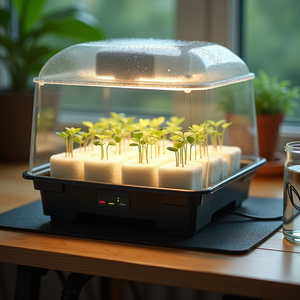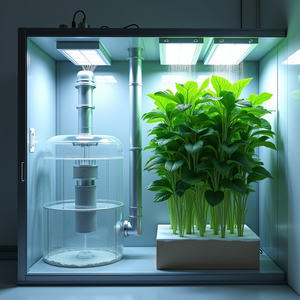
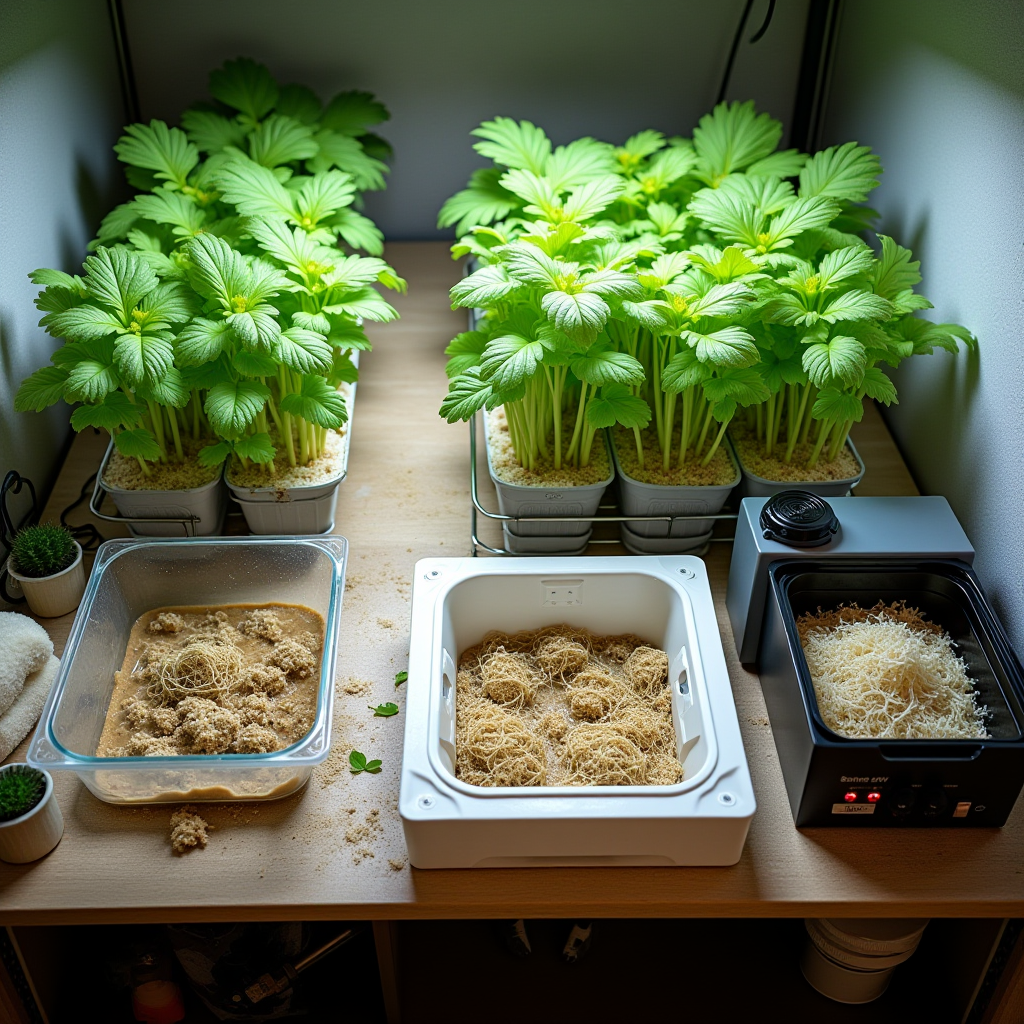
Stop Landfilling Rockwool: A 2026 Guide to Hydroponic Substrate Reuse, Sterilization, and Recycling (Rockwool, Coco, Hemp, Foam)
Common Mistakes: How Growers Mishandle Rockwool, Coco, Hemp & Foam
“Rockwool is inert, so it’s harmless.” “Hemp mats are plant-based, so they’re automatically sustainable.” “Coco can be reused forever if you just rinse it.”
Those three assumptions quietly drive a huge amount of waste, hidden cost, and food-safety risk in hydroponics right now.
As new reporting highlights the unexpected environmental costs of ‘sustainable’ foods, and vertical farming market reports point to intense efficiency pressure through 2031 (Mordor Intelligence 2026), waste streams are getting audited instead of ignored. Substrates are at the top of that list.
Most Kratky, DWC, NFT, and tower growers still treat rockwool cubes, phenolic foams, hemp mats, and paper plugs as “out of sight, out of mind” once a crop is harvested. That mindset is outdated in 2026.
Let’s nail down what you can safely reuse (and how), what must be sterilized (and with what), and where recycling or alternative disposal is realistic for rockwool, coco, hemp, foams, and fiber plugs.
Why These Mistakes Happen: The Hidden Trade-Offs In 2026
1. “Inert” gets confused with “impact-free”
Rockwool, phenolic foams, and polyurethane foams are chemically inert in your reservoir, but they do not break down in compost or soil. They sit in landfill for decades. As controlled-environment agriculture scales, those cubes and slabs start to add up, and that’s exactly the kind of footprint that sustainability reporters are now calling out in broader sustainability coverage.
2. Food-safety rules are tightening around substrates
Community and commercial operations, like the desert community projects highlighted in this Grozine feature, are under more pressure to document how they prevent contamination. Spent media loaded with roots and biofilm is an obvious weak spot if you start reusing it blindly, especially on short-cycle leafy greens and microgreens.
3. “Eco” branding hides real limitations
Hemp mats, jute mats, paper plugs, and biodegradable sponges absolutely improve end-of-life options compared to rockwool. But they are still high-risk once they’ve hosted roots, algae, and nutrient films. In food production, “plant-based” does not equal “reusable.”
4. Growers underestimate pathogen carryover
If you’ve ever watched a Pythium or Fusarium problem rip through an NFT rail or DWC system, you already know: once it’s in the water and biofilm, it’s everywhere. Reusing plugs or coco from a diseased run is the fastest way to re-infect the next crop.
5. Nobody likes talking to waste handlers
Most growers never call their local waste authority, recycling facility, or compost operator to ask what’s actually allowed. That’s how you end up tossing rockwool in green bins (not accepted) or avoiding good options like industrial composting for hemp mats and coco.
How To Fix It: Material-by-Material SOPs For Reuse, Sterilization & Disposal
1. Rockwool: From “Default” Medium To Controlled Single-Use
1.1 When you should never reuse rockwool
- Any crop with root disease, slime, or foul smells in the reservoir.
- Any cube or slab with visible algae, fungus gnats, or mold.
- Any rockwool used in recirculating NFT or DWC systems where a pathogen event occurred.
In those cases, treat rockwool as contaminated and move straight to disposal or non-food down-cycling.
1.2 Rockwool end-of-life SOP for home and small indoor growers
- Dry it fully
Let rockwool cubes or slabs dry in a ventilated area (away from living spaces). This reduces weight and smell. - Contain the fibers
Wear gloves and a simple dust mask if you are cutting them down.
Bag in a thick trash bag so loose fibers do not become airborne. - Decide the destination
- Landfill/general waste: Still the default route for most small growers.
- Down-cycle to non-food plants: Break into chunks and mix into potting mix for ornamentals as a long-term aeration amendment.
Avoid burning or “composting” rockwool. It doesn’t mineralize in any useful timeframe, so it just contaminates compost with fibers.
1.3 Can rockwool be recycled in 2026?
Large commercial greenhouses in some regions send rockwool to specialized recyclers or construction material blenders. Smaller indoor growers rarely have access to that. If you want to check:
- Call local construction and demolition recyclers and ask about “mineral wool” or “stone wool” acceptance.
- Ask hydroponic supply wholesalers if any regional programs exist for horticultural rockwool take-back.
- Check with your municipal solid-waste office to see whether any inert-mineral recycling trials are running.
Right now, for home-scale Kratky and DWC, the realistic play is:
- Use rockwool as a controlled single-use medium for food crops.
- Downgrade clean, non-diseased rockwool to non-food ornamental use, then to landfill at the very end.
1.4 How many times can you reuse a rockwool plug if you insist?
If you absolutely want to experiment in a clean, hobby system (for example, basil in a single-bucket DWC):
- Strip roots as much as possible.
- Rinse under running water.
- Steam for 20–30 minutes at 100–121 °C (steamer or pressure cooker).
- Air dry in a clean tray.
Limit to one extra cycle max, only on non-commercial, non-high-risk greens, and document that you treated the plugs if you ever need to show your process.
2. Coco Coir: Safely Reusing The Workhorse Medium Indoors
2.1 When is coco coir worth reusing?
Coco is a good candidate for 1–3 reuse cycles indoors if:
- The previous run had no root disease and no foul smells.
- You did not run EC at the ragged edge of toxicity for the entire crop.
- No severe fungus gnat or algae bloom took over the surface.
- You are growing leafy greens, herbs, or modest fruiting plants, not high-value, long-cycle crops.
2.2 Coco coir reuse workflow (indoor Kratky, DWC top-fed, or drip)
Step 1 – Mechanical cleanup
- Tip the coco out of pots or trays into a large tote.
- Break up clumps and pull out as much root mass as possible.
- Run handfuls through a mesh basket or improvised screen to remove large roots and stems.
Step 2 – Flush salts and residual nutrients
- Fill a bucket or tub with low-EC water (ideally RO or soft tap water).
- Add coco, stir, and drain through a mesh or colander.
- Repeat until runoff EC is close to your source-water EC.
This step removes built-up sodium, chloride, and fertilizer salts that otherwise hammer your next crop.
Step 3 – Sanitize: peroxide, steam, or heat
In 2026, indoor growers are judged on hygiene. Treat reused coco as a high-risk input and clean it accordingly:
- Hydrogen peroxide soak
Use 3 % H₂O₂ at roughly 1:10–1:20 dilution (about 1–2 cups per gallon of water). Soak the coco 20–30 minutes, stir occasionally, then drain thoroughly. - Moist-heat pasteurization
Load moist (not dripping) coco into an oven-safe container or roasting bag.
Heat at 70–80 °C (160–175 °F) for one hour. Let it cool completely before opening to avoid steam burns. - Avoid heavy bleach indoors
A 10 % bleach solution will disinfect, but the fumes and residue make it a poor choice in tight indoor spaces. If you use it, rinse until all odor is gone and EC is back near baseline.
Step 4 – Re-buffer and re-inoculate
- Soak coco in a mild nutrient solution that contains calcium and magnesium (or use a dedicated Cal-Mag product) to re-charge cation sites.
- Check pH of the soak solution and target ~5.8–6.2 for typical leafy greens.
- If you run biological IPM, reintroduce beneficial microbes (for example, Bacillus-based products) after coco has cooled and drained.
Step 5 – Limit indoor reuse, then downgrade outdoors
- Cap indoor reuse at 2–3 cycles for food crops.
- Watch for fines buildup that reduces aeration and drainage.
- After its indoor stint, move coco to outdoor containers, raised beds, or soil conditioning.
This keeps your food-safety risk low while still respecting the resource.
2.3 Coco coir disposal and recycling
- Home compost: Mix with nitrogen-rich materials (kitchen scraps, grass) and give it time.
- Municipal green waste: Many programs accept coco as a plant-based material, but confirm with your local waste authority first.
- Soil amender: Spent coco is a great additive to garden beds for water-holding and structure.

3. Hemp & Jute Grow Mats: Single-Use For Food, Workhorse For Compost
3.1 Microgreens & baby greens: treat mats as single-use
For microgreens and baby-leaf production in NFT channels, shallow flood tables, or capillary trays, hemp and jute mats are excellent. They are also packed with roots, exudates, and biofilm after harvest.
The food-safe standard in 2026 is simple:
- One mat per crop for any edible greens grown to cut stage.
- No reuse of mats directly under edible roots or stems.
- If you see any mold issues during the run, that mat is straight to compost or trash.
3.2 Composting and vermicomposting hemp mats
- Cut mats into strips or squares to speed breakdown.
- Layer with nitrogen-rich greens (fresh trimmings, manure where appropriate) to maintain a hot pile.
- Maintain moisture and turn the pile. Fibers will soften and disappear over time.
- For worm bins, add small pieces gradually and cover with bedding to avoid mats forming a dense, anaerobic layer.
3.3 Reuse for non-food jobs
- Weed suppression squares around ornamental shrubs or perennials.
- Mulch under non-edible container plants.
- Liners for paths in greenhouses or walkways, where they can slowly degrade.
3.4 Compliance & documentation for mats
If you sell greens to the public, keep a simple log that states:
- Mat type and batch (for example, “Hemp mat, lot #2026-04”).
- Date installed and crop grown.
- Date removed and disposal route (for example, “compost pile A”).
That kind of record makes life easier if a buyer, inspector, or auditor asks how you manage contact surfaces under the crop.
4. Foams, Paper/Fiber Plugs & Sponges: Sterilize Smart, Reuse Conservatively
4.1 Phenolic/polyurethane foams
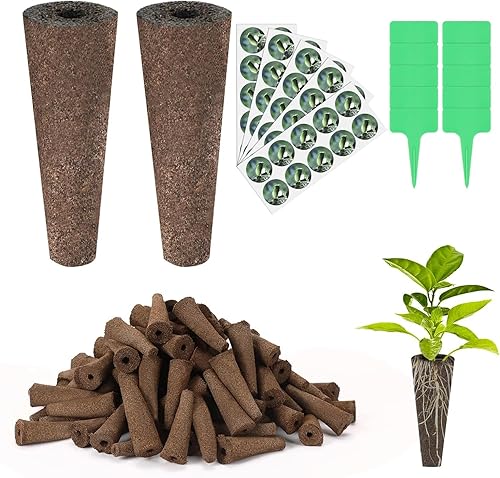
Foam blocks and cubes used for seedling propagation in NFT, DWC, and aeroponics are appealing to reuse because they do not disintegrate. The catch is food safety.
Best practice:
- Single-use for commercial food systems, especially leafy greens sold fresh.
- Optional limited reuse for home systems after proper sterilization, if no disease signs were present.
4.2 Sterilizing foam plugs with hydrogen peroxide
- Debris removal
Peel roots away gently and discard. - Rinse
Squeeze plugs in a bucket of clean water, change water until mostly clear. - Peroxide soak
Use 3 % H₂O₂ at 1:5–1:10 dilution (100–200 ml per liter of water). Soak 20–30 minutes, agitating occasionally. - Final rinse
Rinse in clean water until no peroxide smell remains. - Dry
Air dry completely in a clean tray before reuse.
Limit reuse to 2–3 cycles for home use and treat any sign of rot as the end of that plug’s life.
4.3 Steam and heat for plugs (rockwool, peat, coco, paper)
Steam is efficient and leaves no chemical residue:
- Steam/pressure cooker: Place damp plugs on a rack above water, run at 121 °C (15 psi) for 15–30 minutes, then cool and dry.
- Boiling water: Submerge plugs for 10–15 minutes, then drain and cool.
- Oven pasteurization: For peat/coco/fiber plugs, place moist plugs in a covered dish and heat at 70–80 °C for an hour.
Be aware that peat and coco plugs soften and sometimes crumble after multiple sterilization cycles. If structure fails, retire them to compost or soil.
4.4 Paper, cellulose & biopolymer sponges
Many countertop and small Kratky systems run paper or foam-like sponges. Treat them as follows:
- For food production, one or two uses max, assuming no disease.
- Peroxide soak and thorough drying between uses if you reuse at all.
- Compost or trash once they darken, smell off, or lose structure.
4.5 Hardware: the part you should reuse aggressively
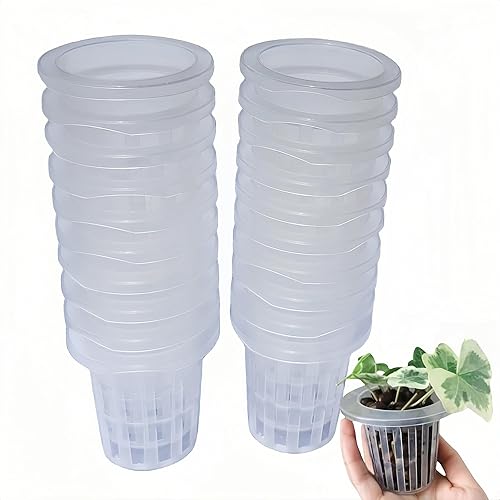
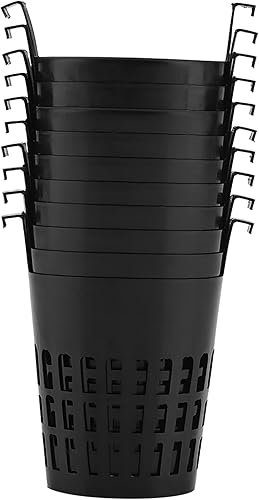
The real sustainability win is reusing plastic hardware: net pots, trays, NFT channels, buckets, lids, and rafts. Standard sanitation cycle between crops:
- Physical cleaning: scrub off roots and biofilm.
- Detergent wash: soak in warm water with a small amount of unscented detergent, then rinse.
- Disinfection: soak or spray with a 3–5 % hydrogen peroxide solution, or a dilute bleach solution (for example, 200 ppm free chlorine).
- Final rinse: clean water rinse and air dry.

What To Watch Long-Term: Audits, Microplastics, And System Design
1. Kratky vs DWC: how substrate choices age your system
- Kratky: No pumps, lower oxygen reserves. Any pathogen load in reused plugs or coco is more likely to tip the system into root rot. It is usually smarter to use fresh plugs and low-organic media and focus on reusing hardware.
- DWC/RDWC: Highly aerated but recirculating. Great for plant growth, but diseases spread fast. Disinfect hardware between runs and be conservative about reusing plugs after any suspect crop.
2. Microplastics & fibers in 2026
As microplastics become a bigger public issue, inerts like rockwool and some foams are drawing more attention. While these substrates are not classic plastics, they behave similarly in the environment as long-lived particles. Reducing their volume and keeping them out of compost-bound streams is part of future-proofing your operation.
3. Talking to local waste handlers (and what to ask)
When you call your municipal waste or recycling office, or a private recycler, make the conversation quick and specific:
- “Do you accept mineral wool or stone wool from horticulture?”
- “Can hemp or jute grow mats go into green waste or organics collection?”
- “Are small amounts of coco coir acceptable in compost or green bins?”
- “Do you have any specific requirements for bagging or labeling these materials?”
Document what they tell you. If the rules change, you have a paper trail showing you tried to comply.
4. Simple documentation habits that impress auditors
Whether you’re running a community farm like the ones featured in Desert Bloom or a tight indoor rack system, keep substrate records:
- Material type and supplier.
- Batch/lot number where available.
- Intended use (for example, “single-use for microgreens only”).
- Reuse or sterilization steps taken.
- End-of-life route (landfill, compost, ornamental reuse).
That level of tracking dovetails with the broader push for transparency in sustainable food systems highlighted by science outlets covering sustainable development.
5. A practical media strategy for 2026 hydroponic growers
- Use rockwool sparingly, as a controlled single-use medium for food, then down-cycle to ornamentals before landfill.
- Lean on coco coir where you want reuse: clean, sanitize, re-buffer, then move it to outdoor or soil-based use after a few cycles.
- Run hemp/jute mats and paper plugs as single-use for edible greens, but route them into compost or vermicompost whenever possible.
- Sanitize hardware aggressively and extend its life as long as possible.
- Write down what you do, even if it is just a simple spreadsheet or notebook.
Substrate management is not glamorous, but in 2026 it is one of the fastest levers you can pull to cut waste, tighten food safety, and stay ahead of where regulations are clearly heading.
As an Amazon Associate, I earn from qualifying purchases.