If your Kratky lettuce tastes tired and your basil sulks after every refill, it is not bad luck - it is nitrogen form and pH drift teaming up against you. The fix is not more gadgets. It is choosing the right nitrogen and setting up your passive system to ride small pH swings without wrecking flavor or roots.
The problem
Passive systems like Kratky and no-stone DWC are famous for set-and-forget simplicity - until pH will not sit still. You start at 5.8, a day later it is 6.6, then it crashes to 5.1. Greens get tip burn, basil blackens at the veins, and roots look tea-stained. In recirculating DWC, the runoff chemistry feeds back and amplifies swings, so one bucket throws the whole reservoir off, as noted in this overview.
The cause
- Nitrate vs ammonium uptake moves pH. Plant roots exchange charge to stay balanced. Nitrate uptake tends to push pH up, while ammonium uptake pushes pH down, as summarized in this Science in Hydroponics explainer and observed in controlled studies using nitrification-hydroponic systems where nitrification and uptake drive clear pH responses here.
- Nitrification acids the solution. If any ammonium or urea is present, nitrifying bacteria convert it to nitrate and release H+, lowering pH. This is aquaponics 101 and applies to hydroponics when biofilms are active, as reviewed in this paper.
- Water alkalinity and weak buffering. Low alkalinity lets pH crash on nitrification. High alkalinity lets nitrate-driven pH climb and resist correction. Managing pH and alkalinity together is core hydroponic practice per Oklahoma State University.
- Static reservoirs magnify everything. Kratky and no-aeration DWC have no constant mixing, so local root-zone chemistry becomes the reservoir chemistry. pH drift is a feature, not a bug - you just need it small and predictable.
The solution: steer nitrogen form and buffer the ride
For leafy greens and herbs indoors, you want nitrate-dominant nitrogen with just enough ammonium to counter slow upward drift - not a lot, and not zero.
- Target nitrogen balance. For lettuce and common herbs, keep ammonium at roughly 0-5 percent of total N in warm tanks and up to 10 percent in cool rooms. This minimizes toxicity risk and counters nitrate-driven pH rise, consistent with agronomic guidance on pH dynamics from Science in Hydroponics and pH drift control principles discussed by Dr. Russell Sharp here.
- Choose the right salts. Build or buy formulas that are nitrate-heavy: calcium nitrate, potassium nitrate, magnesium sulfate, plus a balanced micros package. Avoid urea and keep ammonium sulfate low.
- Start pH and let it drift small. Set fresh solution to 5.8-6.0 and allow a gentle daily swing between 5.6 and 6.3. Most hydro crops live best between 5.5 and 6.5, as noted by OSU Extension. Small pH oscillations can even aid uptake when controlled, as discussed in this piece.
- Tune alkalinity, not just pH. Use low to moderate alkalinity source water. If your tap is high KH, cut with RO or pre-neutralize with acid before mixing nutrients so the reservoir obeys adjustments, per OSU.
- Keep it sterile-ish in Kratky. In passive tubs, avoid organic N. Organics and urea become ammonium, invite nitrification, and crash pH. If you go organic, be ready for faster downward drift, as shown in systems where digestate and nitrification drive acidification here.
Kratky and no-stone DWC: a pH-stable, low-tech playbook
- Light-proof everything. Algae consume CO2 by day and shift pH. Paint or wrap lids and buckets.
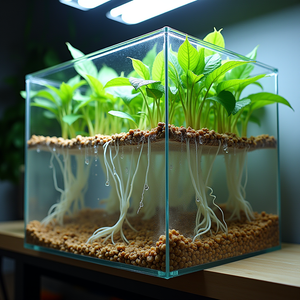
- Set the air gap. Maintain a 2-5 cm air gap as the solution drops so roots get oxygen without pumps. Kratky thrives on this balance as noted here.
- Temperature discipline. Keep solution 18-21 C. Warmer water means less oxygen and more microbial swings. Cooler holds O2 and slows pH drift.
- EC control. Mix to a crop-appropriate EC and track it. EC and pH monitoring are the two dials that prevent both deficiency and burn, per OSU Extension and this Kratky guide.
- Refill strategy. Top up with plain water pH-adjusted to about 6.0. When EC drops below target even with water loss, add a small nutrient bump. If pH drifts beyond 5.5-6.5 and will not respond, replace 25-50 percent of solution.
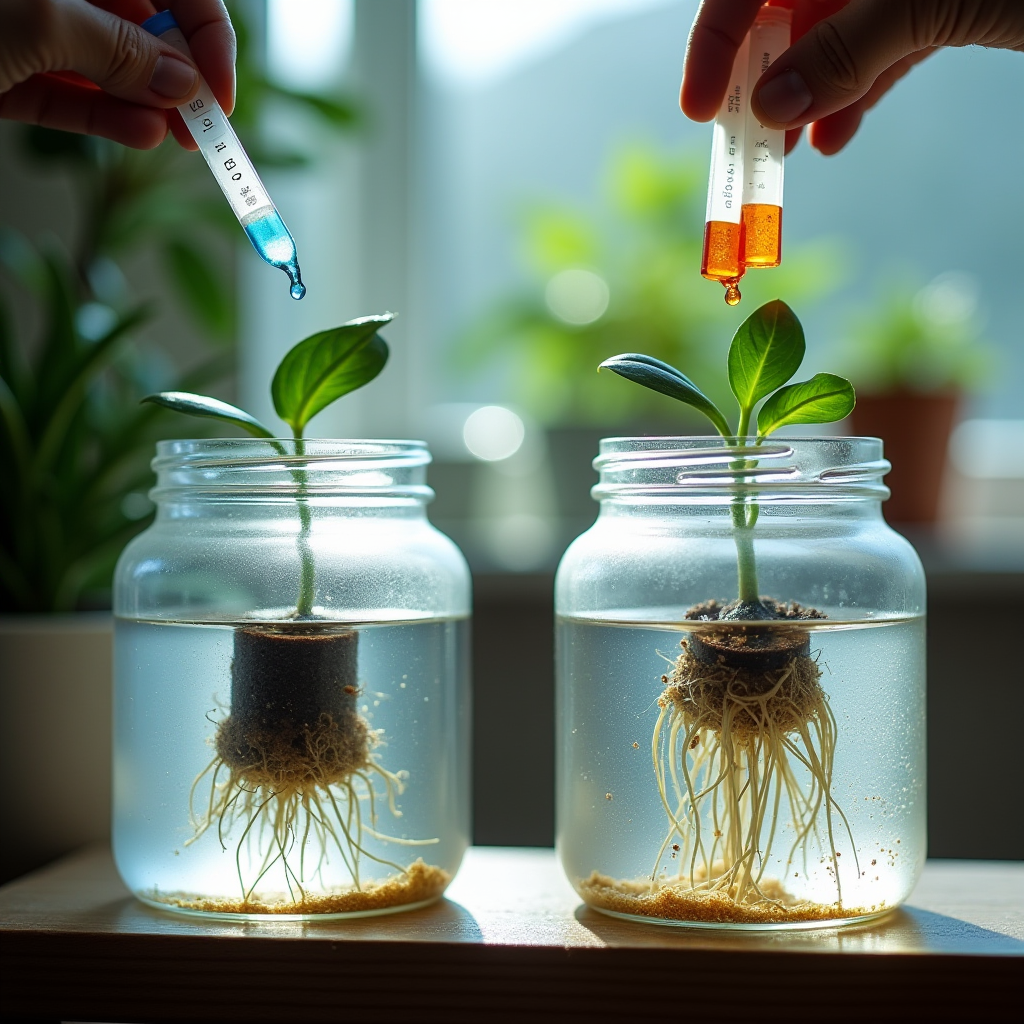
- Daily quick checks. Dip pH and EC, log the direction of drift, and make tiny corrections. In recirculating DWC, remember that plant uptake changes runoff which then moves the reservoir pH as covered here.
Should you add a mini biofilter in passive hydro?
Only if you actually need to remove ammonium from organic inputs - and only with oxygen.
- How it works. A small mesh cup of ceramic media sitting in the airy zone can host nitrifiers that turn ammonium into nitrate and lower pH via released H+. This is useful when organics or urea sneak in, as the acidifying effect of nitrification is well documented here and here.
- The catch. Nitrification is aerobic. In fully submerged, unaerated solution it stalls. Do not rely on a biofilter to stabilize a sealed Kratky tote. Use it near the air gap where roots breathe - or skip it and remove the ammonium source.
- Balance still rules. Overdoing ammonium to chase a rising pH will backfire. A small, intentional NH4 fraction plus modest alkalinity is more stable than chasing drift with big chemical swings, echoing best practice on pH drift control here.
Quick diagnostics: which way is your pH drifting?
- pH drifts up day after day: Likely nitrate-dominant uptake plus high alkalinity. Actions: lower alkalinity with RO or pre-acid, increase NH4-N slightly within safe limits, or do a 25-50 percent change. See pH drift mechanics and controls here and nitrate-driven pH rise here.
- pH drifts down fast: Ammonium present and being nitrified, or organic N breaking down. Actions: switch to nitrate-only formula temporarily, refresh solution, light-proof and clean surfaces, then reintroduce 0-5 percent NH4-N if needed. Nitrification acidification details are covered here.
- pH yo-yos with the lights: Algae or weak buffering. Actions: block light, adjust alkalinity, and keep the lid dry side dry.
Starter settings for leafy greens and herbs indoors
- N form: Nitrate dominant, NH4-N 0-5 percent of total N in warm rooms, up to 10 percent cool.
- pH: 5.8 target, allow 5.6-6.3. Safe band 5.5-6.5 per OSU.
- EC: Use crop-appropriate EC and track trend. EC and pH are the two primary dials for nutrient balance per OSU Extension.
- Temp: Solution 18-21 C for oxygen and steady roots.
- Design: Light-proof container, 2-5 cm air gap, clean walls, and no organics in passive setups.
Bottom line
Hydroponic pH drift is not random. In Kratky and DWC without active aeration, you stabilize pH by steering nitrogen form, taming alkalinity, excluding light, and embracing small, controlled swings. Nitrate vs ammonium is your main lever. Get that right and your greens get crisper, herbs get brighter, and your top-ups get boring - the good kind.
Further reading on hydroponic pH drift mechanics and control strategies can be found in this guide, this overview, detailed nitrogen form and pH interactions here, and OSU's pH-EC fundamentals here.