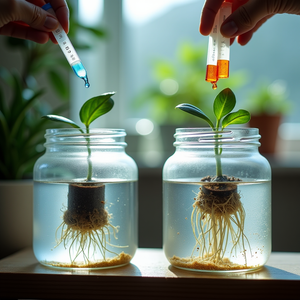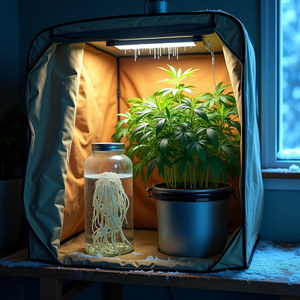
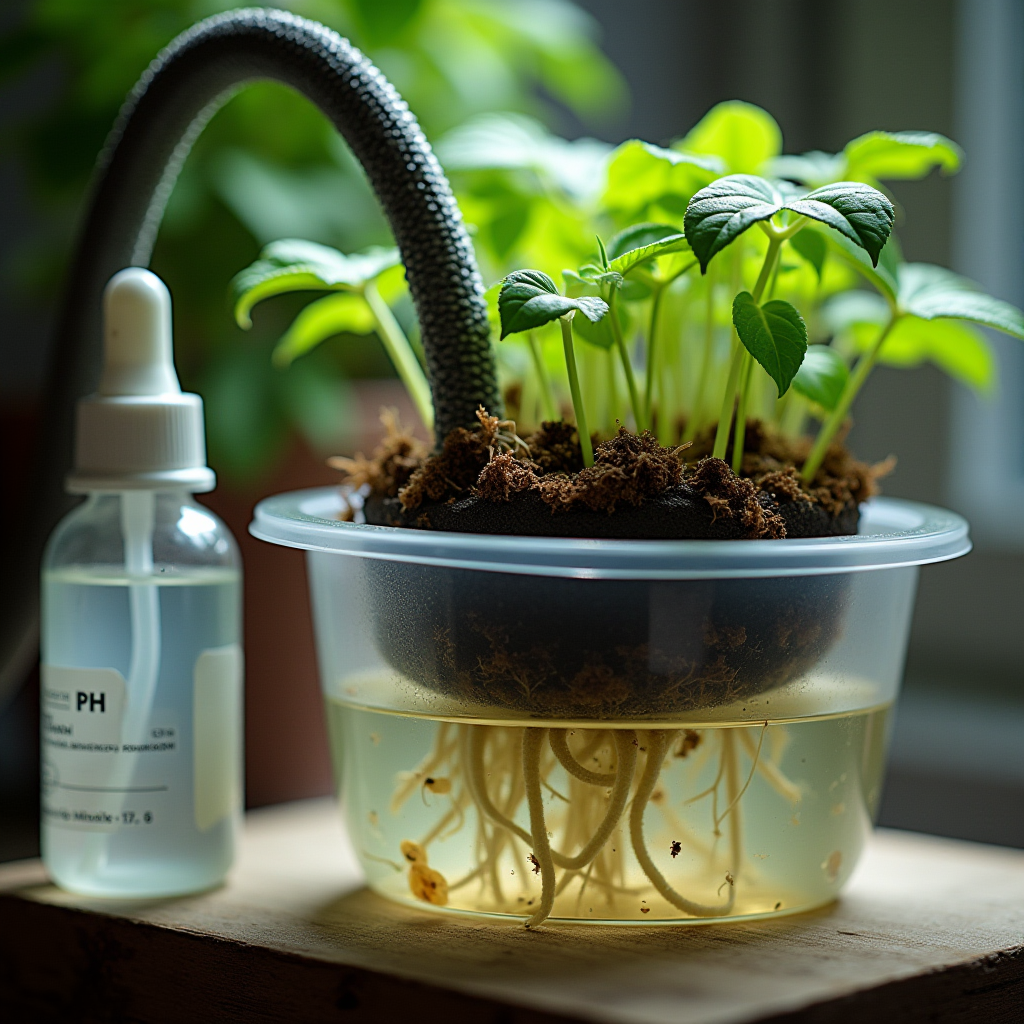
If your winter Kratky or DWC looks like a snow globe, it’s not your luck—it’s your mixing. Cloudy reservoirs, gritty sediment, and slow growth are classic signs of calcium precipitation and iron lockout. The fix is not new gear. It’s mixing order, chelate choice, and a little math.
The problem
Home hydro growers often see nutrient haze, sand-like sludge on the bottom, pale leaves that refuse to green up, and pH that creeps the wrong way in cold months. In Kratky, the static solution amplifies mistakes. In DWC, constant aeration doesn’t save you from incompatible salts.
What’s actually going wrong
- Wrong mixing order: Calcium nitrate and phosphates/sulfates can form insoluble solids if they meet at high concentration. That’s why two-part A/B formulas exist. Add concentrates together, and you trigger precipitation. As noted in this Hydrobuilder guide, order matters and full dilution between steps prevents lockout.
- Hard tap water: High alkalinity (bicarbonates) pushes pH up and reacts with calcium to form cloudy carbonates and phosphates. Using RO or pre-acidifying tap water reduces the reactions, a point echoed across practical mixing guides like this overview.
- Iron chelate mismatch: Iron EDTA fails as pH rises. DTPA or EDDHA keep iron soluble at higher pH. Choosing the right chelate prevents the “permanent pale” look. See chelate ranges summarized in this comprehensive guide.
- Winter pH drift: Cooler water and slower plant demand change uptake ratios, while tap-water alkalinity resists pH down. Keep solution temps in the sweet spot and watch pH trends, as recommended in this RDWC mixing guide.
The fast fix: mix like a pro
Whether you run Kratky jars or a bubbled DWC tote, follow this order religiously. It stops calcium precipitation and stabilizes micronutrients.
- Start with water at 65-70 F (18-21 C): Temperature supports stable pH and uptake, as noted in this guide. If your tap is hard, consider RO or pre-acidify.
- If using silica, add it first and fully dilute before anything else. The order reduces incompatibility, per Hydrobuilder.
- Add Part A (phosphates + micros): Stir until completely uniform. Never let Part B touch Part A in concentrate form.
- Add magnesium sulfate (Epsom): Fully dissolve. This step before calcium helps avoid precipitation. See practical notes in this mixing article.
- Add Part B (calcium nitrate) last: This is the big one—calcium nitrate must be added after full dilution of the other salts. It’s emphasized in this guide and echoed in Hydrobuilder’s order.
- Add micronutrients + iron chelate at the end: Choose the chelate that fits your system pH (details below). Mixing fundamentals in this HGShydro primer are a solid reference.
- Mix hard, then measure: After everything dissolves, adjust pH and confirm EC. Upstart University’s guide on monitoring and adjustments is a helpful refresher (resource).
A/B separation: never let concentrates meet
Two-part nutrients exist for a reason. Part A (phosphates, sulfates, trace metals) and Part B (calcium nitrate) are chemically incompatible in concentrate form. If you DIY dry salts, copy the same logic: dissolve your A bucket completely, add it to the reservoir, then dissolve your B bucket separately and add after. The Kratky crowd using three-part liquids will find the same rules apply, as explained in this Kratky 3-part walkthrough.
Iron chelate choice by pH: EDTA vs DTPA vs EDDHA
- EDTA: Best below about pH 6.5. Above that, iron availability drops fast.
- DTPA: Holds iron up to roughly pH 7.0-7.5. Ideal for tap-water systems that hover near neutral.
- EDDHA: Stays available up to roughly pH 9. It’s powerful and dark red. Use when high alkalinity makes pH control tough.
These ranges are standard horticultural practice and summarized in this mixing guide. In Kratky and DWC, where 5.5-6.5 is the target pH, EDTA is fine. If winter alkalinity pushes you toward 7+, switch to DTPA. Only reach for EDDHA when pH refuses to stay in range.
Dial in pH and EC for leafy greens
- Target pH: 5.5-6.5 for most hydro crops. This keeps calcium and iron available, supported across guides like Hydrobuilder and Upstart University.
- Target EC (lettuce, leafy greens): Start ~0.8-1.2 mS/cm for seedlings and early veg, then ~1.2-1.6 mS/cm as heads fill out. In Kratky, start toward the low end because solution concentrates as water drops. In DWC, aeration and constant uptake can handle mid-range EC once roots are established. Use manufacturer charts as a starting point and tune by plant response, a workflow reinforced in this beginner’s guide.
Simple dilution math you can use today
- Step 1: Add 50 percent of the label rate for A and B to your full reservoir volume.
- Step 2: Mix thoroughly and measure EC.
- Step 3: Bump nutrients in small increments (10-20 percent) until you hit your target EC.
- Step 4: Adjust pH last. Recheck EC after pH changes. Avoid chasing numbers—watch the plants.
This incremental approach avoids overshooting and follows the best-practice theme in practical mixing resources like HGShydro and Upstart University.
Winter-proof your reservoir
- Pre-acidify hard tap water: Add pH down to plain water and bring it to ~5.8-6.0 before nutrients if alkalinity is high. Then mix in order. This reduces calcium carbonate formation, a tip commonly found in mixing guides such as Hydrobuilder.
- Hold solution temps: 65-70 F (18-21 C) keeps roots happy and pH steadier in DWC and Kratky. See RDWC guidance.
- Separate A and B measuring tools: Residual drops of Part B in a Part A cup can seed precipitation.
- Aerate DWC, leave air gap in Kratky: Kratky is a variant of DWC without pumps, but both rely on oxygen access to roots (context, overview).
Storage and handling that actually helps
- Keep nutrients warm, sealed, and dark: Avoid freezing. Store iron chelates out of light to reduce breakdown. Shake bottles before dosing. Practical reminders are sprinkled through mixing guides.
- Never pre-mix concentrates: Don’t combine A and B in a small bottle. Add each to the reservoir with full dilution.
- Label dates: Mark when you opened each bottle. Old micronutrients can settle and underperform.
Troubleshooting in 60 seconds
- Cloudy, milky solution: Likely calcium reacting with carbonates or phosphates. Check mixing order and pH. See order emphasis in Hydrobuilder.
- Grit on the bottom: Precipitation. Clean, remix in order, and consider RO or pre-acidify tap water (guide).
- Pale new growth with green veins: Iron deficiency. If pH is above 6.7, switch to DTPA; if pH is fighting you above 7.5, use EDDHA (reference).
- pH creeps up in winter: Lower temps and alkalinity drive drift. Stabilize temperature and pre-acidify water; verify with a calibrated meter (Upstart University).
The bottom line
In 2025, the smartest Kratky and DWC growers aren’t buying new hardware to fix cloudy tanks—they’re mixing smarter. Separate A/B, add calcium nitrate last, pick iron chelates by pH, and set EC with small steps. Do that, and your lettuce stops sulking and starts bulking.