If your aeroponic roots smell like a swamp, your system is screaming for a redesign
High-pressure aeroponics should be a cheat code: massive oxygen, fast growth, clean roots, and serious yield in a tiny footprint. That is, right up until your mist nozzles clog, the pump timer drifts, biofilm chokes the lines, and your once-white roots turn beige, then brown, then slime.
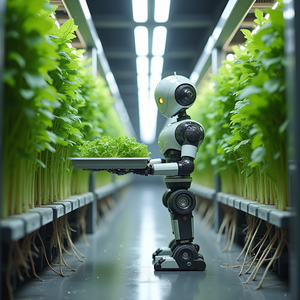
With automation hitting vertical farming - from outfits like Agroz partnering with robotics companies such as UBTech - the bar for reliability is rising fast. The commercial guys treat aeroponics like life-support: filtration, nozzle choice, misting schedule, sanitation, and fail-safes are engineered, not guessed.
This guide distills that mindset for small and home growers. We will cover how to:
- Pick nozzles and droplet sizes that actually work in real systems
- Build a filter chain that prevents scale, grit, and biofilm from ever reaching your nozzles
- Set misting duty cycles that hydrate roots without drowning them
- Design fail-safes so a holiday weekend or power blip does not wipe out your crop
- Use NASA-style cleanliness discipline so your system stays reliable, not random
Let’s fix the two killers of small aeroponic systems: nozzle clogging and root browning.
The Problem: Clogged nozzles, browned roots, and systems you cannot trust
Most hobby aeroponic setups fail in the same three ways:
- Nozzles clog from minerals, plastic shavings, or biofilm, so half your roots stop getting mist.
- Roots brown from constant wetting, poor oxygen, or pathogens like Pythium finding a perfect warm, wet home.
- Systems crash silently when a timer freezes, a pump overheats, or a filter plugs - and you only find out when the canopy droops.
In high-pressure aeroponics, you are running tiny orifices and very fine droplets. That is awesome for gas exchange, but brutally unforgiving if your water quality and maintenance are sloppy. As growers and nozzle manufacturers note, even small amounts of sediment, biofilm, or scale can partially block sprays, creating streaky coverage and inconsistent plant growth.
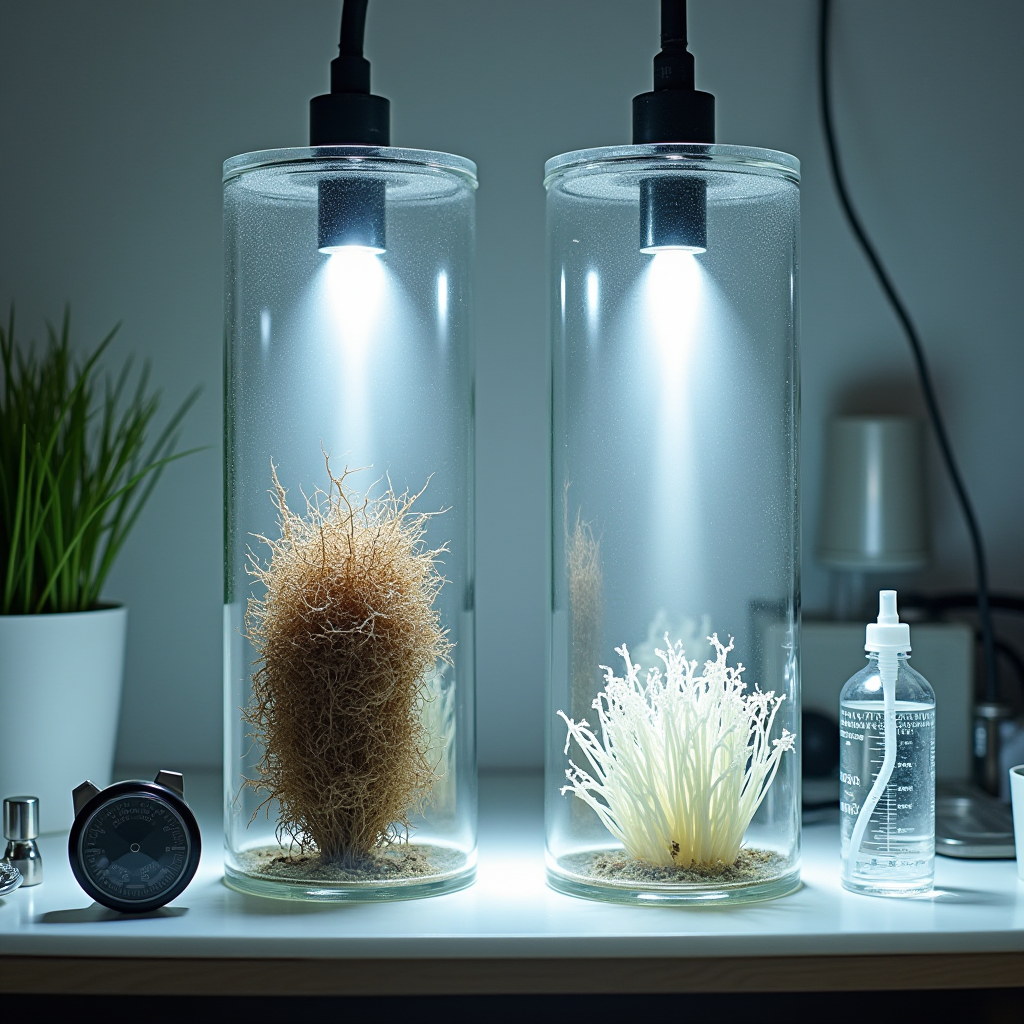
Then there are the roots. Healthy aeroponic roots are fluffy, white, and smell neutral. When your misting schedule, nutrient strength, or sanitation gets out of line, you start seeing:
- Cream to tan roots that feel slightly slimy
- Brown tips and necrotic patches
- Wet, matted root zones that never really “breathe”
Left unchecked, that becomes root rot. AEssenseGrows, which runs commercial aeroponic systems, explicitly describes their systems as “ideal breeding grounds” unless hygiene is handled preventively, not reactively in their best practices guide.
For home and balcony growers, the pain is simple: you do not have a maintenance crew. You need a system that:
- Runs clean for weeks, not days
- Gives you early warning when something drifts
- Can survive a weekend away or a short power outage
The Cause: Tiny orifices, dirty water, and root zones that never get to breathe
Nearly every problem in aeroponics comes back to four things:
- Nozzle geometry and droplet size
- Filtration and water quality
- Misting duty cycle versus oxygen
- Sanitation and system design
1. Nozzles: wrong droplet size or pattern for your system
In practice, most home systems use one of three nozzle types:
- Low-pressure sprayers (typical 2 - 3 bar) from irrigation kits
- Medium-pressure fog/mist nozzles (3 - 7 bar)
- High-pressure aeroponic nozzles (6+ bar) with very small orifices
According to practical nozzle selection guides like this breakdown of aeroponic mist patterns, you are aiming for a droplet size that:
- Is fine enough for good root surface coverage and oxygen exchange
- Is coarse enough that droplets reach the roots without evaporating mid-air
Mist droplets that are too fine dry the outer root hairs between pulses, especially in warm, dry air. Too coarse, and you are basically running a low-pressure spray system, with heavy wetting and higher risk of root rot.
Pattern matters too. Full-cone patterns are usually best for dense root zones because they fill the chamber evenly, while narrow streams or partial cones leave “dry shadows” where roots desiccate.
2. Poor filtration feeding very small nozzle orifices
Most small nozzles have orifices well under 0.5 mm. Any of the following will jam them:
- Hard water scale and precipitated nutrients
- Plastic shavings from drilled lids or poorly cut tubing
- Biofilm flakes and microbial slime from warm reservoirs
Grower and industry reports on nozzle clogging stress that prevention starts with filtration and clean nutrient solution, not just cleaning nozzles after the fact as highlighted here.
3. Misting schedules that hydrate, but suffocate
In aeroponics, your “medium” is air. Roots only get oxygen when they are not drenched. If your mist cycles are too frequent or too long, roots sit in a thin film of water constantly, burning oxygen and inviting anaerobic pathogens.
Practical guidance from experienced builders suggests mist cycles on the order of 2 - 10 seconds ON, followed by 2 - 10 minutes OFF, depending on species, root mass, and environment. Aeroponics-focused resources like AeroponicsDIY stress that nutrient uptake is so efficient in mist that you typically run lower EC than DWC and still get faster growth as they note in their misting frequency guide.
Too much ON-time or too short an OFF-time leads to:
- Constantly wet, tan roots
- Reduced oxygen in the boundary layer around roots
- Higher root-zone temperature from warm recirculating water
4. Weak sanitation and reservoir discipline
Aeroponics is essentially a closed-loop, high-humidity, nutrient-rich system. That is paradise for biofilm and root pathogens if you do not run it with some NASA-level discipline. Commercial and research groups emphasize:
- Regular, scheduled cleaning of reservoirs, lines, and nozzles
- Use of disinfectants (peroxide, hypochlorous, or similar) between crops
- Control of pH (typically 5.5 - 6.2) and EC suitable for the crop
NASA’s controlled environment agriculture (CEA) work on closed-loop systems shows the same principle: once pathogens or biofilm are established in recirculating nutrient, they are very hard to get rid of without full system sanitation. Aeroponics simply compresses that lesson into smaller plumbing.
The Solution: Filters, nozzles, misting schedules, and fail-safes that actually work
To get reliable, high-oxygen, high-yield aeroponics at home, design your system like a scaled-down commercial rig. That means decisions up front about nozzles, filtration, timing, and maintenance so you are not constantly reacting to slime or clogs.
1. Choose the right nozzle and droplet size for your setup
When you select nozzles, decide first what pressure range and system type you are willing to manage:
- Low-pressure “aero” (2 - 3 bar): easier, cheaper, larger orifices (less clogging) but coarser droplets. Great for beginners and leafy greens, more forgiving of weaker filtration.
- True high-pressure aeroponics (6 - 8+ bar): finer droplets, more oxygen, but orifices are tiny. Demands strong filtration and stricter cleaning.
Then match droplet size and pattern:
- Look for full-cone or wide-angle fog patterns that cover the entire root zone.
- Avoid ultra-fine fog nozzles in hot, dry rooms unless you can shorten OFF times; fine mist can evaporate before hitting the roots.
- Choose nozzles that are easy to remove and soak in a mild acid (like diluted citric or phosphoric) to clear mineral deposits.
Practical nozzle guides such as this article on choosing aeroponic mist nozzles reinforce that there is no single “perfect” droplet size; you tune it to your pressure, chamber size, and crop.
2. Build a filter chain that actually prevents clogs
Think of filtration as a staged defense between your reservoir and nozzles:
- Intake screen or sock
Stop big debris right at the pump intake. A simple mesh filter bag around the pump keeps perlite, roots, and plastic bits out. - In-line sediment filter (100 - 200 micron)
Placed after the pump (or on a loop through a separate polishing pump), this catches fine particulates that would otherwise hit your nozzles. Many growers repurpose small RO pre-filters for this. - Optional carbon or UV stage
Activated carbon can help remove organics and some chlorine if you are starting from tap water, while a small UV unit in a side loop can reduce microbial load. Commercial aeroponic providers strongly recommend prevention-focused sanitation and filtration in their cleaning overviews.
Service your filters on a schedule. If you are running a high-pressure pump, treat filter maintenance like an oil change: regular, not optional.
3. Dial in misting duty cycles for hydration and oxygen
Aeroponics lives or dies by timing. You need enough ON time to wet the roots and replenish nutrients, then enough OFF time for oxygen and evaporation. Use these as starting points for leafy greens and herbs:
- Seedlings / clones: 3 - 5 seconds ON, 3 - 5 minutes OFF
- Vegetative stage: 3 - 8 seconds ON, 3 - 8 minutes OFF
- Large, dense root masses: 5 - 10 seconds ON, 2 - 5 minutes OFF (watch for constant wetness)
Then watch your roots and tweak:
- If roots are drying and crisping at tips, shorten the OFF period or lengthen ON by 1 - 2 seconds.
- If roots are tan, heavy, and dripping between sprays, extend OFF time and verify chamber drainage.
- Monitor reservoir temperature; aim for around 18 - 22 °C. Hot nutrient solution accelerates rot.
Also keep EC on the lower side for aeroponics. Many growers run roughly 20 - 30 percent lower EC than in DWC for the same crop, because fine mist increases nutrient uptake efficiency as discussed here. For typical leafy greens this might mean ~0.8 - 1.4 mS/cm depending on cultivar and stage, with pH around 5.5 - 6.2.
4. Root rot prevention: sanitation and oxygen
To keep roots white and fluffy:
- Run a cleaning cycle between crops: drain, physically scrub the reservoir and chamber, flush lines with a cleaning solution (for example, a dilute hydrogen peroxide or specialized system cleaner), then rinse thoroughly. Cleaning-focused guides like this overview emphasize regular, not occasional, sanitation.
- Control pH and EC: most crops want pH 5.5 - 6.5. Outside that band, nutrients lock out and stress roots, making them easier prey for pathogens.
- Keep light out of the reservoir to suppress algae, which feeds biofilm and clogs.
- Use fresh, well-oxygenated solution: some growers add a small recirculation/aeration loop or venturi in the reservoir so the pump is not the only source of flow.
Check roots weekly. Catching the shift from white to cream early lets you fix misting or sanitation problems before you are in full-blown rot territory. Resources focused on root health in aeroponics stress the same thing: continuous monitoring and quick adjustment keep roots vigorous as outlined in this troubleshooting guide.
5. Design fail-safes for holidays and power blips
If you want your system to survive while you are away or the grid hiccups, build in simple redundancy:
- Gravity-safe root zone: design the chamber so that if mist stops, roots can still reach a shallow nutrient puddle at the bottom, or hang partly over a backup wick/DWC zone. It is not ideal aeroponics, but it keeps plants alive.
- Quality timer and pump: avoid the cheapest mechanical timers; use digital or Wi-Fi timers with battery backup. Keep a spare pump on hand for critical grows.
- Power backup window: a small UPS dedicated to the pump and timer can bridge short outages. Even 30 - 60 minutes can be the difference between a scare and a loss.
- Simple monitoring: a Wi-Fi camera aimed at the root chamber access hatch or a pressure gauge on the mist line tells you if the system is actually cycling while you are away.
With these in place, your aeroponic system behaves more like a reliable appliance than a science experiment you have to babysit.
6. Quick setup checklist for small/home aeroponic systems
If you are building or upgrading a home or balcony aeroponic rig, use this as your baseline:
- Reservoir: opaque, insulated if possible, with a tight lid
- Filtration: intake screen + in-line sediment filter
- Nozzles: full-cone pattern, easily removable, sized for your pressure
- Misting schedule: digital timer with second-level control
- Targets: pH 5.5 - 6.2, EC 20 - 30 percent lower than your DWC baseline, water 18 - 22 °C
- Sanitation: planned cleaning cycle between crops, not “when something looks bad”
- Fail-safe: backup moisture path (shallow pool or wick) plus at least basic power protection
That is the difference between “it worked great for three weeks, then everything died” and a system you trust enough to leave running while you finally take a weekend off.