Smart greenhouses in car parks and warehouses: not a gimmick, but a serious way to grow food in the city
Most people still picture greenhouses as glass boxes out in a field. Meanwhile, some of the most interesting food projects right now are happening in places that were never meant to grow a single leaf: multistorey car parks, dead warehouse space, and old industrial shells. As recent reporting on smart urban greenhouses points out, these hidden farms can tighten city food security and hedge against supply shocks. The problem is that most growers only see the glossy photos, not the hard engineering and compliance work that actually makes these retrofits profitable.
This guide is the no-magic version: how to evaluate a non-traditional site, choose a sensor and automation stack that actually earns its keep, size HVAC/dehumidification and lighting for semi-closed operation, and get through city permitting without guessing. The focus here is enclosed urban structures (warehouses, parking decks, big-box shells) running hydroponic production - DWC, NFT, and recirculating systems - with smart climate control on top.
1. Common mistakes when converting warehouses & parking garages into smart greenhouses
1.1 Treating an enclosed shell like a standard greenhouse
Parking decks and warehouses behave nothing like traditional glasshouses. They are heavy concrete or steel boxes with high thermal mass, poor natural light, and very different air paths. A common failure pattern: a grower copies a rooftop greenhouse spec, slaps LEDs and a few dehumidifiers into a warehouse bay, and ends up with chronic condensation, disease pressure, and power bills that kill the business.
Key differences in these retrofits:
- Solar gain is lower and more directional. You rely far more on artificial light than in a standard greenhouse, so waste heat from lighting and HVAC interaction dominate your design.
- Concrete structures store cold and heat. This slows down climate response and can trap moisture against surfaces if airflows are poorly designed.
- Existing ventilation paths were designed for cars or pallets, not for a high-transpiration canopy and nutrient reservoirs.
1.2 Underestimating latent loads from plants and water
Every square meter of active leaf area is a dehumidifier in reverse. In a closed or semi-closed space, transpiration from dense hydroponic crops can easily exceed several liters per square meter per day. New operators regularly size HVAC to the sensible heat (air temperature) and ignore latent load (humidity). Result: RH at 85 to 95 percent during peak transpiration, wet surfaces, botrytis, and foliar disease.
Studies on smart greenhouses and CEA systems keep stressing that climate control is not just about temperature; humidity and dewpoint control are just as important for yield and disease suppression as highlighted in this greenhouse design review and in broader work on controlled-environment agriculture like this CEA overview.
1.3 Over-simplified sensor stack
A lot of urban greenhouse projects ship with an impressive-looking but shallow sensor setup. One sensor node at head height, a cheap pH pen, and a basic EC meter is not a control system. In a multilevel urban bay with stacked NFT or DWC racks, climate can vary significantly by height, aisle, and rack position. If you do not measure those gradients, the automation cannot correct them.
You also see nutrient systems run by manual checks a few times per day. That might be fine for a hobby Kratky tub, but not for a multi-bay commercial system where a 6-hour drift in pH or EC can visibly delay growth or burn margins on fast-growing leafy greens.
1.4 Treating AI and automation as a black box
Smart greenhouses are often sold with pitches about AI that “learns your plants” and “optimizes everything”. Underneath that marketing, you still have the same physics: lights and pumps draw power, plants transpire, and dehumidifiers condense water. If you do not understand the control levers and constraints, you cannot verify whether the AI is helping or quietly costing you money.
As noted in recent summaries of smart greenhouse technology, the high performers are not the ones with the fanciest buzzwords. They are the ones where growers and engineers understand the climate targets, the limits of their hardware, and the algorithms that sit between.
1.5 Ignoring permitting, fire, and egress until too late
Car parks and warehouses were designed to store vehicles and goods, not nutrient tanks, PVC, and dense electrical runs. Fire load, egress routes, smoke extraction, structural load from water tanks, and even simple things like hose bibs and drains all matter. Projects stall - or get shut down - when planners, fire marshals, or building inspectors discover after the fact that corridors are blocked with racks or that plastic systems have pushed the space into a higher fire-risk category.
The Conversation’s look at city smart greenhouses flagged these “technonature” projects as socio-technical systems: they are as much about code compliance and politics as about sensors and nutrients. If you ignore the regulatory side, the grow will not last.
2. Why these mistakes happen in urban retrofits
2.1 Misreading the business case in enclosed city sites
Urban food security is back on the policy agenda. Reports on Canadian greenhouse and vertical farming efforts highlight how protected cropping can offset imports and make supply chains less fragile in northern climates. That is pushing cities and investors to look at “unused” enclosed space: parking decks with fewer cars, dead industrial stock, large-format retail shells.
The pressure to activate these spaces quickly leads to shortcut thinking: “The shell is already there, so we just add climate and lights.” The reality is that the envelope you inherit often costs you more in energy and complexity than a purpose-built light greenhouse would. Your job as a grower or operator is to quantify that instead of assuming it away.
2.2 Confusing semi-closed with fully closed
Most urban retrofits are not truly closed farms. They sit in a messy middle where you try to minimize outside air exchange (for efficiency and biosecurity) but still rely on some ventilation for purge cycles, heat rejection, and code compliance. Many projects get in trouble because the design either:
- Acts like a sealed box and oversizes HVAC, only to discover that some outdoor air exchange is mandatory for code or for CO2 control, or
- Acts like an open greenhouse, using simple exhaust fans, and cannot maintain humidity and temperature stability in a dense hydroponic canopy.
In practice, semi-closed means you plan for controlled, filtered air exchange: you use dedicated outdoor air systems, energy-recovery ventilators, and modulated dampers tied into a climate computer. You chase stability while accepting that this is not a space station.
2.3 Lack of integrated design around crops, systems, and structure
You cannot bolt hydroponics onto a shell and then stick climate control on top. System design has to be integrated from the start:
- Crops and hydroponic method set your climate targets (temperature, humidity, CO2, VPD) and your nutrient strategy (pH, EC ranges, solution temperature).
- The shell (warehouse vs open-sided deck) sets your thermal behavior, air leakage, and light baseline.
- Lighting, HVAC, and dehumidification respond to both of those and then get mediated by controls and AI tools.
When these are designed in isolation, you end up with, for example, very high-intensity LEDs over shallow nutrient film channels in a cool concrete bay. Plant canopy temperatures drift well above air temperature, nutrient solution runs cold, and your HVAC fights both at once.
2.4 Over-trusting vendor packages
Vendors like to sell “turnkey” packages: racks, lights, fertigation, software, sometimes even standard operating procedures. Those can be useful starting points, but they rarely understand your specific city, your energy prices, your building, or your code environment. The risk is that you design to the package instead of the building and business case.
Independent research on smart greenhouse projects stresses context sensitivity: climate, energy mix, and urban policy shape which technologies and layouts actually deliver resilience and profitability as discussed in this smart greenhouse overview. Use vendor packages as parts bins, not as a whole design.

3. How to fix them: a practical design and operations playbook
3.1 Step 1: Evaluate the site like an engineer, not a tenant
Before sketching NFT tables or DWC rafts, walk the building with four checklists: structure, services, envelope, and code.
Structural & layout
- Floor loading: Hydroponics is water-heavy. A DWC raft tank can easily reach 400 to 500 kg per square meter when full. Parking decks have different live load ratings than warehouses. Get a structural engineer to verify load capacity and identify no-go areas.
- Clear heights and columns: Vertical racking, tower systems, and multi-tier NFT benefit from high clear heights and regular column grids. Awkward column placement kills flow and makes airflow harder to model.
- Vehicle ramps and slopes: Sloped decks complicate nutrient tank placement and leveling for long NFT runs. Plan for level platforms or step-wise layouts.
Services & utilities
- Power: Calculate realistic peak loads: LEDs, HVAC, dehumidification, pumps, dosing, data equipment. Work from watts per square meter of canopy, then add 20 to 30 percent headroom. If you cannot get sufficient three-phase power to the space, scale expectations back early.
- Water and drainage: You need reliable water supply, drains close to tanks, and backflow protection. Recirculating hydroponic systems reduce total water use, but initial fill volumes and periodic dumps are still large.
- Data: Redundant connectivity for your control system and remote monitoring. Do not leave automation exposed to a single flaky Wi-Fi link.
Envelope & climate context
- Insulation and air leakage: Warehouses often leak like sieves at doors and dock seals; parking garages can be almost outdoors. Each scenario pushes you toward different HVAC and control strategies.
- Local climate: Cold, cloudy climates lean on waste heat recovery and tight envelopes. Hot climates lean on efficient cooling, aggressive dehumidification, and shading. Urban reports from northern countries highlight how protective structures and LEDs can make production viable in tough climates as seen in this Canadian analysis.
Code and risk
- Egress: Can people exit quickly around your racks and tanks if there is a fire? Your layout must preserve clear paths and exits.
- Fire load: Nutrient tanks, plastic channels, and foam panels add fuel. Your design may trigger sprinkler upgrades, fire barriers, or material changes.
- Hazardous materials: If you store acids, bases, and concentrated nutrients in quantity, you may cross thresholds for special storage rules.
3.2 Step 2: Choose the right hydroponic systems for constrained footprints
Most urban smart greenhouses in enclosed shells use a mix of these systems:
- Deep Water Culture (DWC) rafts for leafy greens and herbs: shallow ponds with floating rafts. Robust, good thermal buffer, high yield per labor hour. Requires careful oxygenation and solution temperature control.
- Nutrient Film Technique (NFT) for high-density leafy greens: great space efficiency and lower solution volume, but more sensitive to power outages and root mat issues.
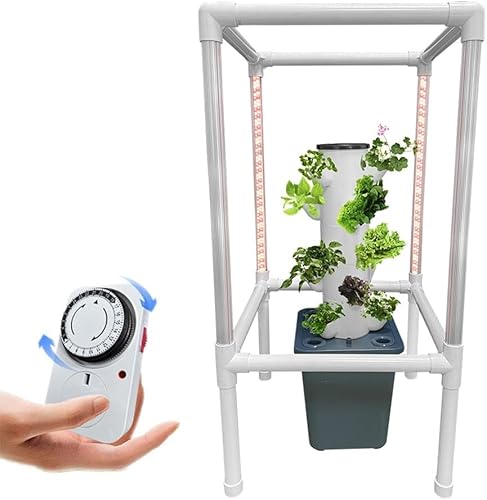
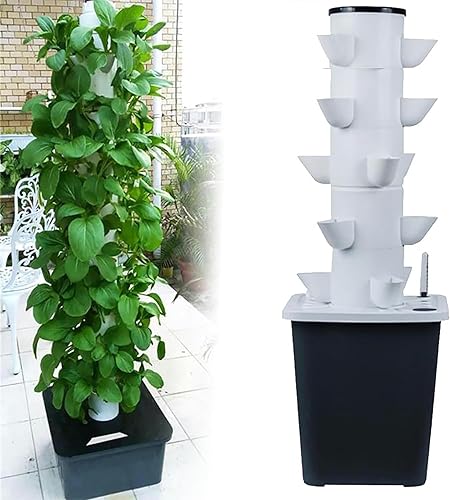
- Vertical towers or hybrid aeroponic towers in high-bay areas: maximize yield per square meter of floor. Good when energy prices and capital can support higher hardware and pumping complexity.
For semi-closed urban sites, design choices should reflect risk tolerance:
- Use DWC or multi-loop NFT with buffer tanks for your core revenue crops. These handle short outages better than bare-root high-pressure aeroponics.
- Group systems into climate zones. Leafy greens with similar VPD and temperature demands should share a bay, while fruiting crops with higher light and temperature needs go elsewhere.
- Centralize fertigation where possible to reduce points of failure, but maintain isolation between zones or crops that need very different EC or pH.
3.3 Step 3: Build a sensor and automation stack that actually pays off
Minimum viable sensor stack for an urban CEA bay
For each major bay or zone, design around this baseline:
- Climate sensors: At least three combined temperature/RH sensors per bay (low, mid, top of canopy). One outside-air sensor at an intake or representative exterior location.
- CO2 sensor: At least one per bay, more if the bay is long or divided by racks. Place near canopy height, shielded from direct airflow.
- Light sensors: PAR or quantum sensor at canopy level in at least one representative spot per crop type.
- Nutrient sensors: Continuous EC and pH probes on each major fertigation loop or tank serving more than one bay. Temperature probes in each tank.
- Water security sensors: Float switches or level sensors in sumps, leak detection in critical aisles, and flow meters on supply lines.
Automation and AI layers
A practical automation stack for semi-closed urban greenhouses looks like this:
- Layer 1: Local controllers for lights, pumps, valves, HVAC units, and dehumidifiers. These handle basic safety and fallback (for example, high-temperature cutouts, minimum airflow).
- Layer 2: Central climate computer that aggregates all sensor data, runs PID or model-based controls, and coordinates setpoints for each zone.
- Layer 3: Analytics / AI that sits above, using historical data, weather feeds, and energy price signals to adjust schedules and targets over hours or days. For example, it may pre-dry the space before a known high-transpiration midday peak.
AI does not replace good control design. It refines it. Recent work on smart greenhouse energy optimization and plant comfort shows how advanced control algorithms can reduce energy use while maintaining plant-friendly climates, but only when hardware and baselines are sound.
Automation for hydroponic stability
In DWC and NFT systems, automation should explicitly target:
- pH stability: Automatic dosing systems that keep pH in a target band (usually 5.5 to 6.5 for mixed greens) and log every correction.
- EC tracking: Fertigation control that adjusts concentration based on measured EC, plant stage, and drain data.
- Temperature control: Nutrient solution temperature kept in range (typically 18 to 22 °C) via heat exchangers or chillers, not just room air.
- Redundancy: Backup dosing pumps, spare probes, and offline calibration schedules baked into SOPs.
3.4 Step 4: Size HVAC, dehumidification, and lighting for semi-closed operation
Lighting design in enclosed shells
Because warehouses and parking decks offer little usable sunlight, lighting becomes the primary “engine” of your system and the main input to your climate model.
- Work backwards from target PPFD (photosynthetic photon flux density) at canopy. For leafy greens, 150 to 250 µmol/m²/s is common; for fruiting crops, 250 to 400+ µmol/m²/s.
- Calculate fixture power density (W/m²) and total heat load from lights. That load has to be handled by your HVAC, either as useful heat in winter or as a cooling requirement in summer.
- Plan light zoning: separate dimmable channels per crop type and bay, tied to your climate computer and AI layer.
HVAC and dehumidification: a quick sizing logic
You do not need to be a mechanical engineer, but you do need to understand the basics of latent vs sensible load.
- Sensible load is the energy to change air temperature. Lights, people, pumps, and outside air drive this.
- Latent load is the energy tied up in moisture. Transpiration from plants, evaporation from tanks, and infiltration drive this.
In a semi-closed, plant-dense space, latent load is often the bigger problem. A simple rule of thumb for leafy crops in high production is that transpiration can approach 3 to 5 liters per square meter per day under strong light. Every liter of water you condense or exhaust carries away significant energy.
The practical workflow:
- Estimate transpiration and evaporation by crop, area, and light level.
- Estimate heat load from lights, equipment, and envelope gains or losses.
- Select HVAC units (heat pumps, chillers, air handlers) sized to handle peak sensible load plus margin.
- Select dehumidifiers (standalone or integrated into HVAC) sized to handle peak latent load with some buffer.
- Use energy recovery: in colder climates, consider heat recovery ventilators or run-around coils to capture waste heat from exhaust air.
Research on energy optimization in smart greenhouses shows that coupling dehumidification, heating, and cooling in one coherent strategy beats treating them as separate appliances. In practice that means your dehumidification decisions, coil temperatures, and airflows are all coordinated by the climate computer, not tuned one unit at a time.
3.5 Step 5: Navigate city permitting and compliance early
Approach permitting as a design input, not a hurdle at the end.
- Meet with planning, building, and fire officials early with a concept package: intended crops, water use, chemicals on site, number of staff, and layouts.
- Clarify zoning: Are agricultural uses explicitly allowed in that zone? If not, what category (light manufacturing, research, food processing) best fits your operation?
- Discuss life safety: Egress routes, emergency lighting, sprinkler coverage, fire ratings of materials, and any CO2 enrichment plans.
- Document environmental benefits: lower transport emissions, controlled water use, and resilience to external shocks. This aligns with the resilience and sustainability narratives cities are already using to support smart greenhouse initiatives as described here.
Semi-closed operation can be a regulatory advantage if you show that you are not exhausting odors, chemicals, or uncontrolled heat into the neighborhood. That means specifying filtration, noise control for fans and compressors, and visual impact of external equipment.

4. What to watch long-term: failure modes, benchmarks, and continuous tuning
4.1 Common failure modes in urban smart greenhouse retrofits
- Chronic high humidity and condensation: Shows up as wet structural elements, drips on fixtures, mold growth, and edge-burn or disease on leaves. Often traced back to undersized dehumidification, poor airflow, or unbalanced air distribution.
- Thermal stratification: Hot canopy, cold root zone. DWC tanks sitting on cold concrete with warm air above slow root metabolism while pushing transpiration fast, which stresses plants and skews nutrient uptake.
- Nutrient instability: In multi-bay systems sharing a central fertigation loop, one crop type can drive EC and pH adjustments that are not ideal for another, leading to mixed performance.
- Software over-reliance: Operators stop cross-checking sensors and assume the dashboard is correct. Drifting probes or failed sensors then mislead the AI, triggering bad control decisions.
- Regulatory drift: As the site evolves (more racks, new crops, larger tanks), it drifts away from the original permitted design, creating risk at the next inspection or after an incident.
4.2 Operational benchmarks for profitable, resilient semi-closed sites
Every site will have its own numbers, but here are practical benchmarks worth tracking:
- Yield per square meter of canopy: For leafy greens in optimized DWC or NFT, commercial operations often target 3 to 7 kg/m²/month depending on crop and spacing. Track this per bay.
- kWh per kilogram of product: This captures how well your lighting and climate systems are tuned. Smart greenhouses that leverage both efficient hardware and intelligent controls consistently show lower energy per unit output as noted in this smart greenhouse review.
- Water use per kilogram: Recirculating hydroponics can push this very low compared to soil agriculture, but leaks, frequent tank dumps, or poor condensate reuse will push the number up.
- Unplanned downtime: Hours of climate or fertigation out of spec per month. Anything over low single digits is a warning sign.
4.3 Continuous tuning cycles
The best way to keep a retrofitted urban greenhouse resilient is to run it like a small industrial plant with short, repeatable tuning cycles:
- Weekly: Review climate logs (temperature, RH, VPD, CO2) for each bay, correlate with growth and issues. Check EC, pH, and nutrient solution temperature trends.
- Monthly: Revisit energy use, dehumidifier run time, and lighting schedules. Fine-tune setpoints based on plant performance and energy costs.
- Quarterly: Recalibrate sensors, test backup systems, and walk through emergency procedures with staff.
- Annually: Step back and revisit the original design assumptions. Has the crop mix drifted? Are you using more of the building than originally planned? Does your permitted design match reality?
4.4 Practical compliance and safety habits
To keep inspectors and insurers comfortable, bake these into daily routines:
- Keep clear, marked egress paths at all times; do not let pallets or tanks drift into corridors.
- Store acids, bases, and concentrated nutrients in ventilated, labeled cabinets.
- Keep current as-built drawings showing racks, tanks, and major equipment locations.
- Log all significant changes: new zones, more lights, extra tanks, or CO2 enrichment upgrades.
Remember that urban greenhouses are visible symbols of a city’s resilience strategy. If your site is clean, safe, and data-backed, it becomes easier for planners to support future expansions or additional projects in other unused structures.

Closing thoughts
Retrofitting warehouses and parking garages into smart, semi-closed hydroponic greenhouses is not a shortcut. It is a different engineering problem with a different set of advantages: closer to customers, protected from outdoor extremes, and able to plug directly into urban resilience agendas. If you treat the building as part of the system, design your hydroponics and climate control together, and respect both physics and permitting, you can turn “dead” urban space into reliable production that runs year-round.
The growers who win in these spaces are not the ones with the flashiest AI dashboards. They are the ones who know exactly why their climate targets are set where they are, what their failure modes look like, and how each valve, pump, and sensor contributes to both yield and resilience.
As an Amazon Associate, I earn from qualifying purchases.