RDWC vs Simple DWC in 2026: When a Recirculating Deep Water Culture System Is Actually Worth It
Common Mistakes: Getting Sucked Into RDWC Hype (Or Avoiding It Completely)
"More buckets, more pumps, more yield." That is the storyline flooding 2026 feeds right now. You open Instagram or YouTube and it is all slick RDWC undercurrent loops, waterfall returns, and shiny control reservoirs. Then the next video tells you a single DWC tote is "all you really need" and anything more is overkill.
Both takes are incomplete, and they are costing growers real money, time, and sometimes entire harvests.
Recirculating Deep Water Culture (RDWC) is not an upgrade just because it has more plumbing. It is an upgrade only when it solves specific problems that simple DWC cannot: multi-bucket pH/EC headaches, water temperature control, scaling plant count, and automation. When those problems do not exist in your space, RDWC is just extra failure points.
This article is a systems-design view of recirculating deep water culture vs DWC in 2026 for small indoor grows: offices, spare rooms, garages, and tent setups. We will walk through the real mistakes people are making this year, why they happen, and how to design RDWC that actually runs stable instead of becoming a 24/7 leak watch.

Why These Mistakes Happen: Hype, Half-Truths, And Missing Design Numbers
Mistake 1: Treating RDWC as "Bigger DWC" Instead of a Different Architecture
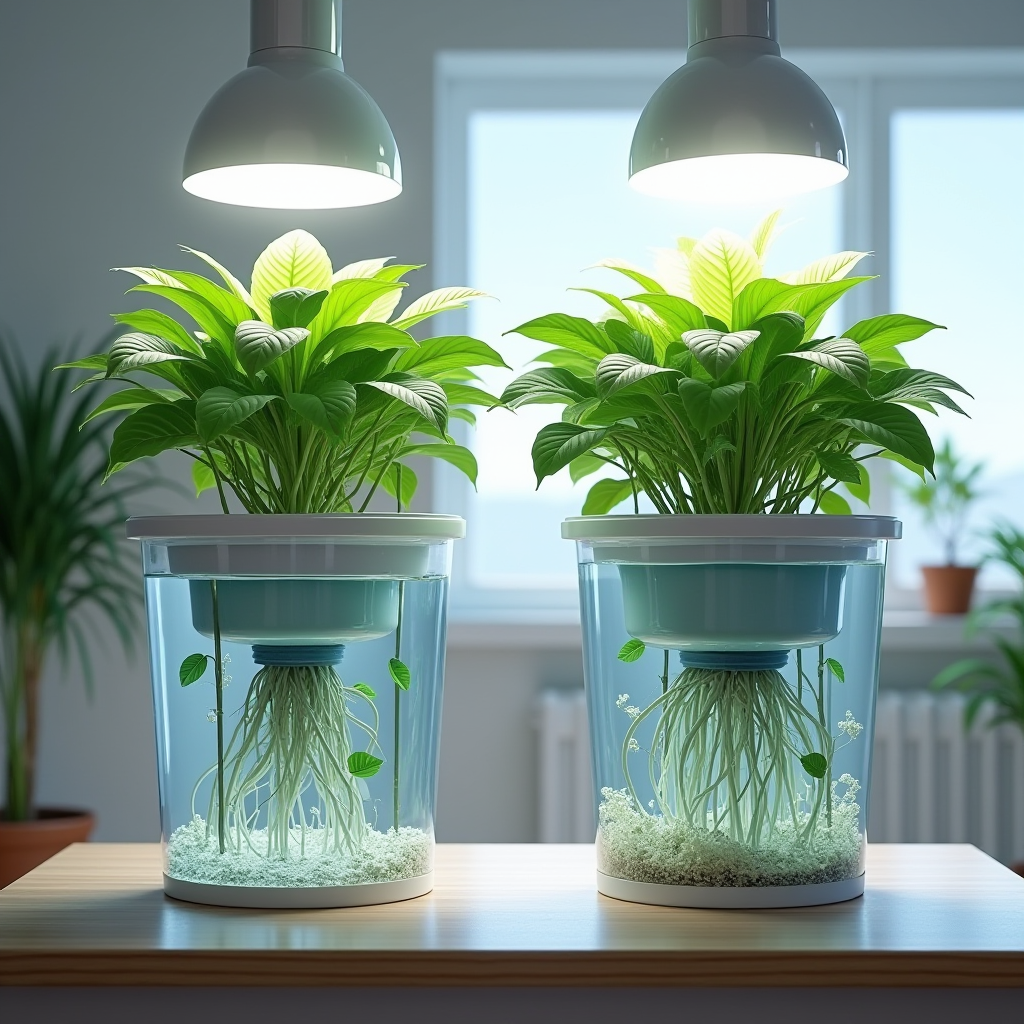
DWC and RDWC are related, but they are not just different sizes of the same thing. In classic DWC, each plant has its own isolated, aerated reservoir. You drop an airstone in a bucket or tote and you are done. In RDWC, multiple DWC sites are hydraulically tied to a single control reservoir via continuous recirculation and shared plumbing, as described in this RDWC guide.
That shift changes everything:
- Water temperature is now shared. One hot bucket can compromise the whole loop.
- A plumbing restriction in one return line can raise the water height and flood a single site.
- One pH or EC adjustment affects every plant at once, for better or worse.
Growers who copy a visual layout from a reel without understanding these dynamics tend to discover the difference the hard way: one clogged return and 20+ liters on the floor.
Mistake 2: Oversizing the Pump and Undersizing the Returns
One of the most common 2026 DIY failures looks like this:
- 400–1000 GPH pond pump "because more flow = more oxygen"
- Return plumbing in 1/2" or 3/4" hose because it is cheap and easy to find
- No emergency overflow path on the plant sites
The result is classic: the supply side overwhelms the returns, water heights drift, and the highest-resistance bucket overflows. Multiple experienced builders on forums like Rollitup and 420 Magazine now push a simple rule of thumb: large returns, modest pumps. Several undercurrent-style builds recommend 1.5–2 inch return pipe as a minimum for multi-bucket RDWC, with only 5–7 full system volume recirculations per hour rather than "firehose" flow, as echoed in community discussions and in this RDWC conversion thread.
Mistake 3: Ignoring Heat Load and Water Temperature
In single-bucket DWC, it is easy to pick the bucket up, move it, and manually swap frozen bottles or rotate it away from the light. Once you plumb buckets together and add a recirculation pump, water temperature becomes much harder to control.
The science is simple: as water temperature climbs above about 20–22 °C (68–72 °F), its dissolved oxygen capacity drops and root pathogens gain an advantage. Several hydroponic references converge on 18–20 °C (65–68 °F) as ideal for DWC and RDWC nutrient solution, with issues rapidly increasing above 22 °C, as explained in this hydroponic temperature guide and in this DWC water temperature article.
In 2026, many new RDWC builders cram a hot, oversized pump into a small control bucket inside a tent, add a strong air pump, and then wonder why their roots brown out at 24–25 °C even though their EC and pH look fine.
Mistake 4: No Leak Strategy, No Isolation, No Emergency Overflow
RDWC adds more failure modes than simple DWC:
- Each bucket penetration (bulkhead or uniseal) can leak.
- Each union or hose clamp can weep under vibration.
- Each return line can clog with roots or biofilm.
Experienced RDWC growers talk openly about having at least one flood event on the path to a dialled system. Many of those could have been prevented with simple design choices: slightly oversizing returns, adding unions and isolation valves, and giving excess water somewhere safe to go. Threads like this DIY RDWC fail post are full of the same root cause: no safety margin in plumbing and no contingency plan.
Mistake 5: Upgrading When You Do Not Need RDWC Yet
Plenty of serious hobbyists in 2026 are running one or two plants in a 2×2 or 2×4 tent, checking pH and EC every couple of days. For them, a well-built single-reservoir DWC tote might be the best tool: fewer parts, fewer leaks, lower cost, and easy to move.
RDWC is most useful when you have:
- More than 2–3 plants to manage, and you are tired of adjusting multiple buckets.
- Water temperature issues that require a chiller and centralized flow.
- A side-hustle or small farm room where downtime or uneven plants cost actual income.
For a single office basil bucket, recirculation is often a solution looking for a problem.

How To Fix It: An Evidence-Based Framework For RDWC vs Simple DWC
Step 1: Decide If RDWC Actually Solves Your Problems
Start by being brutally honest about your current pain points. Ignore Instagram for a minute and look at your grow diary.
Stay with simple DWC (for now) if:
- You run 1–2 buckets and do not mind checking pH/EC per bucket.
- Your water temperature stays under 22 °C without a chiller.
- Your main goal is reliability and learning, not squeezing max yield per square meter.
RDWC is worth it when:
- You run 3–8 sites and pH/EC tracking per bucket is becoming a chore.
- You need a chiller to survive summer or a hot garage.
- You want uniformity and automation: single reservoir, auto top-off, single nutrient change.
This mirrors guidance in RDWC-specific resources like this build guide and manufacturer content from systems like CCH2O and Artisun, which position RDWC as a way to centralize control rather than just stack more buckets.
Step 2: System Design For Your Actual Space (Office vs Garage)
Now assume RDWC is justified. The next move is to design a loop that fits your space, crop, and risk tolerance.
Office / Tent RDWC (2–4 Sites, 20–40 L Total)
Typical scenario: 2×2 or 2×4 tent in a spare room or office corner.
- Grow sites: 2–4 buckets or totes, 15–25 L each, inside the tent.
- Control reservoir: 1 matching or slightly larger bucket/tote (20–40 L), ideally outside the tent to shed heat and make access easier, as suggested in build logs like this 2-site RDWC tent guide.
- Returns: 25–40 mm internal diameter (1–1.5 inch) pipe or hose in a floor loop connecting all sites to the control reservoir.
- Pump: Target 3–5 full system recirculations per hour. For a 40 L system (~10.5 gal), this means a pump delivering roughly 120–200 GPH after head loss.
- Air: Quiet air pump outside the tent, feeding 1–2 airstones per bucket. Aim for around 1 L/min of air per gallon of water, as recommended in DWC pump guides such as this air pump sizing guide.
Keep the layout clean: recirc loop along the back or sides, control bucket near the tent door, and as few tight bends as possible.
Garage RDWC (4–8 Sites, 150–400 L Total)
Typical scenario: 4×4 to 5×10 space in a garage or small farm room.
- Grow sites: 6–13 gal (25–50 L) modules, 4–8 sites.
- Control reservoir: Similar or larger module (40–80 L), easy to reach for dosing and testing.
- Returns: 40–50 mm (1.5–2 inch) hard pipe undercurrent loop. At this scale, growers and manufacturers like Current Culture strongly favor 2 inch returns to prevent root clogs.
- Pump: For a 250 L system (~66 gal), target at least 5× turnover: 330–500 GPH after head. Many undercurrent-style systems end up in the 500–1000 GPH range depending on chiller requirements, as noted in community sizing discussions like this pump sizing thread.
- Air: Larger commercial air pump, plumbed to 1–2 airstones per module plus one in the control reservoir.
In a garage, noise is less of an issue. Heat is usually the main enemy, so design with chiller integration in mind from day one.
Step 3: Reservoir Volume, Pump Sizing & Flow Targets
Reservoir size and pump selection determine how forgiving your system will be.
Reservoir sizing:
- Aim for at least 30–40% of total system volume in the control reservoir for small systems. That gives you a useful buffer for pH and EC adjustments.
- Example: four 20 L buckets (80 L total). Target a 30–40 L control reservoir. That puts you in the 110–120 L total system volume range.
Recirculation pump sizing:
- Use a simple rule: 3–7 full system volume recirculations per hour.
- Example office system: 60 L total (~16 gal). A 200–300 GPH pump gives roughly 5–7× turnover, which aligns with rules of thumb reported by RDWC builders in threads like this recirc rate discussion.
- Example garage system: 250 L (~66 gal). A 400–600 GPH pump provides similar exchange, with extra headroom if a chiller is in the loop.
Err on the side of slightly less pump and better pipe sizing. Oversized pumps add heat and turbulence, and you will usually throttle them back anyway.
Air pump sizing:
- Target ~1 L/min of air per gallon of water in high-performance RDWC.
- For a 60 L system (~16 gal), that is about 16 L/min total air capacity.
- Spread that across multiple outlets and stones, so each bucket gets dense, fine bubbles.
Step 4: Temperature, Oxygen, And Water Quality Control
Temperature: Design for 18–20 °C nutrient temperature. If your room/tent routinely runs above 24–26 °C, it is time to plan active cooling. Aquarium-style water chillers are now common in RDWC builds, as noted in guides such as this hydroponic chiller article and this comparison of chiller options.
Oxygen: Combine vigorous aeration with good temperature control. You can supplement airstones with waterfall-style returns to boost gas exchange, but do not rely solely on turbulence if water is warm.
Water quality: Use a reliable pH meter and EC/TDS meter, as recommended in DWC guides like this starter guide. Check daily or at least every few days depending on plant size. Most crops are happy in the 5.5–6.5 pH window, with many growers targeting 5.8–6.0.
What To Watch Long-Term: Heat, Leaks, Clogs, And Automation
Long-Term Risk 1: Chronic High Water Temperature
If your RDWC spends weeks above 22–23 °C, you are running on borrowed time. Oxygen drops, roots get mushy, and you end up blaming nutrients for what is really a temperature and dissolved oxygen problem.
In warm climates or unconditioned garages, treat a chiller as core equipment, not a luxury, once you see consistent summer spikes. Resources like this temperature overview make the same point: yield and root health are tied directly to solution temperature.
Monitor:
- Daily water temperature at the control reservoir.
- Trend over the light cycle (with lights on vs off).
- How quickly the system reheats after cooling.
Long-Term Risk 2: Slow Leaks and Stress Cracks
Every hole you drill is a potential future leak if you rush the install.
Best practices from experienced RDWC builders include:
- Use the exact hole saw size recommended for your specific bulkhead or uniseal model.
- Deburr and smooth edges before installing seals, as highlighted in build notes like this undercurrent DIY guide.
- For bulkheads, keep the gasket on the wet side and avoid overtightening.
- For uniseals, lubricate and push pipe straight through without twisting.
- Pressure test with plain water for 12–24 hours before nutrients.
If you are growing above anything you care about (office floor, rented space), consider paying more for high-quality bulkheads or using square buckets that are easier to seal. More than one grower has switched from uniseals to bulkheads after repeated weeping issues on round buckets, as discussed in threads like this uniseal leak story.
Long-Term Risk 3: Root Clogs And Uneven Water Levels
Roots grow toward flow. In RDWC, that means they will eventually explore your return lines. If those lines are too small, they will clog.
To manage this proactively:
- Use at least 25 mm (1 inch) returns on very small systems and 40–50 mm (1.5–2 inch) on larger multi-site undercurrent loops.
- Avoid tight 90° elbows right at the bucket wall where roots collect.
- Include unions and isolation valves so you can disconnect, flush, and ream lines without dismantling the whole system.
- Inspect clear or removable sections regularly for slime buildup.
Many of the worst RDWC flood stories are simple: a 1/2" or 3/4" return line clogged with roots, the supply kept feeding, and one bucket quietly overflowed overnight.
Long-Term Gain: Centralized Automation & Scaling
Once you have the fundamentals under control, RDWC pays you back with options DWC simply cannot match:
- Auto top-off: Add a float valve or electronic level sensor to the control reservoir and feed it from an RO or pre-mixed holding tank. Total solution volume becomes far more stable.
- Central dosing: pH and nutrient dosing can be automated at the reservoir, giving tight EC and pH windows across all buckets, similar to what commercial recirculating systems aim for as described in this RDWC manufacturer guide.
- Scaling: Adding more sites is often just a matter of extending the undercurrent loop, not building new reservoirs.
This is where RDWC justifies the plumbing: a side-hustle grow, a small farm room, or a high-value crop where uniformity and reduced labor directly translate into more income per square meter.

Bringing It All Together: A 2026 Checklist For RDWC vs Simple DWC
Use this quick checklist before you cut any holes:
- Plant count: 1–2 plants with low maintenance needs? Lean toward simple DWC. 3–8 plants with a focus on uniformity and automation? RDWC is probably worth the jump.
- Environment: Cool, stable room and short-cycle crops? DWC is easier. Hot garage or high-watt lighting? RDWC plus a chiller and centralized control will be easier to keep in range.
- Skill and time: If you are still learning pH, EC, and nutrient basics, start with one bucket and master that first. RDWC magnifies both your wins and your mistakes.
- Budget and risk: Factor in not just pumps and fittings, but flood risk mitigation: quality bulkheads, unions, valves, and possibly leak sensors.
Once you have answered those, you are not choosing between "influencer RDWC" and "beginner DWC." You are choosing between two different architectures based on heat, oxygen, redundancy, leak management, and how you want to scale.
If you want help turning this into a concrete build, put your tent size (or room dimensions), plant count, and whether you are in an office or garage into a note. From there you can map out exact bucket sizes, return pipe diameter, pump models and flow rates, first-fill nutrient targets, and a maintenance schedule that matches your real life, not a reel.
As an Amazon Associate, I earn from qualifying purchases.