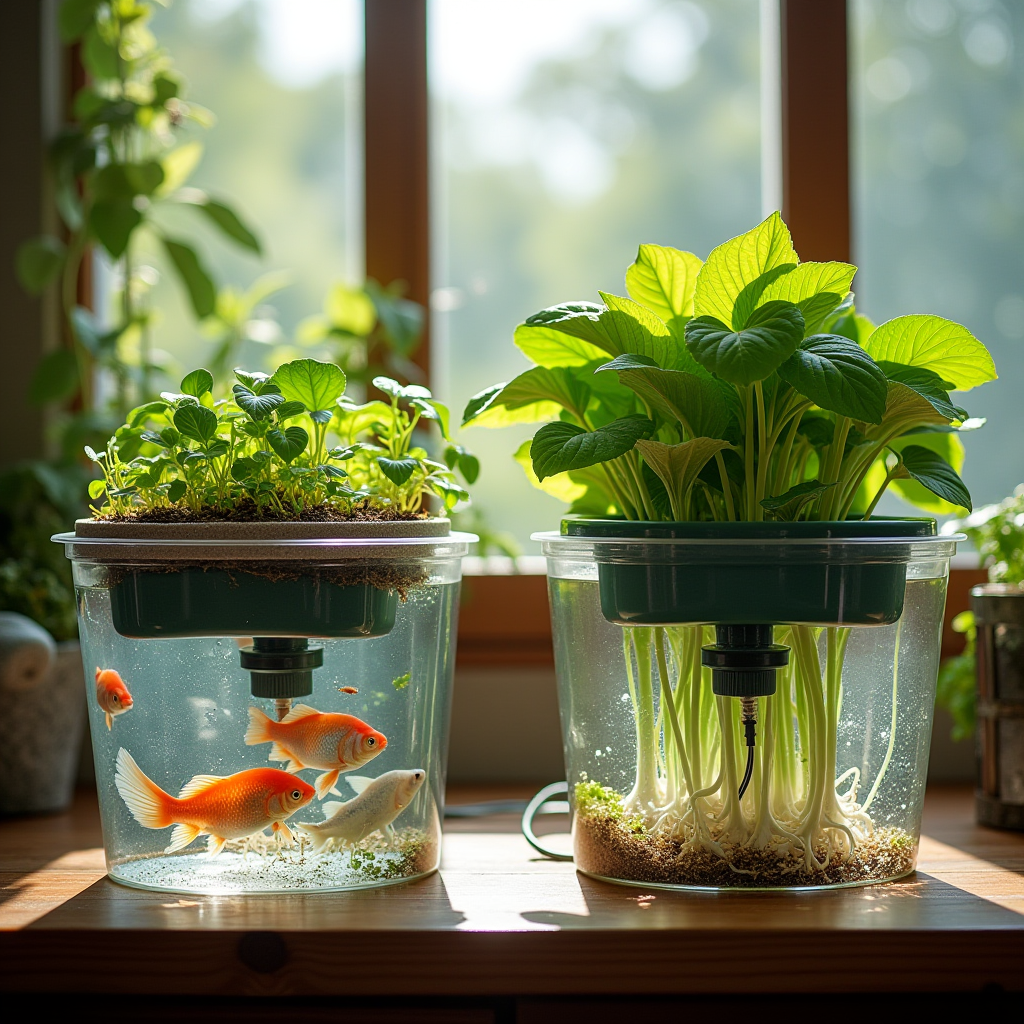
Raft Aquaponics vs Hydroponic DWC: A Home Grower’s Design Guide to Stable Nutrients, DO, and Fish Health
If your “aquaponic” tote smells like a fish shop and your lettuce looks like it was grown in a puddle, you’re not alone. A lot of home growers mash together raft aquaponics and hydroponic DWC as if they’re the same thing - then wonder why the fish are stressed and the greens stall or rot.
They are not the same system. The rafts look similar. The physics and chemistry underneath are completely different.
This guide cuts through the confusion so you can design either:
- a stable raft aquaponics system that keeps fish alive and biofilters happy, or
- a clean, aggressive-growth hydroponic DWC system that pushes yields without worrying about fish.
We’ll stay tightly focused on what really matters for small indoor and balcony setups: biofiltration, fish load, solids, pH and alkalinity, dissolved oxygen (DO), and nutrient balance.
The Problem: Same Raft, Totally Different Failure Modes
Here’s the classic scenario:
- You see a commercial raft aquaponics greenhouse on YouTube and copy the look: blue barrels, foam rafts, air stones.
- You throw a dozen fish into a tote, hook up a pump, float a raft, and call it “aquaponics”.
- Meanwhile, you’ve also run a DWC tub with bottled nutrients that grew lettuce like a machine… but the “aquaponic version” keeps melting plants or killing fish.
Typical symptoms when raft aquaponics and hydro DWC get blurred:
- Plants in fish systems grow slowly, yellow, and leggy while the same variety explodes in pure hydro DWC.
- Roots look tea-colored and slimy, not the clean white you saw in hydroponic Instagram photos.
- pH swings hard: it’s 7.8 one week, 6.2 the next, with plants and fish sulking through the ride.
- Dead fish after a pump or air outage, even though the plants looked “okay”.
- Algae blooms and brown foam around rafts that never show up in your nutrient-only DWC tub.
In pure hydroponic DWC, you can sterilize, reset, and push nutrient strength and acidity exactly where plants like it. In raft aquaponics, every shortcut in fish stocking, solids management, or biofilter sizing eventually shows up as plant issues or dead fish.
Behind these frustrations is a simple truth highlighted in multiple comparisons of aquaponics vs hydroponics: aquaponics is a three-way negotiation between fish, bacteria, and plants, while hydroponics is just plants and nutrients in water as outlined here.
The Cause: Same Raft, Different Chemistry
Both systems float plants on water, but the water is doing very different jobs.
1. Nutrient source: bottled salt mix vs fish metabolism
- Hydroponic DWC runs on a complete nutrient solution. You dose precisely measured N-P-K plus calcium, magnesium, and trace elements in a clean reservoir. EC and pH are tuned for plant uptake, usually with no organics and minimal biological action.
- Raft aquaponics runs on fish waste. Ammonia from fish is converted to nitrate by nitrifying bacteria in the biofilter. Micronutrients are present, but typically at lower levels and with a different balance compared to bottled hydro nutrients as discussed here.
Outcome: hydro DWC can easily hit the sweet spot for lettuce (for example, EC around 1.2-1.8 mS/cm and pH 5.8-6.2), while aquaponic systems often run lower EC (0.3-1.0 mS/cm) and slightly higher pH to keep fish and bacteria healthy as noted in this comparison. That means you cannot expect the same growth speed unless the fish side is well designed and mature.
2. Biofiltration: optional in DWC, non-negotiable in aquaponics
- Hydro DWC does not need a biofilter. In fact, many growers work to keep the system relatively low in organics and microbes to avoid slimy roots and pythium.
- Raft aquaponics absolutely depends on a functioning biofilter. Nitrifying bacteria live on surfaces - dedicated biofilter media, tank walls, pipe interiors, even raft undersides. If you don’t give them enough surface area and oxygen, ammonia and nitrite spike and burn both fish gills and plant roots.
This is the most common home-grower mistake: using a fish tank + raft but no real biofilter, assuming the raft tank itself is enough. It rarely is at indoor densities.
3. Solids: nuisance in hydro, backbone of the nutrient cycle in aquaponics
- Hydro DWC wants solids gone. Any organic gunk increases bio-load and eats oxygen that should go to roots. You run sterile-ish, or at least clean and clear.
- Raft aquaponics must manage, not zero out, solids. Fish feces and uneaten feed need to be mechanically removed or lightly mineralized; otherwise they accumulate under rafts, go anaerobic, and produce root-burning compounds.
Good aquaponic raft design separates these roles: fish tank, solids capture, biofilter, then raft tank. When you cram everything into a single tote, solids smother biofilm and DO crashes.
4. pH and alkalinity: plant-first vs ecosystem compromise
- Hydro DWC: you chase plant-optimal pH. For leafy greens, that is typically 5.5-6.5, often dialed to ~5.8-6.2 to keep iron, manganese, and other micros available.
- Raft aquaponics: you are balancing fish, bacteria, and plants. Nitrification naturally drags pH down over time, so you need alkalinity (carbonate hardness, KH) to buffer it. The common compromise range is 6.8-7.2 as this guide explains.
If your system lacks alkalinity, pH can free-fall over several days, crashing beneficial bacteria and stressing fish before plants show obvious symptoms.
5. Dissolved oxygen: roots only vs roots + gills + bacteria
- Hydro DWC: DO exists mainly for roots. Plants tolerate some DO sag if water is cool and clean; you aim for at least 5 mg/L but can get away with less in short bursts.
- Raft aquaponics: DO must support fish, nitrifiers, and roots simultaneously. Under high fish load, anything under about 5 mg/L for extended periods is asking for gill damage and stress. Warmer indoor water temperatures make DO even harder to maintain.
Result: the air pump that was “plenty” for your hydro DWC may be marginal in a raft aquaponics build with fish and biofilters pulling oxygen 24/7.

The Solution: Two Clear Design Paths For Home Growers
Stop trying to make a single tote be both clean hydro DWC and a complete aquaponic ecosystem. Pick a lane and design for it.
Path 1: Stable hydroponic DWC for aggressive plant growth
If you want the simplest, highest-yield indoor raft-style system and don’t care about fish, do this:
1. Keep it clean and simple
- Use a light-tight reservoir or line with black plastic to block algae.
- Run only nutrient solution and roots - no fish, no organic additives unless they are specifically designed for hydroponics.
- Keep plumbing minimal: reservoir, air pump, air stones, rafts.
2. Run plant-first pH and EC
- For lettuce and leafy greens, target pH 5.8-6.2.
- Run EC around 1.2-1.8 mS/cm for vegetative greens. Heavy feeders (like basil) can go a bit higher once established, while seedlings prefer the low end as summarized here.
- Use a calibrated pH and EC meter, not guesswork.
3. Oxygen like you mean it
- Size air pumps so that the reservoir looks like it is “boiling” gently under each raft section.
- Keep water 18-22 °C if possible; warmer water holds less oxygen and increases root disease risk.
4. Maintenance routine
- Top up with plain water to maintain volume and EC.
- Swap or flush the reservoir between crops or every few weeks to prevent salt buildup.
- Sanitize between runs (mild bleach or hydrogen peroxide, then rinse) to keep pathogens down.
Result: a fast, predictable deep water culture hydroponics system. No fish, no cycling time, no ammonia scares.
Path 2: True raft aquaponics for fish + greens
If you want a home aquaponics system with fish and rafts, treat it as a miniature wastewater treatment plant plus hydro bed. The core design steps:
1. Separate fish, solids, biofilter, and raft
At minimum, plan four zones, even if some share a physical container:
- Fish tank - where fish live. Round or oval is better for solids suspension, but a rectangular tote can work if you pull water from a bottom corner.
- Solids capture - a swirl filter, radial flow filter, or simple settlement chamber to remove heavy particles.
- Biofilter - a container with high-surface-area media (like K1, bio-balls, or lava rock) with strong aeration to support nitrifying bacteria.
- Raft tank / plant bed - the calm, oxygenated water where rafts float and roots hang.
You can stack or nest these in small spaces, but design them logically in this order.
2. Stock fish lightly and feed to match your plant load
- In small indoor systems, understock. It is easier to add fish later than to rescue an overstocked tank.
- As a rule of thumb for leafy greens: a very conservative start is roughly 0.25-0.5 kg of fish per 100 liters of system water while you learn. Go slower than the aggressive commercial ratios promoted online.
- Match feed input to plant area: more feed equals more nutrients, but only if the biofilter is mature and DO is high.
3. Build real biofiltration capacity
- Use a dedicated biofilter with moving bed or static media and heavy aeration.
- Allow 4-6 weeks of cycling (fishless or with a very light fish load) for nitrifying bacteria to establish before you expect strong growth.
- Keep biofilter pH in the neutral range (around 6.8-7.2) and fully oxygenated; nitrifiers stall in low-pH, low-oxygen environments as detailed here.
4. Manage pH and alkalinity, not just pH
- Use a KH (carbonate hardness) test to ensure you have enough buffer. Aim for at least ~60-100 ppm as CaCO3 in small home systems.
- Add gentle alkalinity sources like potassium bicarbonate or calcium carbonate when pH trends downwards.
- Aquaponic compromise: target pH 6.8-7.2 so fish, bacteria, and plants all function reasonably well.
5. Oversize aeration
- Run air to both the fish tank and biofilter, and optionally the raft tank.
- In warm indoor setups, err on the side of too much air. You are supporting gills, microbes, and roots off the same oxygen budget.
6. Don’t “top off” nutrients like hydro DWC
- In hydro DWC, you dose nutrients to hit your ideal EC. In aquaponics, nutrients primarily come from feeding fish.
- If plants are pale but water tests show low ammonia and nitrate, gently increase feed rate or fish biomass rather than dumping in hydroponic salts.
- If you must supplement, use low-dose, aquaponics-safe supplements and monitor fish closely.
Result: a slower ramp-up compared with hydro DWC, but once the biofilter matures and fish load is matched to plant demand, you get a much more self-sustaining fish-and-leafy-green loop.


Evidence & Practical Numbers: What “Stable” Really Looks Like
To keep this grounded in reality, here are ballpark targets for small indoor systems, pulled from comparative guides on aquaponics vs hydroponics and common practice ranges like this one and this overview. Adjust for your crop, but treat these as sanity checks:
Hydroponic DWC (leafy greens focus)
- pH: 5.8-6.2
- EC: 1.2-1.8 mS/cm
- Water temperature: 18-22 °C
- DO: aim for at least 5 mg/L; more is better, especially at the warm end.
- Lighting: 14-18 hours of strong indoor light for greens; think PPFD 200-400 µmol/m²·s at canopy level rather than “watts”.
Raft Aquaponics (fish + greens)
- pH: 6.8-7.2 (ecosystem compromise)
- EC: typically 0.3-1.0 mS/cm; expect slower growth than hot hydro unless you have a highly tuned, mature system.
- Water temperature: depends on fish species, but many small home systems run 20-26 °C. Warmer water means you must push harder on aeration.
- DO: aim for 6 mg/L or higher for comfort, especially with denser fish stocking.
- Nitrogen species (via test kit):
- Ammonia: consistently near 0 ppm once cycled.
- Nitrite: 0 ppm after cycling.
- Nitrate: allowed to accumulate to a moderate level, then controlled via plant uptake and water changes if needed.
Both system types benefit from regular monitoring. Multiple practical comparisons emphasize that aquaponics typically demands testing ammonia, nitrite, and nitrate in addition to pH and temperature, while hydroponics can focus on pH, EC, and reservoir cleanliness as summarized here and in this review.
Quick design checklist for small-space growers
If you are building DWC hydroponics indoors:
- Light-tight reservoir.
- Strong air pump and stones.
- Reliable pH and EC meter.
- Hydroponic nutrient formula matched to leafy greens.
- Dedicated cleaning/sanitizing routine between cycles.
If you are building raft aquaponics indoors:
- Separate zones for fish, solids, biofilter, and raft.
- Conservative fish stocking to start.
- Test kits for pH, KH, ammonia, nitrite, nitrate.
- High-surface-area biofilter media with heavy aeration.
- Plan for backup aeration or redundancy. Fish cannot survive extended outages.
Once you think in these terms - clean plant factory vs living ecosystem - the design decisions become simple and your results far more predictable. Same raft, different job description.
As an Amazon Associate, I earn from qualifying purchases.