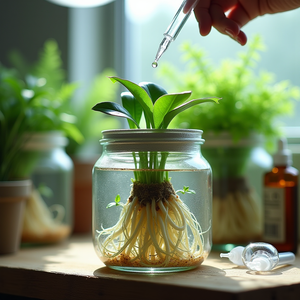
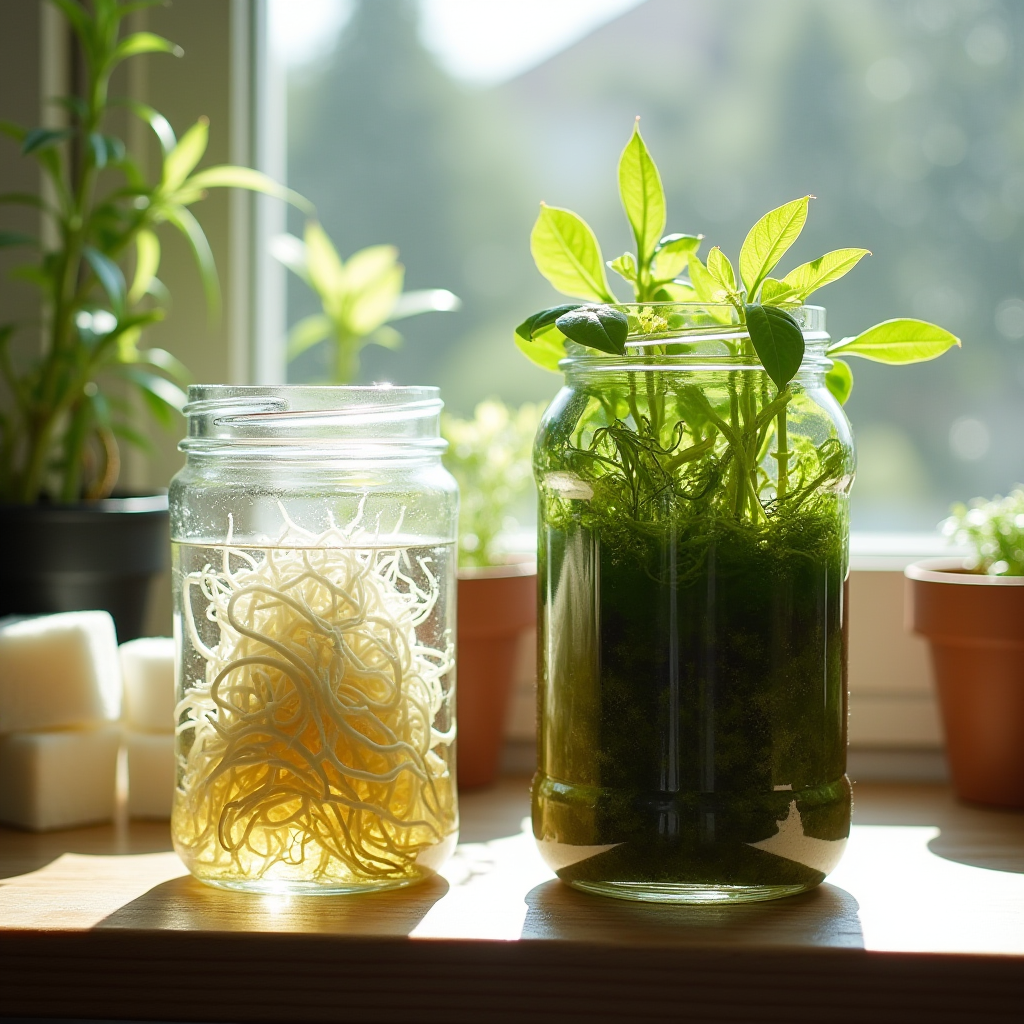
If your Kratky basil smells like a pond and your jar looks like green tea, it’s not bad luck - it’s light hitting your nutrients. Block the light, and you starve the algae, stabilize pH, and keep roots crisp-white without adding pumps or chemicals.
The problem
Winter window sills, bright LEDs, and clear mason jars are a perfect algae factory. Algae steals nutrients, drives pH drift, and slimes the root zone, which is rough on passive Kratky where there is no circulation to help you out. The result: bitter lettuce, stalled basil, and roots that brown instead of branch.
The cause
Algae needs three things: water, nutrients, and light. You are already supplying the first two by design. Let light into the reservoir and algae will outcompete roots for nutrients and oxygen, stressing or suffocating them, and it often pushes pH around as it grows and dies back - a headache for small volumes like jars, as noted in this overview and discussed by growers tackling pH drift with algae in this guide.
The fix: lightproof the reservoir, not the plant
You want full light on leaves, zero light on the nutrient solution and roots. The most effective, low-cost algae control in Kratky jars is to make the reservoir opaque and seal lid leaks. This is basic to Kratky done right, as noted in Ponics Life and this Kratky guide.
Fast, cheap ways to lightproof clear jars
- Blackout sleeve - Wrap the jar with a sheet of black craft foam or felt and secure with tape or a binder clip. It’s the simplest working fix and a go-to in mason jar Kratky builds, as shown in this how-to.
- Foil or tape wrap - Spiral-wrap the jar with aluminum foil, black duct tape, or gaffer tape. It blocks light and reflects heat. This quick DIY is commonly recommended, for example in this Kratky primer.
- Paint it opaque - Scuff the glass and spray with matte black or dark plastic-dip paint. Leave a thin vertical window under a removable sleeve if you want occasional level checks without exposing the whole jar, a best practice echoed in multiple beginner guides like WhyFarmIt.
- Contact vinyl - Apply adhesive blackout or wood-grain vinyl. Clean look, totally reusable.
- Koozie hack - Slip on a neoprene can koozie or sew a sleeve from an old black T-shirt. Cheap and washable.
Lightproof lids and net pot baffles
Even a perfect sleeve fails if light leaks through the top. Fix the lid - it is the most common leak point.
- Double-lid baffle - Use a solid disc under your net pot lid (cut from black plastic or foam) so stray light has to bend twice to reach the solution.
- Neoprene collar - Insert a 2 in cloning collar in the net pot to seal gaps around the stem and media.
- Gasket the lid - Add black weatherstrip foam under the lid or around jar threads to block side light.
- Cover the media - Cap exposed clay pebbles or sponges with a lightproof disc.
These simple lid tweaks stop the top-down light that feeds algae. They also protect the tender crown and upper roots from drying drafts while still allowing gas exchange.
Root-zone design that works in passive Kratky
- Maintain an air gap - Start with only the tips of roots in the solution and let the air gap grow as plants drink, the core Kratky principle shown in mason jar builds like this tutorial.
- Side-port top-up - If you need to top up, use a small funnel or syringe through a taped side port or remove the sleeve momentarily. Do not leave fill holes uncovered.
- Placement matters - Keep jars out of direct side light from windows. Give the canopy light, shade the glass. Opaque or painted reservoirs are standard practice to prevent algae in any hydro system, as noted in Ponics Life and this guide.
Proof that lightproofing works
- Opaque beats algae - Using opaque containers or covering transparent ones is the first-line algae prevention in hydroponics. It reduces algae’s access to light, nutrients, and oxygen, protecting plant roots, as summarized in this Bob Vila overview and highlighted in multiple Kratky how-tos like WhyFarmIt.
- Algae drives pH drift - Growers report algae swings pH and ties up nutrients, which is why light exclusion stabilizes small reservoirs, as discussed in this algae-control article.
- Kratky basics still apply - Opaque reservoirs and a stable pH keep uptake smooth. Check pH periodically, especially in small jars, a simple routine noted in Epic Gardening’s Kratky guide.
Step-by-step: 10-minute lightproof upgrades
- Sleeve wrap - Cut black foam sheet to jar height, wrap, and tape. Add a small pull tab to remove for quick level checks.
- Foil-tape combo - Wrap foil shiny side out, then secure with black tape bands at top and bottom.
- Contact vinyl - Measure, peel, stick, and smooth. Punch a tiny alignment hole near the top to reapply precisely after cleaning.
- Lid baffle - Trace your lid on a black plastic folder, cut a disc with a 2 in hole for the net pot, and stack under the lid. Fill any remaining gap with a neoprene collar.
Maintenance that avoids chemicals
- Weekly wipe - With the sleeve off, wipe the interior above the waterline with a clean cloth. If you see green film, recheck your lightproofing.
- Full reset between crops - Rinse jars, lids, and net pots with hot water and a bottle brush, then rebuild the sleeve. No need for algaecides when light is excluded.
- Simple monitoring - In jars, a quick pH spot-check helps catch drift early. If pH is out of the ideal range for leafy greens, just remix fresh solution instead of chasing numbers in tiny volumes, a habit encouraged by Epic Gardening.
Diagnose leaks like a pro
- Flashlight test - In a dim room, shine a phone light all around the jar and lid. If you see light inside, algae can too. Patch or rewrap.
- Green ring check - A ring of green just above the waterline means top-down light leak. Improve lid baffles and collar coverage.
- Side glare - If the algae grows on the side facing a window or grow light, you need a full 360-degree sleeve, not a partial cover.
Quick note for DWC and NFT growers
Even with aeration or flow, light getting into the reservoir means algae trouble. Opaque or painted reservoirs and covered access ports are standard best practice in all hydro systems, echoed across Kratky resources like Ponics Life and WhyFarmIt.
Bottom line
You do not need pumps, tablets, or mystery additives to beat algae in Kratky jars. You need darkness at the roots and consistency in your setup. Block the light, seal the lid, maintain the air gap, and your basil, lettuce, and herbs will cruise all winter.