Most vertical farms dial in DLI and PPFD. Very few control spectrum with the same precision.
You see it in the numbers: decent yields, acceptable color, but inconsistent head size, stretch on lower tiers, and quality that swings between crops or seasons even in a fully enclosed room. The usual response is to tweak hours, bump PPFD, or change nutrients. Meanwhile, the tunable LEDs overhead are left running one generic spectrum from seed to harvest.
In 2026, that is wasted capability.
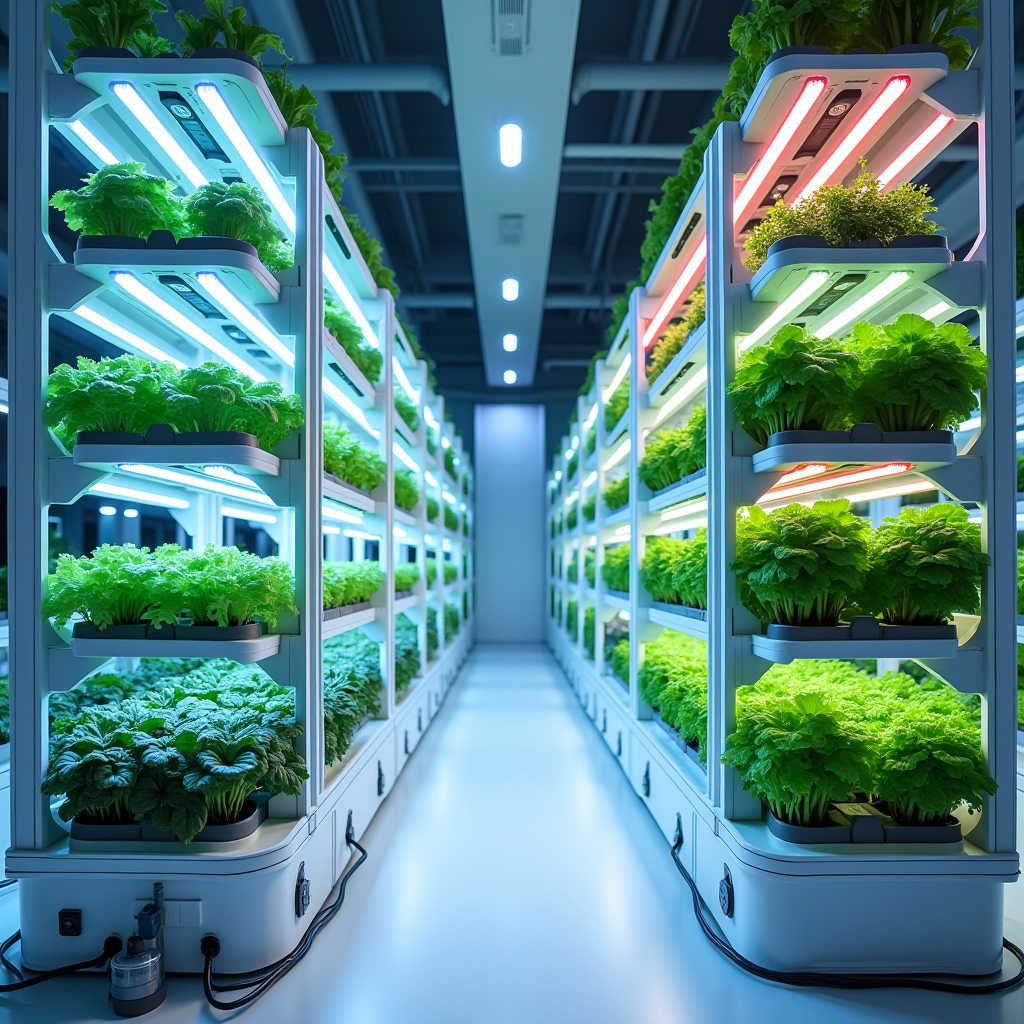
Dynamic LED projects are scaling hard, from large greenhouse deployments to stacked indoor farms, because spectrum is now a design parameter, not a fixed property of a fixture. As highlighted in this dynamic LED expansion case, growers are starting to use spectrum as a control lever, not just intensity. For leafy greens in vertical farms, that means you can shape morphology, texture, color, and nitrate levels with stage-specific blue:red:green and UV-A settings, instead of running “one size fits none.”
This guide is the missing piece: concrete spectrum recipes for indoor vertical lettuce and similar leafy crops, broken down by growth stage and matched to realistic PPFD bands. The goal: compact, high-yield, high-quality heads you can reproduce across racks, turns, and seasons.
Section 1: Common spectrum mistakes in vertical leafy greens
1. Running one static spectrum from seed to harvest
Most vertical farms pick a default spectrum preset (often “broad white” or “veggie”) and never touch it. It works, but you leave money and quality on the table.
- Seedling trays under too much red and too little blue stretch early and never fully recover.
- Mid-veg can handle more red for biomass, but needs enough blue to keep internodes tight and leaf angles upright.
- Pre-harvest benefits from targeted blue and UV-A to tune color, texture, and nitrates, even if total biomass is basically “locked in.”
Using one spectrum throughout is like using one nutrient mix for seedlings and finished heads. It works, but it is not optimized.
2. Over-relying on red for “efficiency”
Red photons are energy-efficient for photosynthesis, so many operations push heavy red ratios to chase µmol/J. The trade-off:
- Excessive red with low blue drives stretch and thin leaves.
- Heads fill the footprint but are loose, with poor shelf life.
- Quality metrics like dry matter percentage and texture slide.
Several controlled-environment studies on lettuce have shown that higher blue fractions increase leaf thickness and compactness at the cost of a small yield drop. In a vertical farm where space and quality drive profitability, that trade can be worth it.
3. Ignoring green light deep-canopy effects
Green used to be considered “wasted” for photosynthesis. We now know it penetrates deeper into lettuce canopies and stacked vertical layers, supporting lower leaves that blue-heavy spectra cannot reach as well. In multi-tier setups, that extra canopy penetration can stabilize head uniformity across benches.
Many commercial white LEDs already include 10–20% green. The mistake is not intentionally designing around that fraction: either over-correcting with too much narrow-band blue/red, or assuming all whites are equal when they are not.
4. Treating UV-A like a gimmick or a hazard, instead of a tool
UV-A (typically 365–400 nm) is tricky. Too much and you stress crops, scorch edges, and waste energy. Too little, and you miss a lever that can influence phytochemicals and, under the right conditions, help fine-tune nitrate and antioxidant profiles.
Current research on leafy greens suggests that low doses of UV-A, layered late in the crop cycle, can be used without yield loss when PPFD, nutrients, and environment are stable. The key mistake is blasting UV without timing, dose control, or measurement.
5. Forgetting that system type changes the plant’s response
A butterhead in a high-oxygen deep water culture (DWC) bed will not react exactly like a nutrient-film technique (NFT) plant under the same spectrum. Kratky-style reservoirs, DWC, NFT, and aeroponics each drive slightly different water and nutrient dynamics. Those differences change how aggressively you can push PPFD and how much stress a plant tolerates when you layer in high blue or UV-A.
In other words, spectrum cannot be separated from your hydroponic system, nutrient strategy, and climate. They all interact.

Section 2: Why these spectrum mistakes happen in vertical farms
1. Vendor presets and “efficiency-first” thinking
LED vendors sell simplicity: choose a preset, set the DLI, and grow. In large projects like the dynamic LED expansion described in this article, the narrative often centers around kiloWatt-hours saved per kilogram rather than how spectrum can tune morphology and chemistry.
That framing encourages operators to prioritize efficacy (µmol/J) and runtime over spectrum shaping. Red-heavy spectra win on the energy spec sheet, even if mixed-spectrum recipes win on quality and space-use efficiency.
2. Confusion between greenhouse and indoor guidance
Much of the published work on spectrum has roots in greenhouse or mixed-light environments. In a greenhouse, sunlight fills in missing wavelengths, making it easier to lean on red and blue hardware while relying on the sun for the rest.
In a fully enclosed vertical farm, you are the sun. Every spectral gap and imbalance is your responsibility. Rules of thumb that work in glasshouses can backfire when you move into black-box, multi-tier racks where plants never see daylight.
3. Lack of simple, stage-based recipes
Growers get hit with acronyms (PPFD, DLI, CRI, CCT, SPD) and complex spectral graphs, but almost never see: “Here is a practical blue:red:green:UV recipe per stage, along with PPFD and timing bands.” Without that, it is no surprise most farms ignore spectrum tools and just manage DLI and temperature.
4. Underestimating how fast feedback loops can work
Vertical farms move quickly. A butterhead run at 21–30 days is short enough that every stage you neglect has a visible effect on morphology and marketable yield. With modern tunable LEDs and simple logging, you can iterate recipes every cycle and lock in a house standard per cultivar.
The barrier is habit and bandwidth, not technology. Fixtures are ready. Software is ready. The missing piece is a clear playbook.
5. Spectrum is treated separately from hydroponic management
Because spectrum lives in the lighting panel and nutrients live in the mixing tank, they are often managed by different people or teams. Yet studies in controlled environment agriculture, including undergraduate research projects like the lettuce trials referenced in this program, repeatedly show that light interacts with nitrate uptake, root development, and even pH drift patterns.
Run high red without matching nitrogen supply and oxygenation in DWC or NFT and you can grow large, soft heads with higher tissue nitrate. Add targeted blue and UV-A late in the cycle without checking EC and you can overshoot stress and lose yield. Treating light and nutrients as one system is the way forward.
Section 3: Practical spectrum recipes for vertical-farm leafy greens
Now the part you can actually plug into your control system. Below are stage-based spectrum recipes for indoor vertical lettuce and similar leafy greens, assuming tunable LEDs that let you control blue, green, red, and UV-A channels independently or via presets.
Use these as starting templates. Dial them in over several cycles per cultivar and system type (NFT, DWC, or aeroponics).
Key assumptions and definitions
- Crop: Leaf lettuce, butterhead, romaine-type minis, and similar leafy greens.
- Environment: Multi-tier indoor vertical farm (no sunlight), with good airflow and CO₂ ~400–800 ppm.
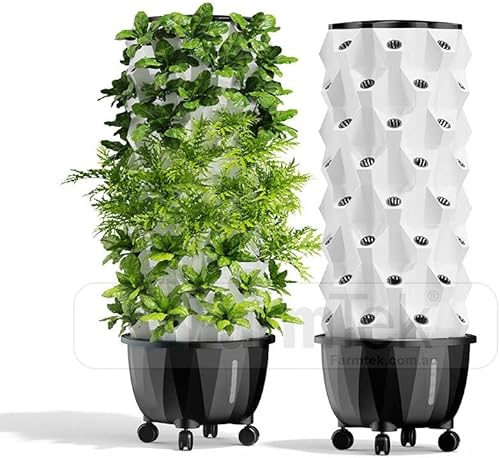
- System types: DWC, NFT, and aeroponic towers as common vertical farm setups, consistent with the stacked systems described in this overview of vertical farming.
- Ratios: Percentages are approximate shares of total photosynthetically active photons (400–700 nm), with UV-A treated separately.
- PPFD: Measured at canopy height with a quantum sensor; values are per stage.
Stage 1: Seedling / Propagation (days 0–7 or 0–10)
Goals: Stocky seedlings, strong roots, minimal stretch, uniform trays.
- Spectrum target (no UV-A):
- Blue: 25–35%
- Green: 15–25%
- Red (including deep red): 40–55%
- PPFD band: 120–200 µmol·m⁻²·s⁻¹ at canopy.
- Photoperiod: 16–18 hours.
Why: Higher blue content presses internode length down, gives you thicker cotyledons and first leaves, and lays the foundation for compact rosettes. Moderate red supports early biomass without forcing stretch. Green helps drive photosynthesis in emerging leaves without causing shade avoidance.
Hydroponic notes:
- In DWC or NFT, pair this with a slightly milder EC (0.8–1.2 mS/cm) and tight pH (5.8–6.0) to reduce stress.
- In Kratky or passive deep reservoirs, ensure water temperature is under control (18–21 °C) so the higher blue fraction does not slow growth excessively.
Example spectrum preset for seedlings
- If your fixture uses “channels” (B/G/R):
- Blue channel: 70–80%
- Green/white channel: 40–60%
- Red channel: 40–50%
- If your fixture uses “CCT + red”:
- Use a cooler CCT setting (5000–6500 K) at 80–100%
- Add red channel at 10–20% if available
Stage 2: Vegetative bulking (days 7–18, or main growth phase)
Goals: Rapid biomass, tight head structure, consistent leaf angles, minimal tip burn.
- Spectrum target (base, no UV-A yet):
- Blue: 15–25%
- Green: 15–25%
- Red: 50–65%
- PPFD band: 220–280 µmol·m⁻²·s⁻¹ at canopy for standard lettuce; up to ~320 µmol·m⁻²·s⁻¹ in well-managed, high-oxygen DWC or aeroponics with CO₂ supplementation.
- Photoperiod: 16 hours (common), up to 18 hours if heat and transpiration are controlled.
Why: As leaf area increases, you can lean more on red for energy-efficient photosynthesis and faster bulking. Keeping blue above ~15% maintains compactness and prevents the “ballooned” look you get with heavy red. Green stays in the 15–25% range to penetrate into the canopy and lower leaves.
Hydroponic notes:
- Match higher PPFD with appropriate nitrogen levels and oxygenation. In DWC, strong aeration is non-negotiable.
- In NFT and tower systems, make sure film depth and flow prevent local dry-outs as plants drink more under raised PPFD.
- Maintain EC in the 1.3–1.8 mS/cm range for most lettuces; monitor pH drift daily.
Example spectrum preset for veg bulking
- RGB tunable:
- Blue: 50–60%
- Green: 60–70%
- Red: 80–100%
- White + red:
- Neutral CCT (4000–5000 K) at 100%
- Red channel at 30–40%
Stage 3: Pre-harvest / final quality push (final 3–6 days)
Goals: Firm heads, good color, controlled nitrates, shelf life, and consistent morphology.
- Spectrum target (with UV-A):
- Blue: 20–30%
- Green: 15–25%
- Red: 45–60%
- UV-A: 1–3% of total photon flux equivalent, applied as either a daily block (for example 2–4 hours) or low-intensity full photoperiod.
- PPFD band: 240–300 µmol·m⁻²·s⁻¹ at canopy. Avoid sudden jumps of more than ~15% PPFD when entering this stage.
- Photoperiod: 16 hours is usually sufficient; some growers taper to 14–16 hours to reduce nighttime heat loads and simplify harvest timing.
Why: By late stage, most biomass is built. Here, spectra fine-tune quality. A modest bump in blue and a controlled UV-A layer can encourage more robust leaves and influence metabolite profiles without materially changing yield if EC, temperature, and moisture are steady.
Research into UV-A and high-blue treatments on leafy greens suggests potential for modulating nitrate levels and boosting certain phytochemicals when stress is not excessive and nitrogen supply is balanced. That is where good hydroponic nutrient management and EC control intersect with light strategy.
Hydroponic notes:
- Monitor EC closely. Slightly easing nitrogen in the final days while keeping potassium and calcium steady pairs well with blue/UV-A increases when targeting lower nitrate content.
- Watch leaf tissues for edge bronzing or spotting as you layer UV-A, especially on sensitive cultivars.
- Ensure ample airflow and leaf temperature control; UV-A on heat-stressed plants is a recipe for damage.
Example spectrum preset for pre-harvest
- RGB + UV tunable:
- Blue: 60–70%
- Green: 60–70%
- Red: 70–90%
- UV-A: 10–20% of its channel capacity, typically 2–4 hours into the main light window.
- White + red + UV bar add-on:
- Neutral/cool white at 100%
- Red at 20–30%
- UV-A bar operated at 25–50% intensity for 2–3 hours near mid-day equivalent.
How to implement these recipes across a vertical farm
Start simple and keep changes trackable. Here is a practical rollout pattern:
- Pick one cultivar and one representative rack (for example, DWC on middle tier).
- Program seedling, veg, and pre-harvest presets with the ratios above, keeping DLI roughly constant compared to your current schedule.
- Run side-by-side with your legacy static spectrum on an adjacent rack for 2–3 full cycles.
- Measure: head weight, diameter, height, core length, dry matter percentage if possible, and note any tip burn or color differences.
- Adjust one variable at a time: either blue fraction, red fraction, or UV-A duration, not all three in the same run.
The result will be a house spectrum standard that is far more precise than “veggie” mode and tuned to your nutrients, airflow, and system design.
Section 4: What to watch long-term: data, integration, and scaling
1. Lock spectrum into your SOPs, not just your app
Dynamic LEDs are only as good as the procedures wrapped around them. As your vertical farm scales, bake spectrum recipes into standard operating procedures alongside nutrient recipes and harvest specs:
- Define exact blue/green/red/UV ranges per stage and cultivar.
- Capture them in batch records and your farm management software.
- Train operators to check spectral presets when they check EC and pH.
The large-scale dynamic LED projects now being deployed, like the one covered in this report, are pushing exactly in this direction: light becomes a process parameter you can audit.
2. Track spectrum alongside hydro data
Your vertical farm is a closed loop. To really dial in quality, log light spectra and hydroponic metrics together:
- pH and EC trends per stage and per rack.
- Water temperature, especially in DWC and Kratky-style reservoirs.
- CO₂ levels and air temperature at each tier.
- Any adjustments to blue/red/green/UV-A presets.
Once you have a few months of data, you will be able to see patterns, such as certain blue-heavy or UV-A phases correlating with specific pH drift, tip burn risk, or nitrate test results. That is how you move from “rules of thumb” to a dialed-in house recipe.
3. Validate quality claims with basic testing
If you are using spectrum recipes to justify premium pricing, you need more than photos. Consider:
- Periodic nitrate testing on finished heads if regulations or clients care about limits.
- Simple shelf-life trials: record days to visible wilting or browning at a set storage condition.
- Occasional lab analysis for dry matter and key phytochemicals if you are marketing functional benefits.
Even basic internal testing, repeated consistently, will give you feedback on whether your blue and UV-A adjustments are doing what you think.
4. Scaling across formats: racks, towers, and benches
Vertical farming is not just metal racks. It includes towers, multi-tier NFT gutters, and deep tables with stacked lighting, as outlined in this overview. Each geometry changes light distribution and airflow:
- Towers: More self-shading and curved surfaces. Slightly higher green fraction can help canopy penetration. Check PPFD around the tower, not just on one face.
- NFT channels: Heads are usually aligned in rows with consistent spacing. Fine-tuning red/blue for compactness pays off in how many rows you can squeeze per tier.
- DWC rafts: Typically open, uniform canopies. You can safely push PPFD and fine-tune spectra for quality as long as DO levels stay high.
Do not assume one spectrum recipe will behave identically across all geometries. Start with the same ratios, then adjust by geometry based on plant response.
5. Keep an eye on fixture evolution
Fixture technology is moving fast. Many “white plus red” bars now include extra blue and, in some cases, integrated UV-A channels. Others give you fine-grained RGB control. As tunable installations grow, as seen in modern dynamic projects summarized in this lighting overview, the constraint is less about hardware and more about how precisely you decide to use it.
As you spec new fixtures or expand your farm:
- Insist on seeing the full spectral power distribution (SPD), not just CCT and CRI.
- Check whether you can independently dim blue, red, and UV-A channels.
- Make sure control software lets you schedule stage-based presets across tiers and time.
The farms that treat spectrum as a core agronomic variable, instead of a cosmetic LED feature, will be the ones hitting consistent head weights, better shelf life, and tighter control over nitrate and quality specs.
Dynamic LEDs give you the steering wheel. These recipes are how you actually turn it.

As an Amazon Associate, I earn from qualifying purchases.