Lagos female farmers are not limited to soil and rainwater anymore
The new Lagos State Government (LASG) agricultural input packages for women can do much more than support another round of open-field vegetables. With the right design choices, those same inputs can become high-yield NFT channels, DWC tubs, or substrate drip systems that run profitably in crowded Lagos neighborhoods.
This guide is about that translation: how to convert LASG input kits into hydroponic microfarms that work with Lagos water, power, and market realities in 2026.
I am going to walk through the specific mistakes that keep many beneficiaries stuck at “free input” level instead of “profitable, compliant microfarm” level - and give you exact layouts, record-keeping habits, and market pathways you can implement on a balcony, rooftop, or small plot.
1. Common mistakes Lagos women make with LASG agric inputs
Mistake 1: Treating LASG inputs as generic soil-farming gifts
LASG has been distributing inputs like seeds, fertilizers, sprayers, simple irrigation gear, and in some cases small water pumps and knapsack sprayers to women farmers, as reported in this Punch report. Most recipients simply extend existing soil beds instead of asking: “How do I turn this into controlled, water-efficient hydroponic production?”
The result: same low margins, same pest pressure, and the same dependence on good weather.
Mistake 2: Choosing the wrong hydroponic system for Lagos constraints
Hydroponics is not one thing. For Lagos women working in dense areas like Agege, Surulere, Shomolu, Alimosho, and on the islands, three practical system families matter:
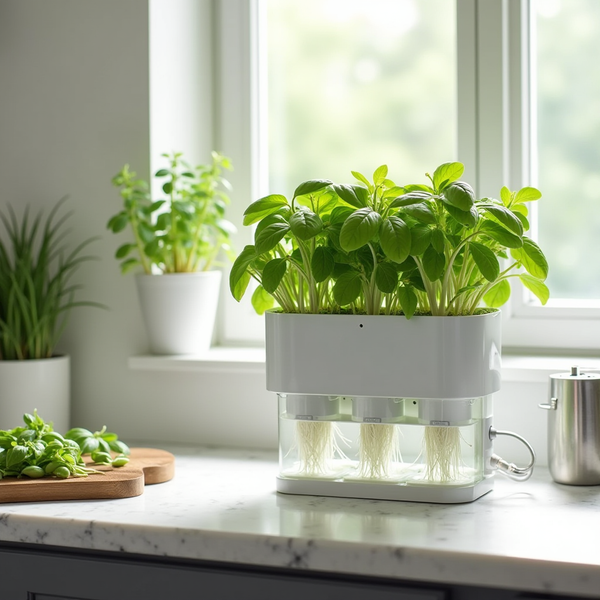
- Passive / low-power systems: Kratky buckets and tubs for leafy greens and herbs.
- Recirculating water systems: Deep Water Culture (DWC) and simple NFT (nutrient film technique) for higher turnover.
- Substrate drip systems: Buckets or grow bags filled with coco coir or rice husk, fed with a small pump and drippers.
The mistake is selecting a system that fights your reality:
- NFT with long runs but unreliable power supply.
- DWC in a place with very hot direct sun and no shading.
- Substrate drip where water is scarce and storage is poor.
System choice must match three things: your water source, your power reliability, and your daily time availability.
Mistake 3: Ignoring pH/EC and treating hydroponics like “water plus NPK”
Most LASG fertilizer bundles include NPK blends designed for soil. Hydroponics prefers complete, water-soluble formulas with micronutrients, and it absolutely depends on controlling pH and EC (nutrient strength) in the solution, as explained in this hydroponics overview.
Common failure pattern:
- Using soil NPK granules in a tank with no calcium, magnesium, or trace elements.
- Guessing dosage by color instead of measuring EC.
- Never checking pH, so nutrients lock out and leaves yellow or burn.
Mistake 4: Skipping Lagos compliance, records, and market strategy
LASG micro-support and future urban farming grants will track impact. That means they will ask: what did you plant, how much did you harvest, and where did you sell it?
Many women farmers:
- Do not register simple business names or cooperatives.
- Do not keep basic production records (planting date, harvest weight, sales).
- Sell irregularly without stable off-take, so income stays unpredictable.
That makes it harder to qualify for larger support, cold-chain projects, or structured market programs.

2. Why these mistakes happen with LASG input programmes
Reason 1: Program design talks “inputs”, not “systems”
Most government support frames success as “number of women who received inputs”. That is a start, but a packet of seeds, a bag of fertilizer, and a basic pump are components, not a productive system.
The gap: women are not guided to re-arrange those components into:
- 10 Kratky tubs producing 150 - 250 heads of lettuce per cycle.
- One 300 - 500 L DWC bed that turns out regular amaranth, ugu, or soko.
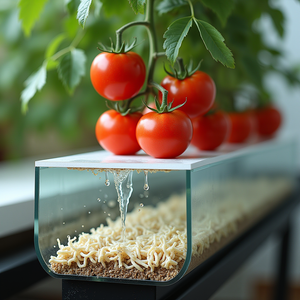
- A 40 - 60 bucket substrate system for tomatoes and peppers with drip emitters.
Inputs are easier to distribute than systems are to teach, so most women are left to guess.
Reason 2: Hydroponics is seen as “too high tech” for small women farmers
Hydroponics in Nigeria is still new, and often associated with large commercial greenhouses, as noted in this Nigerian hydroponics guide. Many LASG beneficiaries assume they need imported kits, full climate control, or huge capital to start.
The reality: a Kratky or simple DWC microfarm that uses your existing LASG pump, local plastic drums, and a shade net can be built on a balcony or rooftop at modest cost, then scaled from there.
Reason 3: Limited training on pH, EC, and water quality
Standard extension training in Lagos often focuses on land preparation, spacing, and pesticide use. Hydroponic training needs a different language: solution volume, EC in mS/cm, pH 5.5 - 6.5, and nutrient change intervals. Without this, recipients pour fertilizer into a tank “until it looks rich” and hope for the best.
Resources like this hydroponics guide and Nigeria-focused business breakdowns show that once pH/EC basics are understood, hydroponics becomes repeatable and profitable.
Reason 4: Weak links between LASG support, cooperatives, and urban markets
Support is often delivered as a one-off event: inputs are handed over, photos are taken, and everyone goes home. But to run hydroponic microfarms in Lagos, you need ongoing structure:
- A women’s cooperative or cluster that can bulk-buy soluble nutrients and media.
- Shared logistics to reach supermarkets, restaurants, and online grocers.
- Joint training on food safety, pesticide records, and traceability.
Without those links, each woman operates alone and stays small and vulnerable to price swings.

3. How to fix it: map LASG input kits to working hydroponic microfarms
Now we turn the program into a system. Below are three realistic builds for Lagos women using typical LASG-style inputs plus a few targeted hydroponic upgrades.
Build 1: Low-power Kratky microfarm for balconies and tight spaces
Best for: Women with very unreliable power, limited time, and access to some clean water (borehole, vendor, or neighborhood tap).
Typical LASG items you can convert
- Seeds: lettuce, fluted pumpkin (ugu), amaranth, okro, herbs.
- Basic fertilizer: NPK blends (you will supplement, not rely on these).
- Knapsack sprayer: useful for foliar feeds and cleaning systems.
Extra hydroponic items to add
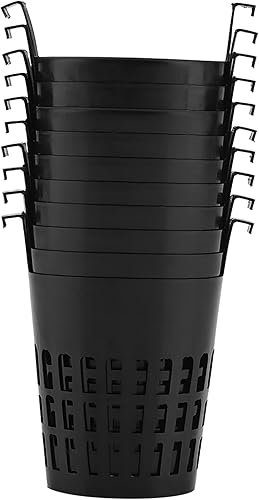
- Food-grade plastic tubs or 25 - 50 L buckets with lids.
- Net pots (or drilled plastic cups) and inert media (coco coir, perlite, or rockwool).
- Complete soluble hydroponic nutrients that include micronutrients.
- Simple digital pH meter and EC meter.
Basic Kratky layout for Lagos
- Use 8 - 12 tubs, each 25 - 40 L, with 6 - 8 planting holes per lid.
- Fill with nutrient solution at EC 1.2 - 1.8 mS/cm, pH 5.8 - 6.3.
- Start seedlings in sponges or coco plugs for 10 - 14 days, then transplant.
- Leave 2 - 3 cm air gap between net pot base and solution for root oxygen.
- Place tubs under a simple shade net or on a shaded balcony to avoid overheating.
Yield and income targets
- Target 150 - 200 heads of lettuce or equivalent leafy greens every 4 - 5 weeks.
- Sell in bunches to nearby canteens, bukas, salad bars, and neighbors.
- Reinvest profits in more tubs and better meters.
Build 2: Small DWC / NFT hybrid using LASG pump
Best for: Women with relatively stable power (or small inverter/solar), and access to a small yard or rooftop.
Typical LASG items you can convert
- Small water pump included in some irrigation packages.
- Hoses, connectors, maybe small poly tanks.
- Seeds for leafy vegetables and possibly tomatoes or peppers.
Extra hydroponic items to add
- One 200 - 500 L reservoir (drum or tank, food-grade if possible).
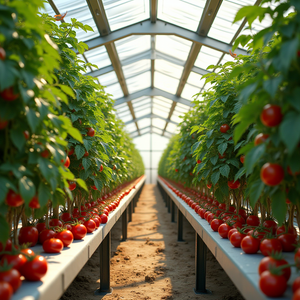
- PVC pipes or channels for an NFT-style top section.
- Air pump and air stones if you want stronger DWC performance.
- Net pots, media, complete hydroponic nutrients, pH/EC meters.
System concept
- Reservoir on ground level feeding a short NFT ladder with the LASG pump.
- Return line flows back into the reservoir.
- Below the NFT pipes, a simple DWC bed or a few big buckets provide backup capacity.
When power goes off, NFT flow stops, but plants can survive short outages if the pipes are not too long and the environment is not extremely hot. Adding an air pump on a small backup inverter increases safety.
Yield and income targets
- 36 - 72 NFT sites plus 6 - 12 DWC buckets.
- Continuous harvest of greens and herbs to a fixed set of buyers.
- Consider simple contracts with salad vendors or restaurants.
Build 3: Substrate drip microfarm for tomatoes and peppers
Best for: Women with a bit more outdoor space and better water storage, interested in higher-value fruiting crops.
Typical LASG items you can convert
- Tomato and pepper seeds.
- Fertilizer that can still supplement base nutrition.
- Knapsack or motorized sprayer.
- Basic irrigation or water pump.
Extra hydroponic items to add
- Grow bags or buckets filled with coco coir or a coco-perlite mix.
- Drip lines and emitters feeding each bag from a central reservoir.
- Soluble nutrients tuned for fruiting crops, with calcium and magnesium.
- pH/EC meters and a timer for the pump.
System concept
- 20 - 40 bags laid out in rows, each with one tomato or 2 - 3 pepper plants.
- Reservoir tank mixed to EC 1.8 - 2.4 mS/cm, pH 5.8 - 6.3.
- Pump runs several times per day (short pulses) depending on heat and plant size.
- Run-off collected and reused if you can monitor EC and prevent salt buildup.
Training and cooperative pathways for Lagos women (2026 outlook)
To maximize these builds, organize through:
- Registered women’s cooperatives with a simple constitution and leadership.
- Links to LASG agric extension offices for training on hydroponics, food safety, and record keeping.
- Partnerships with agritech firms and NGOs already working on urban farming and hydroponics in Nigeria, as highlighted in this Nigerian guide.
4. What to watch long-term: compliance, records, and market access in Lagos
Step 1: Basic registration and compliance
Hydroponic microfarms are still farms. To stay eligible for Lagos urban farming grants and support, set up:
- Business identity: Register a business name or cooperative with the appropriate authorities.
- Location documentation: Lease agreement or proof of permission for rooftop, balcony, or yard use.
- Safe water handling: Simple filtration if using well or surface water, plus clear labeling of nutrient tanks and chemical storage.
Step 2: Production and food safety records
Keep a notebook or spreadsheet that tracks:
- Date of seed sowing, transplanting, and harvesting for each batch.
- Type and batch number of nutrients used.
- Any pesticide applications (product, concentration, date, and target pest).
- Harvest weight per crop and where it was sold.
These records support food safety requirements and prove your farm’s performance when talking to buyers or applying for LASG schemes.
Step 3: Market positioning for Lagos hydroponic produce
Lagos has a growing middle class and hospitality sector that values clean, reliable leafy greens and fresh herbs. Position your microfarm around:
- Consistency: Offer a fixed weekly quantity rather than random availability.
- Freshness and cleanliness: Hydroponic produce can be sold with roots attached, rinsed and packed.
- Traceability: Use your records to assure buyers that inputs are safe and controlled.
Step 4: Scaling with data and cooperative leverage
Once your first microfarm cycle is complete, use your numbers:
- Calculate profit per square meter or per tub/channel.
- Identify which crops had the best margin and lowest losses.
- Standardize those crops across your cooperative to approach larger buyers.
With clean records and consistent supply, women-led hydroponic cooperatives in Lagos are well positioned for future LASG programs aimed at food security, climate-resilient agriculture, and youth employment, as urban hydroponics continues to spread in Nigeria as discussed here.

As an Amazon Associate, I earn from qualifying purchases.