Hydroponic Living Walls for Restaurants & Retail: Design, Irrigation, Lighting, and Code Compliance (2025 Guide)
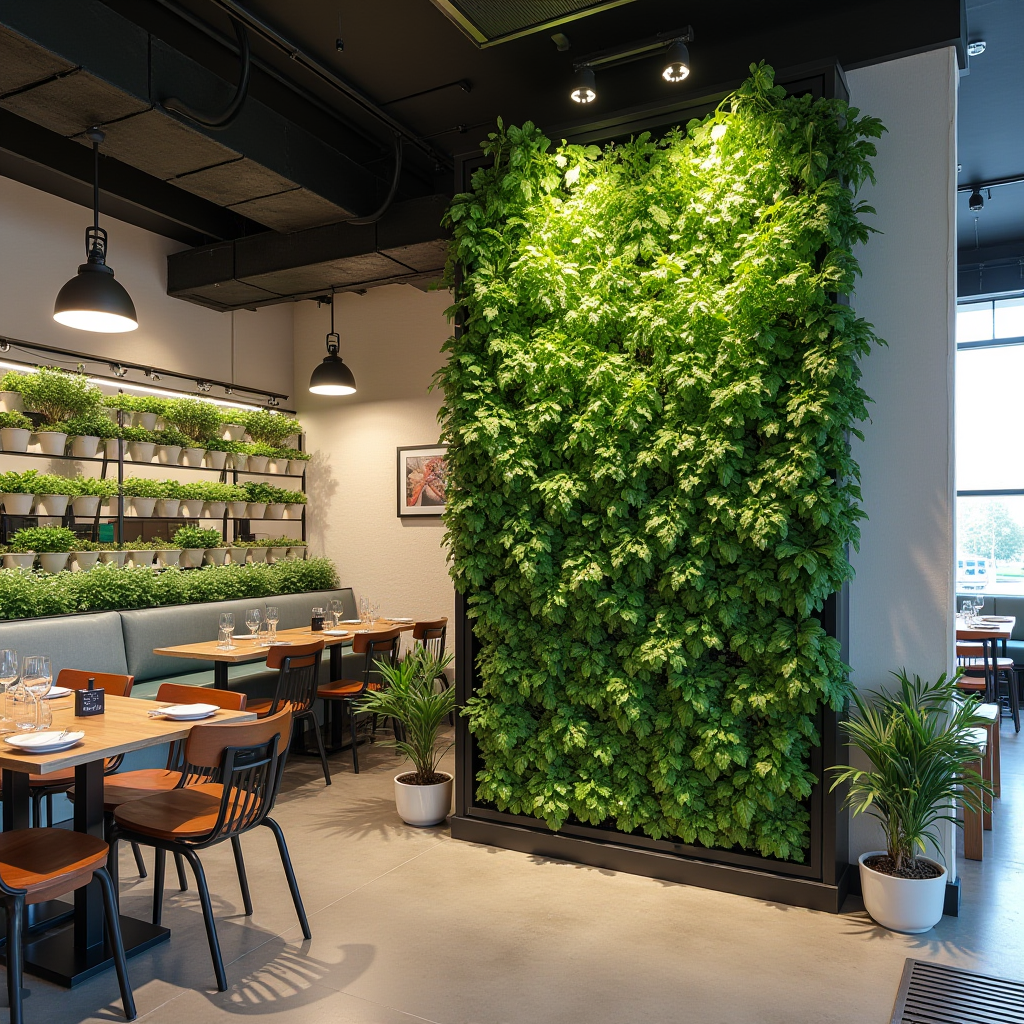
Most commercial living walls fail for the same reason: they are designed like decor, not like critical infrastructure. In a restaurant, hotel, or mall, a vertical hydroponic wall is closer to an HVAC or refrigeration asset than a houseplant. If you do not spec irrigation, lighting, drainage, and safeguards properly, the wall will look tired in 3 months and become a maintenance and code headache in 12.
At the same time, venues like NEXTOPIA’s interactive sustainability space in Bangkok’s Siam Paragon mall are proving how powerful visible, hands-on green systems can be when they are engineered correctly and made truly interactive, including hydroponic planting and harvesting for guests, as described in this overview. The bar is rising fast.
This guide is written for operators, designers, and engineers who need living walls that can survive in real, high-traffic spaces. We will walk through the four big failure zones using a mistakes-first model:
- Common mistakes in vertical hydroponic wall design for restaurants and retail
- Why those mistakes keep happening
- How to fix them with clear design specs and target ranges
- What to monitor long-term so the wall stays compliant and profitable
1. Common mistakes in commercial hydroponic living walls
1.1 Treating the wall as a static decoration, not an engineered system
Most failed walls started as a moodboard item, not an engineering package. Typical issues:
- No clear irrigation strategy (recirculating vs drain-to-waste/fertigation).
- No filtration or emitter selection, so drippers clog and plants desiccate in strips.
- No PPFD/DLI targets or uniformity spec; lights are chosen for looks, not photosynthesis.
- No condensate or humidity plan, so framing, drywall, and finishes slowly rot.
- No spill containment, backflow protection, or defined drainage path.
1.2 Random irrigation layouts that cause “striping” and dead zones
Many walls run a single top manifold with basic drippers and hope gravity does the rest. The result:
- Top rows: overwatered, nutrient-starved, prone to algae.
- Middle rows: acceptable growth for a while, then salt buildup.
- Bottom rows: chronic underwatering because emitters are partially clogged and pressure is low.
On a 3–5 m tall wall, you often see vertical brown bands where pressure drops or drippers clog.
1.3 Lighting “by vibe” instead of by PPFD/DLI
In restaurants and hotels, lights often serve branding and ambience first. Common outcomes:
- Wall-wash accent lights that hit the top half strongly and leave the bottom half in perpetual shade.
- Powerful spotlights creating hot zones that fry herbs in one quadrant while the opposite side barely photosynthesizes.
- No dimming or zoning, so plants get the same intensity whether the venue is open or not.
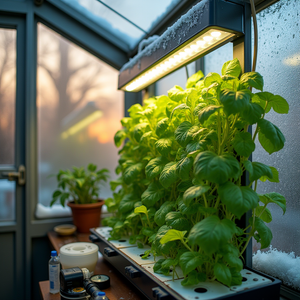
Herbs and leafy greens used for on-site harvest generally want a PPFD of 150–250 µmol/m²/s at canopy and a DLI of about 12–18 mol/m²/day for steady, compact growth, as outlined in practical indoor farming guides like this vertical system overview.
1.4 Ignoring VPD, humidity, and condensate in interior spaces
Warm nutrient solution, transpiring foliage, and cool interior surfaces make a perfect recipe for condensation, mold, and spalling finishes. Typical problems:
- Condensation running down the back of the wall into hidden cavities.
- Local relative humidity spiking around the wall, triggering comfort complaints or mold.
- Unmanaged condensate from lights or nearby HVAC diffusers dripping into the planting face.
1.5 Code blind spots: backflow, overflows, and access
Walls get failed or delayed at inspection because:
- The make-up water line lacks an appropriate backflow preventer recognized by local code.
- There is no clearly defined secondary containment or floor drain sized for a worst-case spill.
- Electrical components are not rated or protected for wet locations.
- There is no safe access plan (ladders, catwalk, or service points) for top rows.
Remember: inspectors will treat this as plumbing + electrical + food-contact (if you harvest) + life-safety combined.

2. Why these mistakes keep happening
2.1 Design is led by branding, not performance
Retail and hospitality projects are usually driven by concept visuals. Living walls appear in pitch decks as lush, seamless green planes. The grower, mechanical engineer, and code consultant often come in after the visual decisions are locked.
Compare that to projects like the "Source of Life" dome at Expo 2025 Osaka, where structure, water, plants, and climate control were designed together as one closed-loop ecosystem, as described in this article. Your wall needs that same systems-first thinking, just flattened onto a vertical surface.
2.2 No clear choice between recirculating and fertigation
A lot of specs say "hydroponic living wall with automatic irrigation" and leave it there. Behind the scenes, that can mean one of two very different approaches:
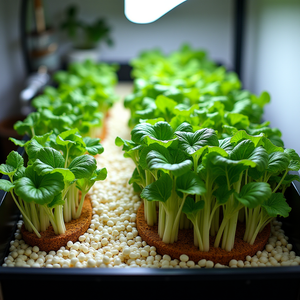
- Recirculating wall: Nutrient solution recirculates from a sump through emitters and back to the tank. Requires filtration, disinfection strategy, and robust monitoring.
- Fertigation / drain-to-waste: Clean water is mixed with fertilizer via a doser, sent through the wall, and drained away. Easier to keep clean, but uses more water and nutrients.
Without this decision, you end up with a hybrid that is difficult to maintain and awkward to permit.
2.3 Underestimating how vertical surfaces distort light and airflow
Lighting and HVAC layouts in restaurants and hotels are usually designed for people, not plants. When you add a tall, leafy surface:
- Top rows sit closer to fixtures and can receive 2–3x the PPFD of the bottom rows.
- Fans and diffusers create localized turbulence that dries out some sections while others stay stagnant.
- Guests and furniture block airflow at the lower half of the wall.
Without modeling or at least simple grid measurements, you cannot see this until the foliage tells the story with uneven growth.
2.4 Fuzzy ownership of maintenance
In many venues, the question of "who owns this wall?" is never answered properly. It often lands somewhere between facilities, F&B, and a third-party maintenance vendor.
So pH and EC drift, filters clog, and light schedules creep out of spec. By the time someone notices, you are replacing half the plant modules and apologizing to inspectors.
2.5 Code is treated as an afterthought instead of a design driver
Backflow, drainage, and overflows are easy to design early and painful to retrofit. But living walls are often value-engineered down to "just a planter" in drawings, then treated as decorative when they are functionally wet systems tied to potable water and permanent power.
That is how you end up with surprises like "you need a different backflow device on that tee" or "this wall now triggers additional sprinkler or smoke detection requirements." Firms specializing in living walls, such as those described in this living wall primer, treat these as core scope, not extras.

3. How to fix them: design specs & target ranges
3.1 Step 1: Decide the system type and duty
Start by answering four questions before any aesthetic decisions:
- Primary purpose? Brand feature only, or true production (e.g., restaurant herb wall for daily harvest)?
- Access? Is there rear access or is all service from the front only?
- Water source? Hard plumbed to potable, or stand-alone reservoir that is manually filled?
- Drainage? Floor drain in reach, or do you need a contained, pumped drain-back solution?
For most restaurants, hotels, and mall features, these templates are reliable:
- Showpiece wall with light harvesting: Recirculating hydroponic panels with a central sump, filtration, UV or ozone, and automation. Hard plumbed with backflow protection, with a floor drain within the containment zone.
- Heavy production herb wall in or near kitchen: Consider fertigation / drain-to-waste rails or panels for simpler sanitation and clearer food safety protocols.
3.2 Irrigation: recirculating vs fertigation and emitter layout
3.2.1 Recirculating vertical wall (common in malls and lobbies)
Core elements:
- Central reservoir or sump sized at 3–5 L per m² of planting area as a baseline.
- Inline filtration: 100–200 micron screen or disc filter ahead of emitters.
- Pressure-regulated irrigation zones (1–2 bar typical) to keep flow consistent across height.
- Emitters: typically 2 L/h to 4 L/h drippers or short open microtubes every planting pocket.
- Drainage channel at the base feeding back to the sump, pitched at 1–2% slope.
Control strategy:
- Short, frequent irrigation pulses (e.g., 1–3 minutes every 10–20 minutes during lights-on).
- Moisture sensors or at least a manual check protocol to avoid waterlogging.
- Reservoir mixing and aeration via circulation pump and air stones to maintain oxygen and uniform EC.
3.2.2 Fertigation / drain-to-waste (common in kitchens and high-sanitation zones)
Core elements:
- Fertigation unit (proportional doser or injection pump) feeding from potable water to a small day tank or directly to the wall.
- Dedicated drainage line to a grease-free sanitary drain with an air gap.
- Flush cycles to push out any standing nutrient solution from lines after watering.
When to choose it: If the wall is primarily about producing herbs for food service and the local health authority is cautious about recirculated nutrient in food-contact areas, drain-to-waste simplifies the conversation significantly.
3.3 Lighting: PPFD, DLI, and uniformity for vertical planes
Design your lighting as if you are planning a grow rack turned sideways:
- Target PPFD: 150–250 µmol/m²/s across the plant surface for most culinary herbs and leafy greens.
- DLI: 12–18 mol/m²/day, which typically means 12–16 hours of light at the PPFD above.
- Uniformity: Aim for a PPFD uniformity of at least 0.7 (min/avg) across the wall.
Practical layout tips:
- Use vertical light bars or staggered linear fixtures mounted on rails, not just ceiling downlights.
- Mount lights 20–40 cm off the canopy plane and zone them vertically so each section can be dimmed independently.
- Measure PPFD with a quantum sensor in a grid (e.g., every 60–90 cm); do this after plants are established, not just on bare panels.
Systems like the ZipGrow-style wall modules described in this guide pair vertical channels with appropriate LED bars. Use those as reference, then scale up for commercial interiors.
3.4 Airflow, VPD, and humidity management
In a dining room or lobby, you need plant-friendly air without creating cold drafts or noise.
- Target leaf-zone airspeed: 0.2–0.5 m/s along the wall face.
- Comfort RH for guests: typically 40–60% in conditioned interiors.
- Plant VPD: aim for 0.8–1.2 kPa at the leaf zone for leafy greens and herbs.
Implementation options:
- Discreet, low-noise circulation fans mounted above or alongside the wall to sweep across the foliage.
- Coordinate with mechanical engineer to keep supply diffusers from blasting directly onto the wall.
- If the wall is large (over 20–30 m²), consider treating it like a humidifier load in HVAC calculations.
Watch for visible condensation on nearby glass or metal. That is a sign that local RH is too high or surfaces are too cold relative to air temperature.
3.5 Condensate and interior protection
Every interior living wall should treat water like it is going to escape and condensate like it is inevitable.
- Install a continuous waterproof backing (e.g., membrane over cement board) behind the panel system.
- Provide a drip edge or gutter at the bottom of the wall face to catch stray water.
- Route condensate from overhead fixtures or nearby HVAC coils away from the planting zone.
- Specify mold-resistant materials and avoid paper-faced gypsum anywhere near the wet zone.
Borrow thinking from systems like the geodesic aquaponic dome described in this piece: structural, water, and plant interfaces are designed to stay separated and drainable.
3.6 Nutrients, pH, and EC ranges for commercial herb walls
For recirculating vertical systems growing herbs and leafy greens:
- pH: 5.8–6.2 is a solid working band.
- EC: 1.2–2.0 mS/cm depending on species and growth phase.
- Water temperature: 18–22 °C to balance root health and dissolved oxygen.
Operational practices:
- Top off with plain water daily, adjust pH as needed.
- Check EC at least 2–3 times per week and adjust with concentrate or dilution.
- Full reservoir change every 2–4 weeks in recirculating walls, depending on load and filtration.
Think of this as DWC logic applied to a vertical manifold. You are running the same chemistry; the geometry is the only major difference.

4. What to watch long-term: maintenance, compliance, and uptime
4.1 Build a living wall maintenance schedule that fits operations
For high-traffic commercial spaces, you are looking for a stable weekly rhythm, with light daily checks and deeper monthly tasks.
Daily (5–10 minutes):
- Visual walk-through for wilting, leaks, or blocked emitters.
- Check reservoir level and temperature.
- Confirm lights and pumps are on schedule.
Weekly (30–60 minutes):
- Measure and log pH and EC (keep a simple spreadsheet or logbook).
- Clean filters and check a sample of emitters for flow.
- Prune and harvest to maintain airflow and target form.
Monthly:
- Deep clean accessible plumbing components and pump strainers.
- Inspect waterproofing, backing, and any visible structural elements for moisture damage.
- Review light maps (simple PPFD spot checks) and adjust dimming if plants are stretching or burning.
Quarterly / seasonally:
- Full system sanitation cycle, especially for recirculating walls.
- Replace underperforming plants or entire modules as needed.
- Formal review with facilities and F&B on how the wall is supporting operations (harvest volumes, guest feedback, issues).
4.2 Code compliance: keep your paperwork and safeguards current
Even if the wall passed inspection once, requirements can evolve, or the system can drift from the approved design.
- Keep a record of the installed backflow preventer type and service history.
- Maintain as-built drawings of plumbing and electrical, including shutoff locations.
- Document nutrient ingredients and SDS sheets if herbs are used in food service.
- Log any water quality issues or spills and how they were mitigated.
Inspiration from large experiential sustainability builds like NEXTOPIA, outlined in this writeup, is useful, but your wall lives or dies by the boring stuff: valves, sensors, records, and clear responsibility.
4.3 Staffing and training
Assign clear ownership. Someone on-site needs enough hydroponic literacy to interpret pH/EC logs and spot emerging problems. You do not need a full-time grower, but you do need a named person and a simple playbook.
Training should cover:
- Basic hydroponic principles (nutrient solution, pH, EC, light, airflow).
- System map: where water enters, where it leaves, and where it can fail.
- What to do in an emergency (leak, pump failure, power loss).
4.4 Benchmarks for a healthy, compliant hospitality living wall
Use these as quick reference targets for a restaurant or retail herb wall:
- Lighting: 150–250 µmol/m²/s at canopy, 12–16 h/day, uniformity ≥ 0.7.
- Climate: 40–60% RH in space, leaf-zone VPD 0.8–1.2 kPa, no visible condensation.
- Irrigation: Short pulses, full surface coverage, no chronic wet or dry patches.
- Nutrients: pH 5.8–6.2, EC 1.2–2.0 mS/cm, full change every 2–4 weeks in recirculating setups.
- Safety: Proper backflow device, visible shutoffs, secondary containment, and clear service access for all heights.
Hit those benchmarks and your wall stops being a liability and starts acting like a living asset: a visible signal of sustainability, a practical source of herbs or garnish, and a talking point that actually works season after season.
As an Amazon Associate, I earn from qualifying purchases.