Hydroponic Bathua Indoors: why soil advice is failing your tank
Most guides will tell you bathua “grows anywhere” and “thrives in any well-drained soil.” Useful for backyard beds, useless when you are staring at a reservoir, pH pen in hand, wondering why your Chenopodium album looks tough, bitter, or ready to bolt.
Indoor coverage has finally noticed bathua as a nutrient-dense green that fits into winter container gardens and small spaces, as noted in this bathua container guide and broader indoor gardening pieces such as this winter indoor garden article. But almost all of that advice is soil-centric.
If you are running DWC, NFT, or semi-hydro/wick and want tender, mild baby-leaf bathua all year, you need hard numbers: PPFD, DLI, VPD, EC, pH, and a realistic harvest schedule. That is what this guide delivers, plus how to limit bitterness, keep nitrates/oxalates realistic, and stop the crop from bolting under indoor lights.
1. Common mistakes when growing bathua hydroponically
1.1 Treating bathua like lettuce instead of a Chenopodium
Most growers drop bathua into their “lettuce settings”: low EC, cool root zones, gentle light. The result is leggy, floppy plants that taste watery but still bitter. Bathua behaves more like a cousin of spinach, beet greens, and amaranths: nitrophilous, a little tougher, happier with moderate EC and moderate light, but quick to accumulate nitrate if you push nitrogen without enough photons.
1.2 Running “whatever light came with the kit”
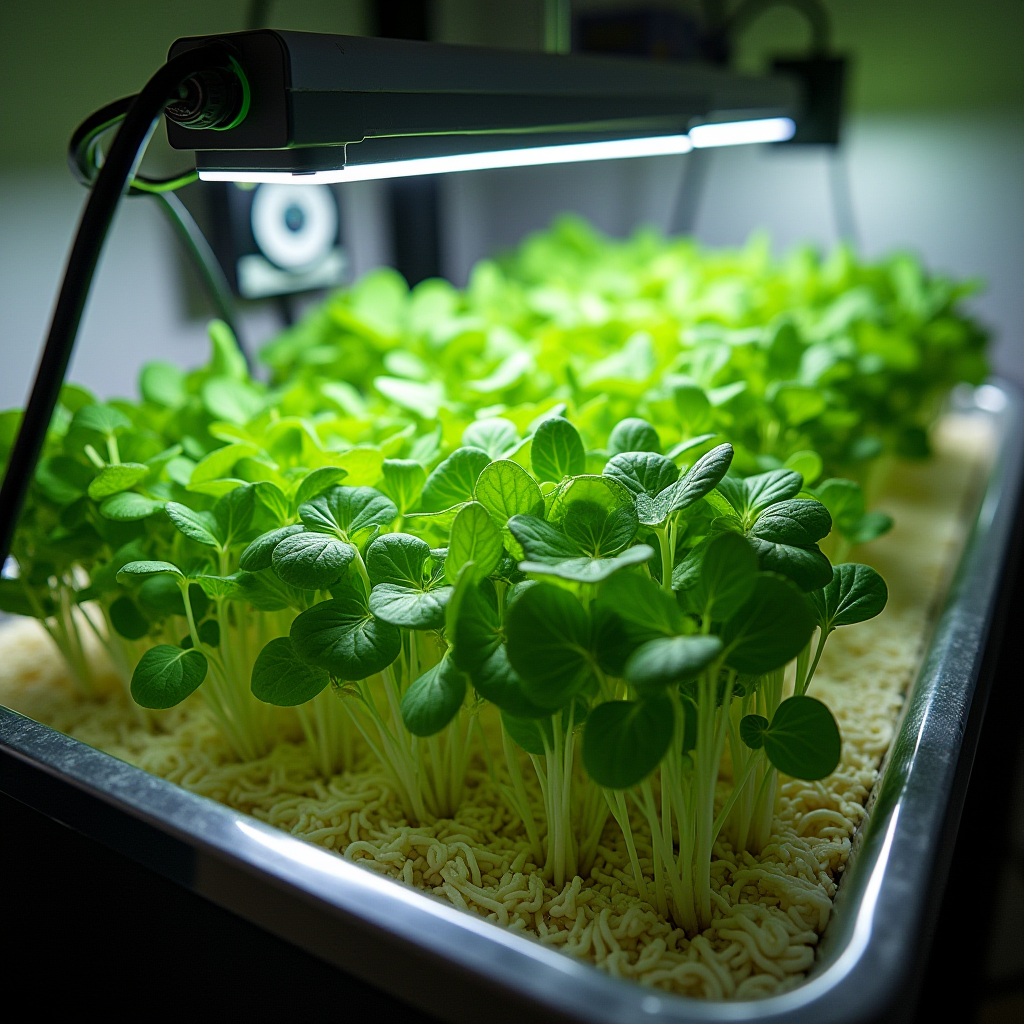
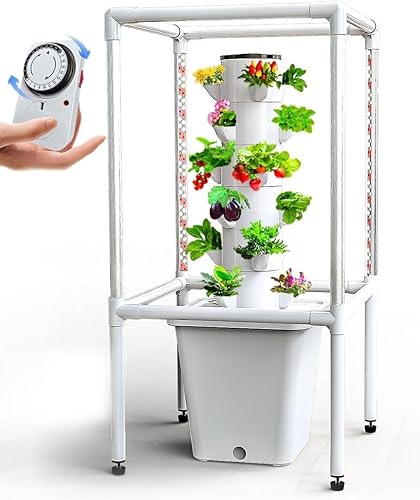
Off-the-shelf indoor gardens often ship with a generic LED bar and zero real data. You see phrases like “full spectrum” or “equivalent to sunlight,” but no PPFD map. For bathua baby leaf, you should be aiming for:
- PPFD: 200–250 µmol·m⁻²·s⁻¹ as a baseline over the canopy
- DLI: 12–15 mol·m⁻²·day⁻¹ for very tender greens, up to 18 for firmer, higher-yield leaves
- Photoperiod: 16 hours on, 8 hours off
Below that, plants stretch and leaves stay small. Above ~350 µmol·m⁻²·s⁻¹ without dialing in VPD, you start seeing tough texture and edge damage.
1.3 No real handle on EC, pH, and nitrate loading
Bathua can pull in a lot of nitrate. That is one reason it thrives on fertile, disturbed soils. In hydroponics, if you run high EC and heavy N without enough light, you get lush but watery leaves, higher nitrate levels, and more bitterness.
Typical mistakes:
- Running generic “all purpose” nutrient at 2.0–2.4 mS/cm from day 1
- Letting pH drift above 6.5 where Fe, Mn, and P availability drops
- Never backing off N in the final week before harvest
1.4 Ignoring VPD, so you get either leathery or floppy leaves
Indoors, your humidity and temperature are often set for human comfort, not plant physiology. If VPD is too low (air too humid or too cool), bathua transpires poorly and you get weak stems, soft, disease-prone leaves, and more nitrate accumulation. Too high VPD (hot and dry air) and the plant tries to protect itself: thicker, tougher leaves and occasional marginal burn.
For indoor baby-leaf bathua, you want:
- Seedlings (week 1): 0.6–0.8 kPa VPD
- Main growth: 0.8–1.2 kPa VPD
- If you push PPFD toward 300–350 µmol: up to 1.4 kPa with tight nutrient and calcium management
1.5 Letting photoperiod and heat drive bolting
Chenopodium album wants to complete a life cycle; under long days and warmth, it can shift toward reproductive growth (bolting) instead of staying in vegetative mode. Many indoor gardeners unknowingly give it a strong bolt signal: long, high-intensity days plus warm reservoirs.
Common triggers:
- Running lights 18–20 hours per day “for more yield”
- Allowing solution temps to sit at 25–27 °C all day
- Keeping plants beyond 4–5 weeks in the system instead of harvesting as baby leaf
2. Why these hydroponic problems show up with bathua
2.1 Crop biology: nitrophilous and sun-tolerant
Bathua is a fast-growing annual that colonises nutrient-rich, disturbed soils. That ecological niche tells you two things that matter in a hydro system:
- It is comfortable at moderate nutrient strength, especially nitrates.
- It can handle strong light outdoors, so moderate indoor PPFD is not the issue; balance with VPD and nutrient is.
Most hydro systems that treat it like lettuce under-light and under-feed it early, then over-feed it late, are fighting the plant’s basic wiring.
2.2 EC, pH, and nutrient profile: what bathua actually wants
With crop-specific hydro trials behind paywalls or blocked, we lean on baby spinach and leafy-green hydroponic research and adjust for Chenopodium’s ecology. Floating spinach systems often run around 1.4–2.0 mS/cm with a leafy-green macro profile and pH between 5.8 and 6.2, balancing yield and quality as seen in controlled environment work such as the baby spinach EC studies summarised via UMass hydroponic leafy greens guidance and other extension-style resources.
For bathua as a tender baby green, a logical and safe starting band is:
- pH: 5.8–6.2 (acceptable range 5.6–6.4)
- EC (seedling): 0.8–1.0 mS/cm
- EC (main growth for baby leaf): 1.4–1.8 mS/cm
This gives good nutrient availability, prevents micronutrient lockout, and keeps salt stress off the table for young plants.
2.3 Light and photoperiod: when “more” becomes a bolt signal
Bathua will tolerate high light, but indoor LEDs at close distance create a different microclimate than open sun. Everything is compressed: higher leaf temperature, drier air, and often longer daylengths because “more hours equals more yield” feels intuitive.
In reality:
- PPFD above ~350 µmol·m⁻²·s⁻¹ with a 16–18 h day starts to push thicker tissue and can accelerate bolt pressure.
- Photoperiods >16 h are not necessary for baby-leaf yield and make it harder to keep plants vegetative for longer cycles.
- Warm nights (room never below 22–23 °C) reduce the “rest” signal and can shorten the vegetative window.
2.4 VPD and root-zone: the invisible drivers of texture
Roots sitting in warm, poorly oxygenated solution need leaves that transpire aggressively to supply calcium and cool the plant. If VPD is too low (humid, cool air), that transport slows down. You begin to see:
- Softer tissues
- Occasional tip-burn in dense canopies
- Higher susceptibility to foliar disease
On the flip side, high VPD with low EC pulls water faster than nutrients, concentrating salts in leaves and toughening tissue.
That is why a moderate solution temperature (18–22 °C) and dialled-in VPD (0.8–1.2 kPa) are non-negotiable if you care about texture as well as yield.
3. How to fix your hydroponic bathua: exact settings and workflows
3.1 System choice: DWC, NFT, or wick/semi-hydro
This guide assumes you are not using Kratky. Here is how I would choose:
- DWC (deep water culture): Best starting point; stable, forgiving, and ideal for dense baby-leaf canopies. Aim for 20–30 cm solution depth with active aeration (0.5–1.0 L/min air per 10 L solution).
- NFT: Good once your recipe is dialled in; higher oxygenation but less buffer, so you must trust your pump and keep roots from clogging channels. Run 1–2 L/min per channel, with a 1–3% slope.
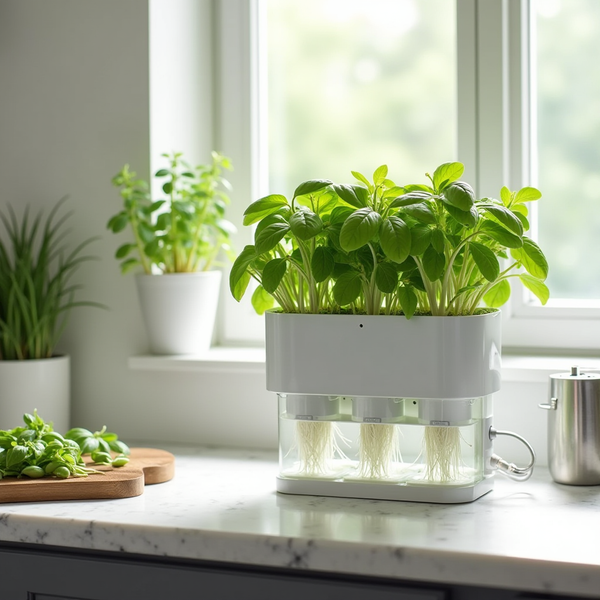
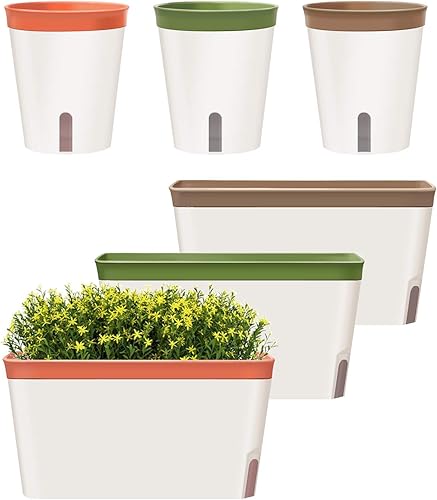
- Wick/semi-hydro: Use for small, continuous-cut kitchen setups. Inert media (coco chips, perlite, LECA) in a container with a nutrient reservoir beneath works well; keep EC on the lower end of the range and accept slower growth.
3.2 Light recipe: PPFD and DLI for tender baby leaf
Dial your light around these numbers:
- Days 0–3 (germination, low light): 50–100 µmol·m⁻²·s⁻¹, 16 hours; DLI ~3–6 mol·m⁻²·day⁻¹
- Days 4–7 (seedlings): 120–180 µmol·m⁻²·s⁻¹, 16 hours; DLI ~7–10 mol·m⁻²·day⁻¹
- Days 8–harvest: 200–250 µmol·m⁻²·s⁻¹, 16 hours; DLI 12–15 mol·m⁻²·day⁻¹ for very tender leaves, up to 18 for higher yield
To convert PPFD and hours to DLI:
DLI (mol·m⁻²·day⁻¹) ≈ PPFD (µmol·m⁻²·s⁻¹) × 0.0036 × hours of light
Example: 250 µmol × 0.0036 × 16 ≈ 14.4 mol·m⁻²·day⁻¹.
3.3 EC, pH, and nutrient targets by stage
For Chenopodium album in DWC/NFT as a baby-leaf crop, use this schedule as a starting point:
- Germination (days 0–3):
- EC 0.4–0.6 mS/cm (or just dilute nutrient solution)
- pH 5.8–6.0
- No need for full-strength aeration yet; keep the seed zone moist but not flooded.
- Seedling phase (days 4–7):
- EC 0.8–1.0 mS/cm
- pH 5.8–6.1
- Start full aeration in DWC; in NFT, ensure a continuous film under all plugs.
- Main growth (days 8–harvest at ~18–28 days):
- EC 1.4–1.8 mS/cm (start at 1.4; if plants show no burn and growth is strong, test 1.6–1.8 next run)
- pH 5.8–6.2
- Solution temperature 18–22 °C
A typical leafy-green nutrient profile that works well here:
- N: 140–170 ppm, mostly nitrate (keep NH₄⁺ < 10–15 ppm)
- P: 30–40 ppm
- K: 180–220 ppm
- Ca: 120–150 ppm
- Mg: 35–50 ppm
- S: 60–80 ppm
- Fe (chelated): 2–3 ppm; Mn: 0.5–0.8 ppm; Zn: 0.05–0.1 ppm; Cu: 0.05 ppm; B: 0.3–0.5 ppm; Mo: 0.05 ppm
Many commercial “leafy A+B” concentrates fall close to these numbers when mixed to 1.6–1.8 mS/cm. Start there rather than trying to reinvent chemistry.
3.4 VPD and temperature control
For indoor grow tents, racks, or even bright windows with supplemental light:
- Air temperature (day): 22–24 °C
- Air temperature (night): 18–20 °C
- Relative humidity: 60–70% to keep VPD around 0.8–1.2 kPa
If you do not want to calculate VPD constantly, use this shortcut:
- At 22–24 °C, aim for 60–70% RH
- At 24–26 °C, aim for 55–65% RH
Use a small clip fan for gentle air movement to keep leaves dry, but avoid blasting seedlings directly.
3.5 Sowing density and harvest schedule for baby-leaf bathua
For continuous baby-leaf production indoors:
- Sowing: 800–1200 seeds/m² equivalent if broadcast on rafts or mats. For cubes or plugs, 5–10 seeds per 2 × 2 cm cube, placed tightly in DWC/NFT channels.
- Germination: 3–6 days depending on temperature.
- Harvest window: 18–28 days from sowing under 16 h light and DLI 12–16 mol·m⁻²·day⁻¹.
- Target leaf size: 8–12 cm leaves with a soft midrib and no visible thickening at the base.
You can run a one-cut system (harvest all at once) or attempt 2–3 cuts by leaving 4–5 cm of stem and allowing regrowth. For top quality, especially for diaspora cooks who want mild, tender leaves, first cut is usually the best.
3.6 Managing bitterness, oxalates, and nitrate uptake
Brassicas and Chenopodium species are notorious for nitrate accumulation when grown under low light with high nitrogen. You are not sending samples to a lab for every crop, so manage by process:
- Keep light adequate: stay above 12 mol·m⁻²·day⁻¹ DLI once true leaves appear. Low light plus high EC is where nitrate and off-flavours creep in.
- Do not chase maximum EC: for baby leaf, 1.4–1.8 mS/cm is enough. If you see dark, overly lush growth with a “watery” taste, test dropping back to ~1.3–1.4 mS/cm and slightly increasing PPFD.
- Finish with a “cleaner” week: 5–7 days before harvest, maintain EC but slightly reduce N-heavy feeds if you custom mix nutrients. Many off-the-shelf leafy formulas are already N-balanced; in that case, just make sure you are not over-concentrating beyond 1.8 mS/cm.
- Avoid severe stress: high heat, drying roots, or huge pH swings can all shift flavour toward bitter.
Oxalate levels are influenced more by species genetics and overall nutrition than tiny day-to-day tweaks. Sensible EC, good Ca/Mg provision, and consistent conditions are your main tools here.
3.7 Bolt prevention: keeping bathua in vegetative mode
If you are growing for diaspora kitchens, you want leafy plants, not stems and flowers. To reduce bolt pressure:
- Photoperiod: cap at 16 hours. Going longer adds marginal yield but more bolt risk.
- Temperature: keep air at 22–24 °C day, 18–20 °C night; avoid prolonged 26–28 °C conditions, especially with warm nights.
- Harvest young: plan on an 18–28 day cycle. Past 30–35 days indoors under strong light, you are in bolt territory.
- Stress management: do not let reservoirs run dry in NFT or wick setups, and avoid dramatic EC or pH swings that make plants “think” conditions are deteriorating.
3.8 DWC and NFT-specific tweaks
DWC:
- Use large, stable reservoirs (at least 20–40 L for small tents) to dampen EC and pH swings.
- Run air stones under dense root mats; bathua roots are fibrous and will form thick rafts.
- Change solution every 7–10 days for a baby-leaf crop; top up with plain water daily to maintain EC.
NFT:
- Install a reliable pump on a UPS if your power is flaky; thin films dry roots quickly.
- Use wider channels (100–150 mm) for multi-seed plugs; Chenopodium roots can clog narrow gutter-style channels over multiple cycles.
- Include a simple filter or mesh screen before the manifold to keep fines out of the system.

4. What to watch long-term: tuning bathua as a house crop
4.1 Benchmarks for a “dialled-in” bathua run
Once you stabilise the system, you should expect roughly:
- Cycle time: 18–24 days from sowing to first baby-leaf harvest at DLI 14–16 mol·m⁻²·day⁻¹
- Yield: 1.2–1.8 kg/m² fresh baby leaf per cut in an efficient DWC/NFT setup
- Leaf quality: soft but not floppy, no thick midribs on baby leaves, minimal bitterness when tasted raw
- Root health: white to cream roots with good branching, no foul smell
4.2 Simple logging that pays off
If you want bathua to become a dependable year-round crop, treat each cycle as a small trial. At minimum, log:
- Date of sowing and harvest
- Average room temperature and RH (or VPD band)
- Target EC and pH by week
- Approximate PPFD at canopy (even a cheap PAR meter is better than guessing)
- Subjective notes: tenderness, flavour, any bolt signs
Within a few runs, you will have your own “house specification” for hydroponic bathua that matches your hardware and market. That is more valuable than any generic soil-based advice.
4.3 Integrating bathua into mixed leafy production
For small indoor farms and serious home growers, bathua can sit alongside lettuce, parsley, Malabar spinach, and sweet potato greens as a rotation crop. To keep systems efficient:
- Group bathua with other moderate-EC greens that like similar light (spinach, beet greens, some amaranths).
- Avoid mixing with very low-EC, cool-demand lettuce in the same reservoir if you want to optimise both.
- Use a dedicated “Chenopodium / spinach” channel or bed where you can adjust EC and PPFD upward without punishing more delicate crops.
4.4 When to change the recipe
Use these signals as triggers to tweak your settings:
- Leaves too bitter, even young: check that EC is not above 1.8 mS/cm, ensure PPFD is at least 200–250 µmol·m⁻²·s⁻¹, and verify you are not heat-stressing plants above 26 °C with high VPD.
- Leaves very soft and pale: increase DLI (raise PPFD or extend photoperiod to 16 h if you were running shorter), check that EC is not below 1.2 mS/cm in main growth, and verify pH has not drifted above 6.5.
- Early bolt signs (elongated internodes, pre-flower buds): shorten cycle; cap photoperiod at 16 h; if room is consistently warm, aim closer to 22 than 26 °C.
The goal is not to nail an abstract “perfect” number, but to build a narrow, repeatable band of settings that consistently gives you tender, mild bathua leaves on your specific rig.

As an Amazon Associate, I earn from qualifying purchases.