If your hydro basil is leggy, bitter, or yellow, your system is begging for a tune-up
Hydroponic basil is exploding because it grows fast, tastes premium, and prints value in small spaces. But under budget LEDs and sloppy nutrient control, basil stretches, turns chlorotic, burns at the tips, and mildews. Here is a no-nonsense plan to dial in Kratky and DWC basil: exact EC and pH, smart nitrate vs ammonium choices, Ca/Mg backup, light intensity and spectrum, warm-temperature steering without suffocating roots, and a pinching schedule for bushy, flavorful plants.
The problem
- Leggy, pale stems and sparse leaves under weak lights.
- Bitter flavor and tough leaves from stress and poor crop steering.
- Yellowing (chlorosis), tip burn, and blackened leaves after cold drafts.
- pH swings and EC creep that starve or scorch plants.
- Mildew pressure in tight, humid indoor setups.
What’s really going wrong
- Light is too low or too far from the canopy. Basil needs real photon density, not just wattage.
- Nutrients out of range: pH outside 5.5-6.2 chokes iron uptake; EC too high drives tip burn, too low drives deficiency.
- N form imbalance: too much ammonium nitrogen softens tissue and destabilizes pH. Basil prefers nitrate-dominant nutrition.
- Weak Ca/Mg support in RO or soft water triggers chlorosis and leaf edge burn.
- Warm air + warm water collapses root oxygen. DWC needs cool, well-aerated solution; Kratky needs a clean air gap and opaque reservoirs.
- No pinching: letting the apical meristem run makes toothpick basil. You want branching.
The fix: a Kratky and DWC basil blueprint
1) EC and pH targets
- Seedling/early veg (first 2 weeks after transplant): EC 0.8-1.2 mS/cm, pH 5.6-6.0.
- Vegetative/bulk: EC 1.2-1.6 mS/cm, pH 5.5-6.2. Some growers run up to 1.8 mS/cm under high light, but watch tips closely, as noted in this Hydrobuilder guide and this overview.
- How to maintain: In Kratky, top up with plain water to hold EC steady as levels drop, then re-mix when solution is 30-40 percent consumed. In DWC, adjust with diluted stock and re-check daily or every other day.
2) Nitrate vs ammonium
- Choose nitrate-dominant hydro nutrients. Keep the ammonium fraction low to avoid soft, leggy growth and pH instability. Many complete hydro blends are already nitrate-heavy. If you are using RO or very soft water, pair your base nutrient with a light Cal-Mag supplement.
- Signs of excess ammonium: fast pH drop, overly lush but weak tops, increased tip burn risk. Switch to a nitrate-leaning formula and stabilize pH.
3) Calcium and magnesium support
- Soft or RO water usually needs Cal-Mag. Apply at label rates to prevent interveinal chlorosis and tip burn. Basil responds well to steady calcium, as highlighted in this indoor basil guide.
- Avoid overfeeding. If EC rises above target, dilute with plain water before chasing deficiencies with more bottles.
4) Light intensity, spectrum, and hours
- PPFD target: Aim 250-400 µmol/m²/s at the canopy for compact, aromatic basil. Under stronger fixtures, 400-600 is fine if nutrients and temperature are on point.
- Spectrum: Full-spectrum white LED in the 3500-5000 K range or a horticultural mix with red/blue/white works well for basil morphology and oil content.
- Photoperiod: Run 14-16 hours per day indoors for steady growth, as noted in this step-by-step guide.
- Distance: Start 20-30 cm above the canopy and adjust to keep internodes short without bleaching.
5) Warm-temperature steering without choking roots
- Air temperature: Basil likes it warm. Target 22-27 C for rapid growth. Below 18 C, growth slows and flavor suffers; near or below 15 C, leaves can darken or blacken from cold injury, consistent with the warm ranges in this guide.
- DWC solution temperature: Keep the reservoir cooler than the room, around the high teens-low 20s C, with vigorous aeration. Warmer water carries less dissolved oxygen; air stones plus cooler solution keep roots crisp.
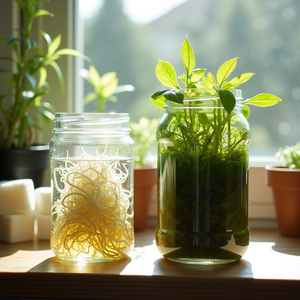
- Kratky oxygen management: Use opaque lids and containers to prevent algae, and maintain a clear air gap as the solution drops so roots can breathe.
- Practical hacks: Increase reservoir volume, insulate or shade buckets, and run lights during the cooler part of the day. In DWC, frozen water bottles or a small chiller can temper solution heat spikes.
6) Pinching and harvest schedule for bushy plants
- First pinch: When plants have 4-6 sets of true leaves, pinch the main stem just above the 2nd-3rd node. This triggers two strong branches.
- Second wave: When each new branch develops 2 nodes, pinch above node 2 to double again.
- Weekly tops: Harvest top clusters regularly instead of single leaves. Leave at least 30-40 percent foliage each time so plants rebound.
- Flavor steering: Consistent pinching plus strong light increases essential oil concentration. Warm days and bright light push aroma; avoid starving plants with super-low EC.
System-specific notes
Kratky basil
- Use dark, opaque containers and lids. Light leaks drive algae and pH drift.
- Start solution 2-3 cm below net pot bottoms, then let the air gap expand naturally.
- Top up with plain water as the level falls to maintain EC; re-mix full-strength solution when the reservoir is down by roughly one-third.
- Keep the room warm, but the container shaded. No pumps means oxygen comes from your air gap, not bubbled water.
DWC basil
- Run at least one quality air stone per bucket and check bubbles daily.
- Monitor EC and pH often. DWC responds quickly to nutrient changes; keep basil in the 1.2-1.6 EC, pH 5.5-6.2 lane, per Hydrobuilder and HydroHowTo.
- Train plants with low pinches so light penetrates. Dense canopies trap humidity.
Troubleshooting: hit both yield and flavor
- Chlorosis (yellow new leaves): Likely high pH blocking iron or insufficient Ca/Mg. Bring pH back to 5.5-6.2 and add a modest Cal-Mag dose. See pH guidance in this IGWorks note and this overview.
- Tip burn: Often calcium issues plus high EC and heat. Dilute solution to target EC, improve airflow, and ensure steady Ca supply, as discussed in this guide.
- Blackened leaves after a cold snap: Basil hates cold. Keep air above 18 C and away from drafty windows. The ideal warm range and long light day are noted in this step-by-step.
- Mildew risk: Tight canopies and humidity above ~60 percent invite trouble. Add a fan, pinch for airflow, and avoid overwatering in balconies and closets, per this indoor basil piece.
- Leggy plants: Raise PPFD and lower light distance. Pinch early and often so energy goes into branches, not one tall stem.
- pH swings: If pH drops fast, reduce ammonium sources and refresh the solution. If pH drifts up, check alkalinity in your source water and add Cal-Mag sparingly to buffer.
Quick checklist
- EC 1.2-1.6 mS/cm, pH 5.5-6.2 for bulk growth.
- Nitrate-dominant nutrition, light Cal-Mag in soft water.
- PPFD 250-400 µmol/m²/s, 14-16 hours light.
- Air 22-27 C; DWC solution cooler with strong aeration; Kratky with a clean air gap.
- Pinch above 2nd-3rd node, then again on branches; harvest tops weekly.
- Keep humidity under ~60 percent and move air.
References
- EC and pH ranges: Hydrobuilder Learning Center, HydroHowTo
- Light hours and temperature context: Hydroponic Way - Step-by-Step
- Indoor humidity and Ca/N/K mention: Food Gardening Network
- pH window mention: IGWorks - Growing Hydroponic Basil