Home Aquaponics vs. Plug‑and‑Play Hydroponics: Which Closed‑Loop Indoor System Actually Makes Sense for 2026 Prepper‑Style Food Security?
1. Common mistakes people make choosing between aquaponics and plug‑and‑play hydroponics
“Aquaponics is better because it’s natural and you don’t need fertilizer.” That line is everywhere in 2026 reels and shorts, especially on home‑build videos like this popular aquaponics demo. At the same time, plug‑and‑play hydroponic towers and countertop pods are marketed as “set and forget indoor farms.” Both claims are incomplete at best.
If you are thinking in terms of food sovereignty and supply shocks, like the scenarios discussed in this 2026 food sovereignty piece, the question is not “which is cooler” but “which system will still be feeding my household when power, nutrients, or supply chains get weird?”
Here are the big mistakes I see preppers and security‑minded growers make when they pick a path.
1.1 Treating aquaponics as “free fertilizer”
Aquaponics absolutely reduces bottled nutrient use, because fish waste provides most of the nitrogen and a chunk of the other macros. But it is not free:
- You are swapping bottled nutrients for ongoing fish feed and electricity (pumps and air).
- You must keep three biological systems in balance: fish, bacteria, and plants.
- Micronutrients like iron, calcium, and potassium often still need to be supplemented carefully so you do not harm fish.
In a short‑term disruption (3–6 months), a poorly managed aquaponic rig is more likely to crash than a simple hydroponic Kratky/DWC setup. That is the opposite of what you want for resilience.
1.2 Assuming plug‑and‑play towers are true “food security systems”
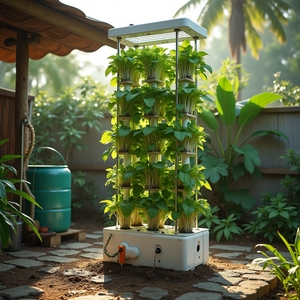
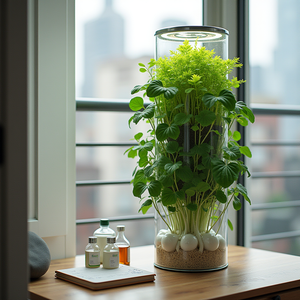
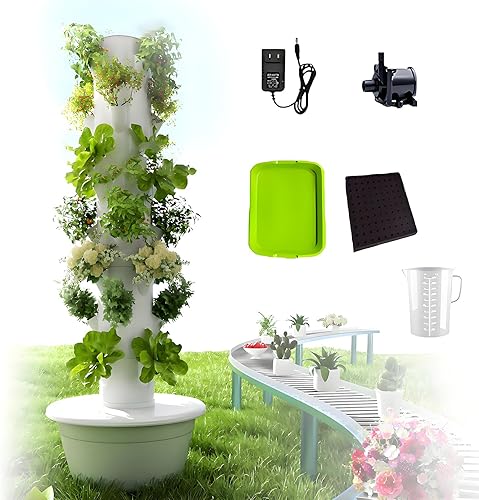
Off‑the‑shelf towers and countertop pods are fantastic for learning and for casual salad production, but there are hard limits:
- They are designed for convenience, not maximum grams of food per kWh or per square meter.
- Most use proprietary pods or nutrients; you are locked into one supply chain unless you hack them.
- Pump, electronics, and bundled lights are often single points of failure with no redundancy.
In a real supply‑shock scenario, a hacked plastic tote with Kratky or DWC can beat a branded tower, simply because you can repair and feed it with generic parts and bulk nutrients.
1.3 Overbuilding systems that you cannot maintain
On social media you see basement fish rooms and full vertical farms. What you do not see as often is the follow‑up: disease outbreaks, pump failures, nutrient lockout, and burned‑out owners.
Common overbuild patterns:
- Huge fish tank with high stocking density “for more protein” but no backup aeration.
- Multiple vertical towers running on undersized reservoirs that are hard to keep stable.
- Complex plumbing with many leak points and no isolation valves.
For 2026 food security, resilience beats scale. A smaller, simpler, well‑understood system will outperform a big, fragile one in any stressful situation.
1.4 Ignoring power‑outage behavior
Aquaponics and most pump‑driven hydro towers assume continuous circulation and aeration. When the power goes off for 6–12 hours during a heat wave, here is what happens:
- Aquaponics: fish can suffocate in a few hours as dissolved oxygen drops; biofilter bacteria can also die back.
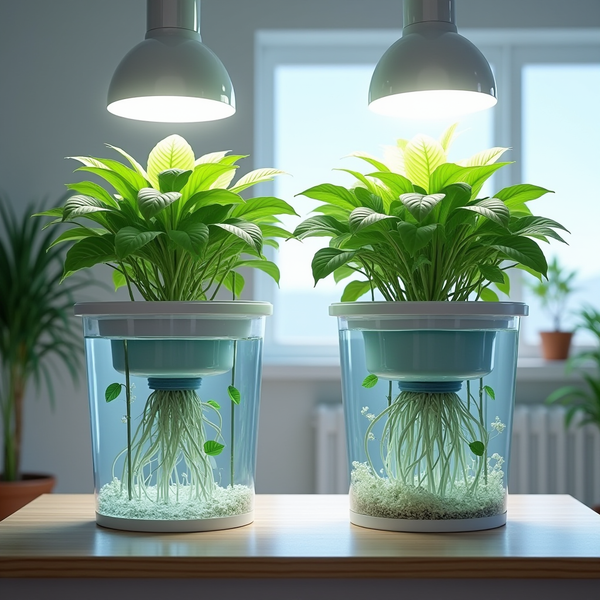
- DWC without backup air: large plants may suffer, but roots can often survive a short outage, especially in cooler water.
- Kratky: no impact at all; there are no pumps to fail.
- Most plug‑and‑play towers: roots dry out quickly because they rely on frequent pumping cycles.
Any system design that does not explicitly answer “what happens when the power is off for 12–24 hours?” is not a security system; it is a hobby.

2. Why those mistakes happen: the real differences through a food‑security lens
2.1 How aquaponics and hydroponics actually work
You have seen the basic definitions everywhere, but from a prepper standpoint, you care about inputs, outputs, and failure modes.
Hydroponics (Kratky, DWC, NFT, towers)
- Plants grow in water or inert media.
- All nutrition comes from mineral salts you mix into water.
- The system is as simple as a passive Kratky tub or as complex as an automated tower.
Aquaponics (fish + plants + bacteria)
- Fish produce ammonia in their waste.
- Bacteria convert ammonia to nitrite, then nitrate.
- Plants uptake nitrate and other nutrients, cleaning the water for fish.
- You mainly buy fish feed instead of bottles of fertilizer.
From a food‑security angle, hydroponics is a controlled chemical engine that you fuel with stocked salts; aquaponics is a biological engine that you fuel with feed and oxygen. Both can be very productive if you respect their constraints.
2.2 Input dependence: what you must keep flowing
Think about what you must still be able to buy or store in 2026 if logistics slow down.
Hydroponic inputs:
- Dry nutrient salts or concentrated solutions (can be stockpiled for years if kept dry and cool).
- pH up/down chemicals.
- Seed, water, light, and replacement pumps/air stones if you are not using pure Kratky.
Aquaponic inputs:
- Fish feed (shelf life is shorter; fat goes rancid if stored poorly).
- Occasional mineral supplements like calcium and potassium sources, plus iron chelate.
- Continuous aeration and circulation for fish health.
Over the first 6–12 months of a crisis, hydroponics is easier to buffer against shocks by stocking a few kilograms of dry salts. Over several years, aquaponics can move closer to a semi‑closed loop if you learn to breed fish and produce a portion of your own feed (worms, black soldier fly larvae, duckweed, fodder greens).
2.3 Risk profile: what actually kills these systems
Hydroponic risks:
- Pump failure in DWC/NFT/towers: root suffocation or drying if not caught quickly.
- pH drift and nutrient lockout if you never test or adjust.
- Salt buildup from constant topping up without occasional resets.
The upside: plants are resilient. Lose a reservoir and you lose a crop, but the system itself is easy to reset.
Aquaponic risks:
- Power failures leading to low oxygen and fish kills.
- Overfeeding and ammonia spikes before bacteria populations catch up.
- Pathogens or parasites in fish, plus root disease if filtration is undersized.
- Temperature stress in fish during heat waves or cold snaps.
Aquaponics can fail more catastrophically: a major fish die‑off can destroy your biofilter and leave you with rotting biomass that must be removed fast to avoid water quality collapse.
2.4 System complexity and daily workload
Simple hydroponics (Kratky, basic DWC)
- Daily tasks: glance at plants, check water level, quick pH/EC test on the main reservoir.
- Weekly tasks: top up solution, adjust pH, harvest and replant.
Aquaponics
- Daily tasks: feed fish, check their behavior, listen for pump/air noise changes, check temperature and at least basic water chemistry.
- Weekly tasks: solids removal or media flushing, plant pruning, check for clogging in distribution lines.
This is why many experienced growers recommend learning nutrient management and pH/EC on simple hydro first, then layering aquaponics on top once you can run a reservoir in your sleep.
3. How to fix it: concrete system designs that are robust under stress
Now let us turn this into a practical playbook. Below are three realistic indoor system options for 2026 preppers, plus a hybrid path that many security‑minded growers will find ideal.
3.1 Option 1: “Low‑tech calories” – Kratky + minimal DWC (no fish)
Best for: apartments, renters, limited budget, unreliable power, first‑year learners.
Core design:
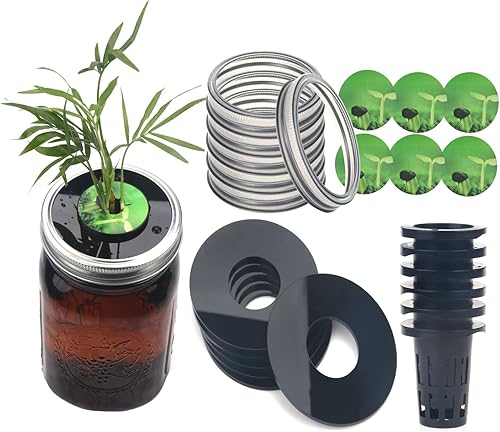
- 2–4 opaque 40–60 L (10–15 gal) totes, each with 6–12 net pots.
- Kratky style: static nutrient solution, no pump, with 5–8 cm air gap under the lid by mid‑grow.
- 1 small DWC reservoir (40–60 L) with an air pump and 1–2 air stones for faster growth on a subset of crops.
- LED lighting sized for at least 200–300 µmol/m²/s over the canopy for 14–16 hours per day.
Crops: lettuce, bok choy, chard, kale, basil, mint, cilantro, green onions. All are high nutrient‑density, low energy cost, and quick to harvest.
Food‑security profile:
- Zero dependency on proprietary hardware.
- Runs through power cuts as long as your Kratky containers are the bulk of the production.
- You can stock several years of dry nutrient salts in a small space.
Stress testing: simulate a 24‑hour power outage. Kratky will not care. The DWC reservoir will be fine if room temperature is reasonable. Your main vulnerability is lighting; consider a small generator, battery backup, or being able to move containers to a bright window temporarily.
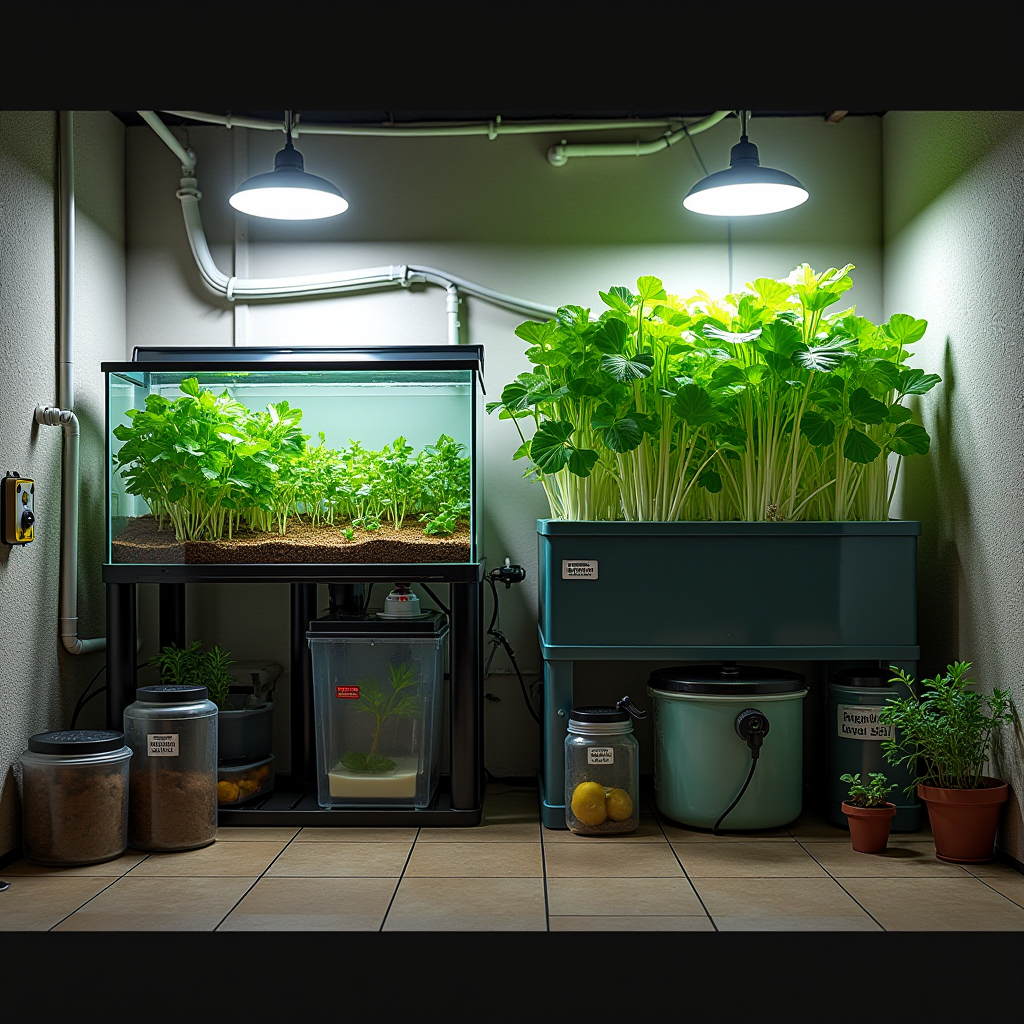
3.2 Option 2: “Protein & greens” – small media‑bed aquaponics (fish + plants)
Best for: owners with a basement/garage, moderate budget, and willingness to learn fish care.
Core design:
- 1 fish tank of 300–500 L (75–130 gal) for stability and temperature buffering.
- 1–2 media beds (total media volume about equal to fish tank volume) filled with expanded clay or gravel, 30 cm deep.
- Flood‑and‑drain via bell siphons or timed pumping.
- Air stones in the fish tank; optional extra air in any DWC add‑on.
- LED lights over grow beds, sized mainly for leafy greens and herbs.
Crops: similar to hydro greens, plus some compact fruiting crops if lighting is strong: dwarf tomatoes, peppers, bush beans. Fish choices depend on local regulations and indoor temperatures (tilapia, catfish, bluegill, carp, trout, etc.).
Stocking guideline: for beginners, stay conservative: 0.25–0.5 kg of fish per 25 L of media (roughly 0.5–1 lb per cubic foot of media). Low stocking density gives you a bigger safety margin on water quality.
Food‑security profile:
- Two food streams: plant biomass plus fish protein.
- Reduced bottled fertilizer use, but you must store fish feed and some supplements.
- Highly vulnerable to extended power cuts; plan serious backup (battery air pumps, generator, or DC aeration on solar).
Stress testing: cut power to pumps and air for 2–4 hours while monitoring fish. Then repeat but with battery backup aeration on. Your design should keep fish alive for at least 12 hours of outage without heroic measures. If it cannot, either reduce stocking or improve backup.
3.3 Option 3: “High‑throughput greens” – hacked plug‑and‑play + DIY reservoirs
Best for: people who already own a tower or pod system and want to turn it into something more resilient.
Core design concept:
- Use your existing tower or pod system as one of several modules, not your entire food source.
- Decouple it from proprietary nutrients: run standard 2‑ or 3‑part hydroponic salts in the reservoir.
- Add a separate Kratky/DWC tote sharing the same nutrient mix so you can grow even if tower electronics fail.
- Where possible, add manual bypass plumbing so you can circulate with a cheap spare pump if the integrated one dies.
Food‑security profile:
- You get high plant density from the tower, which is great for limited floor space.
- You retain a fully independent, low‑tech system as a fallback.
- Maintenance is more complex, but you have redundancy across multiple systems.
3.4 Hybrid plan: staged upgrade from hydro to aquaponics
For most security‑minded growers, the most robust path looks like this:
- Year 1: build and run Kratky/DWC until you can maintain stable pH and EC with your eyes closed.
- Year 2: add a modest media‑bed aquaponics rig with low fish stocking, keeping your hydroponic systems in parallel.
- Year 3 and beyond: start closing loops: seed saving, partial home‑grown fish feed (worms, soldier flies, duckweed), integrating kitchen waste and plant trimmings into feed cycles.
By then, you will have a diversified, redundant, partially closed system rather than a single “silver bullet” unit.
4. What to watch long‑term: metrics, maintenance, and decision rules
Once your system is built, it either becomes a stable food‑production appliance or another fragile project that dies after a few stressful months. The difference is how you measure, maintain, and respond.
4.1 Key numbers to track (hydroponics and aquaponics)
Whether you are running Kratky, DWC, NFT, or aquaponics, you should have a simple log. At least weekly (daily for aquaponics), record:
- pH: for hydroponics, keep it between 5.5 and 6.5; for aquaponics, between about 6.4 and 7.0 to balance plant, fish, and bacteria needs, as also suggested in many introductory aquaponics guides.
- EC (or TDS): watch solution strength. Leafy greens often like 0.8–1.4 mS/cm; heavier feeders like tomatoes can run higher if light is strong.
- Water temperature: aim for 18–24 °C (64–75 °F) for most leafy crops; match fish species to your realistic indoor range.
- Fish metrics (aquaponics): feed input per day, any mortalities, and any behavior changes.
Consistent numbers turn “something looks off” into actionable adjustment instead of guesswork.
4.2 Maintenance routines that prevent crashes
Hydroponics:
- Check pumps and air stones weekly; replace tubing before it turns brittle.
- Fully drain and rinse reservoirs every 4–8 weeks depending on salt buildup and plant response.
- Clean biofilm and algae from walls and lids; opaque containers help prevent it in the first place.
Aquaponics:
- Never overfeed; only feed what fish clear in a few minutes.
- Rinse mechanical filters and remove settleable solids on a schedule; do not let sludge accumulate in the fish tank.
- Protect pumps with pre‑filters, and keep at least one fully tested spare on the shelf.
In both cases, design your plumbing so you can isolate and service pieces without shutting the whole system down.
4.3 Decision rules for when things go wrong
Write your own simple playbook and tape it near the system. For example:
- If pH in hydroponics drifts above 6.5 twice in a week, add a small dose of pH down and recheck in 30 minutes.
- If EC climbs more than 25 % above target, remove some solution and replace with clean water.
- If any fish are gasping at the surface, treat it as an oxygen emergency: add backup air immediately and reduce feeding.
- If power fails, start your outage protocol: battery pumps on, towers turned off first, DWC and Kratky prioritized.
Having these rules pre‑decided is the difference between calmly executing and panicking at 2 a.m. during a storm.
4.4 When to add complexity (and when not to)
Add features only when the current system has proven stable over several crop or fish cycles. Good signs you are ready:
- You can predict how pH and EC will drift over a week based on plant size and topping‑up pattern.
- You have gone through a minor problem (pump failure, pH swing) and recovered without losing the system.
- You have documented backup paths for power, pumps, and key hardware.
If those are not true yet, resist the urge to add more towers, more fish, or more automation. Optimize the resilience of what you already have first.
4.5 So, what actually makes sense in 2026?
Looking at the current climate of supply uncertainty and what we are seeing in real‑world builds shared on platforms like Facebook, YouTube, and Instagram, a few patterns are clear:
- Hydroponics (especially Kratky and DWC) is the fastest, most controllable way to secure a reliable pipeline of fresh greens indoors.
- Aquaponics shines as a second‑stage upgrade for people who already understand water chemistry and who can commit to fish management and backup power.
- Plug‑and‑play systems are useful learning and convenience tools, but only become “security” assets once you de‑risk them with backups and non‑proprietary inputs.
If your priority is feeding your household under stress, start by building a simple, robust hydroponic core, and only then layer fish and towers on top of that foundation.
As an Amazon Associate, I earn from qualifying purchases.