Countertop Hydroponic Herb Gardens: EC/pH, Lighting, and Reservoir Upgrades to Stop Algae, Leggy Growth, and Root Rot (2025 Guide)
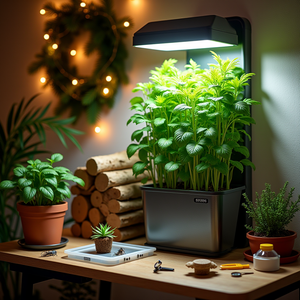
If your shiny new countertop herb garden is growing more algae than basil and your plants stretch like they are auditioning for a horror movie, it is not you. It is the default settings.
Most "smart" countertop hydroponic gardens are designed to look good on Instagram, not to run like a tuned Kratky or DWC system. They ship with weak lights, mystery nutrients, no pH or EC control, and bright, clear reservoirs that practically invite algae and root rot.
This 2025 guide is for anyone who just unboxed a countertop hydroponic garden (or has one collecting dust) and wants to turn it from decor into a reliable indoor herb machine. We will stay tightly focused on four levers you can actually control:
- EC and pH: dialing in hydroponic basil and mixed herbs
- Lighting: hours, height, and spectrum to stop leggy growth
- Reservoir and roots: oxygen, cleanliness, and algae prevention
- Simple upgrades: meters, timers, and light control to make any smart garden actually smart
Everything here applies to common countertop hydroponic systems, including those sold as "smart", as well as DIY Kratky-style jars and small DWC tubs, as described in recent indoor garden guides like this countertop hydroponic overview and practical herb garden walk-throughs from Hydrobuilder.
The Problem: Leggy Herbs, Slimy Roots, and Algae Soups
Here is what most people see a few weeks after the holiday unboxing:
- Leggy, weak plants: Basil leaves are small, internodes are long, and stems flop over instead of forming a dense, bushy canopy.
- Algae everywhere: Green slime on pod covers, sides of the tank, and even on the roots. The water smells "pondy" instead of clean.
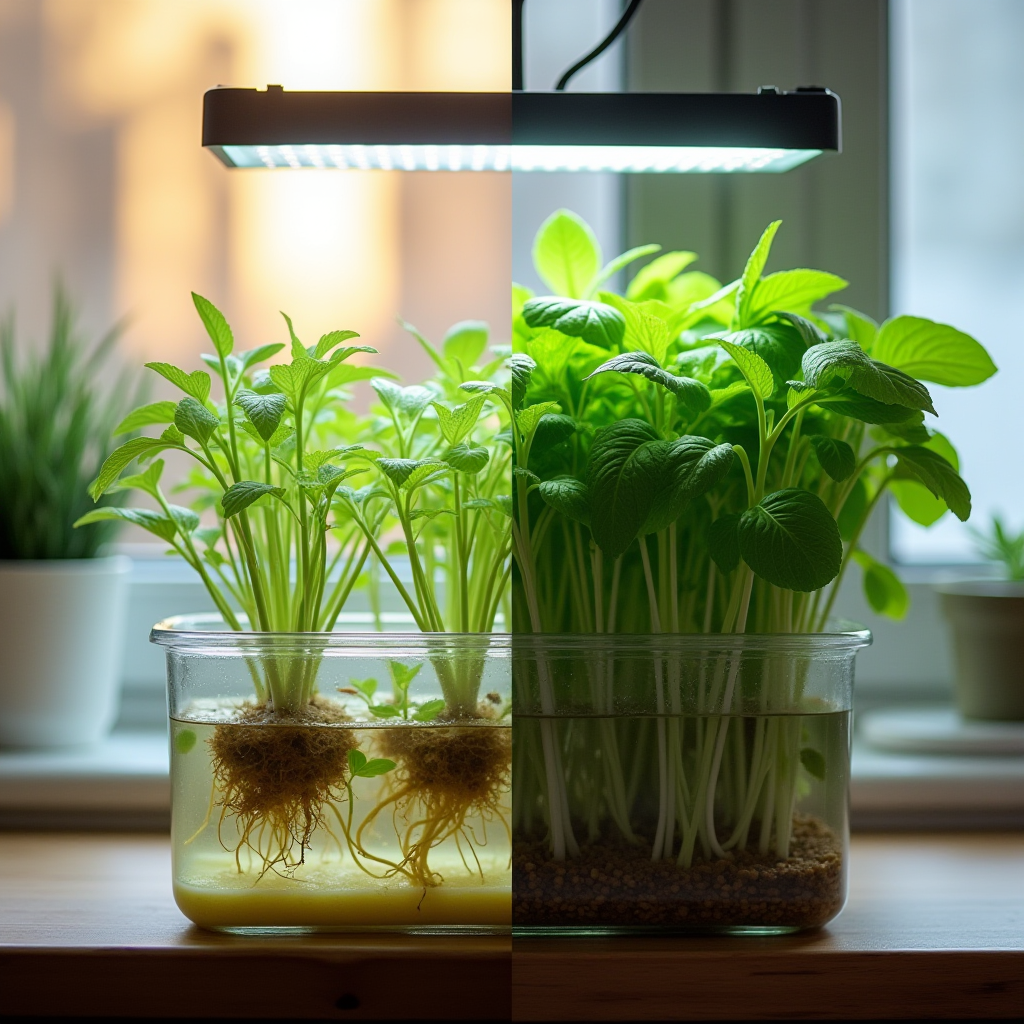
- Brown, stringy, or mushy roots: Root tips darken, slough off, or clump together. Growth stalls and leaves yellow from the bottom up.
- pH whiplash and mystery deficiencies: Leaves show interveinal chlorosis (light between veins), twisted new growth, or burned tips, even though you followed the bottle directions.
- Short harvest window: Herbs peak once, then crash as the reservoir goes out of balance and roots suffocate.
These issues are not unique to countertop systems. The same problems show up in Kratky jars and small DWC buckets when basics like light intensity, nutrient strength, and oxygen at the root zone are ignored. The difference is that countertop kits hide all the knobs you need to turn.
Luckily, the underlying problems are simple and fixable.

The Cause: Weak Light, Blind Nutrients, and Bright, Warm Reservoirs
Countertop hydroponic gardens are basically compact Deep Water Culture (DWC) systems with a built-in LED bar. Some run as constant DWC (bubbled reservoir), some pulse like a small NFT, and some behave like a very shallow Kratky system with periodic flow. When things go wrong, it is almost always one of these:
1. Light that is too weak or on the wrong schedule
Most countertop kits use modest LED output to keep energy consumption and heat low. That is fine for decor, but for dense basil and herbs you want roughly 200-400 µmol/m²/s at canopy level and 14-18 hours of light per day. Many out-of-box programs cap at 12-14 hours, which encourages stretching as plants chase light.
Independent testers reviewing indoor hydroponic gardens for 2025, such as CNN Underscored, consistently note that systems with stronger, adjustable LED panels produce stockier, more productive plants.
2. Nutrient strength and pH running blind
Most included "nutrient bottles" are labeled with vague caps like "add 2" every 2 weeks". There is no mention of EC, and some kits barely mention pH. In practice:
- Herbs and lettuce prefer lower EC than fruiting crops.
- pH drift in small, warm reservoirs can be fast, especially as plants start drinking aggressively.
Without a meter, you are guessing. For basil and mixed herbs, a practical target is:
- EC: 1.0-1.6 mS/cm (up to ~1.8 mS/cm once plants are mature)
- pH: 5.5-6.5, with 5.8-6.2 as a sweet spot
These ranges match typical guidance for leafy hydroponic crops as summarized in Hydrobuilder's indoor herb guide and general indoor garden references like Rise Gardens' setup guide.
3. Warm, bright reservoirs that favor algae and root pathogens
Clear tanks plus overhead lighting is a recipe for algae. Light penetrates the nutrient solution, algae colonize every surface, and as they boom and bust they consume oxygen and destabilize pH.
At the same time, many countertop units sit near appliances and run warm. Once the root zone spends long periods above 24-25°C (75-77°F), dissolved oxygen drops and pathogens like pythium have a much easier time establishing. DWC growers fight this constantly; Kratky growers avoid some of it by leaving a static air gap, but small, enclosed kits can still get too warm.
4. Poor circulation and limited oxygen at the roots
Some compact systems rely entirely on periodic flow or a small pump with no dedicated air stone. That can work when plants are young and the reservoir is clean, but as roots fill the chamber, stagnant pockets appear. Combine that with high temperature and you get root rot, even if everything looks fine from above.
5. Overcrowded planting layouts
Many kits advertise 8-12 pods in an area that really supports 4-6 full-sized basil plants. Too many pods means:
- Plants shade each other, stretch, and fight for light.
- Root systems tangle into a single, dense mat with poor oxygen penetration.
- Nutrients are depleted faster than a small reservoir can buffer.
The result is leggy tops and stressed root zones, which look like "random issues" but are simply overcrowding plus limited control.

The Solution: Simple EC/pH, Lighting, and Reservoir Upgrades That Actually Work
You do not need to gut your countertop hydroponic garden. Treat it like a small DWC/Kratky hybrid and add the controls the manufacturer did not include. Here is how to systematically fix algae, leggy growth, and root rot.
1. Give your herbs the right EC and pH
Your first real upgrade is visibility. Get a basic EC/TDS meter and pH test kit or pen. Even inexpensive meters are a huge leap over guessing.
For basil, mint, cilantro, chives, and parsley in countertop systems:
- Seedlings and new transplants (first 7-10 days): EC 0.4-0.8 mS/cm, pH 5.8-6.2
- Vegetative growth (weeks 2-4): EC 1.0-1.4 mS/cm, pH 5.8-6.2
- Established plants (heavy harvest stage): EC 1.4-1.8 mS/cm, pH 5.8-6.3
Practical workflow:
- Mix nutrients in a separate jug using a hydroponic formula for leafy greens or herbs. Follow label dose, then measure EC.
- Adjust by diluting with plain water until you hit your target EC range.
- Check pH and adjust with pH down (often phosphoric acid) or pH up (often potassium hydroxide) into the 5.8-6.2 range.
- Change the entire reservoir every 10-14 days, more often in warm kitchens or if algae appears.
This mirrors the nutrient management approach used in larger indoor systems, scaled down for a small reservoir, as outlined in indoor hydroponic guides like GreenCitizen's hydroponic indoor garden tutorial.
2. Fix leggy growth with better light intensity and schedule
You rarely need to swap the entire light. Start with these steps:
- Run 16 hours on / 8 hours off for herbs. If your kit does not allow it, use an external plug-in timer and bypass the built-in program.
- Lower the light as close as the plants will tolerate without bleaching or heat stress. Many countertop systems are safe in the 10-20 cm range above the canopy.
- Thin seedlings so each pod has one strong plant. Crowded pods stretch faster.
- Top basil early: Once basil has 4-5 sets of true leaves, pinch out the growing tip. This forces branching and a bushy shape, making better use of limited light.
If your built-in light is clearly underpowered (plants lean dramatically toward it, internodes are very long, and leaf color is pale), consider supplementing with a small clamp-on LED grow bar on a separate timer. Position it to even out coverage across the entire system.
3. Black out the reservoir to prevent algae
Algae control is simple: no light, fewer problems. To prevent algae in your countertop hydroponic garden:
- Block light to the tank with opaque tape, vinyl, or removable sleeves around clear reservoirs.
- Cover unused pod holes with blank plugs or DIY light blockers (foil tape over plastic discs works fine).
- Keep the lid and pod collars clean by wiping down surfaces with a dilute hydrogen peroxide solution between crops.
The same principle is why Kratky jar growers use painted or sleeved mason jars to prevent algae blooms in passive systems.
4. Cool and oxygenate the root zone
To combat root rot and keep roots white and crisp:
- Keep reservoir temperature below ~24°C (75°F) when possible. Avoid placing the unit directly next to ovens, dishwashers, or heat vents.
- Add an air stone and small air pump if your system does not constantly circulate water. Treat it like a mini DWC and give roots continuous oxygen.
- Maintain an air gap between the pod bottoms and the water level once roots are established. Kratky systems rely on this; countertop units benefit too. Let roots have both water and air, not just a stagnant bath.
- Trim dead or brown roots during reservoir changes and gently untangle heavy mats so water can move through.
5. Right-size plant density and pruning
- Under-fill the pod count: If your garden has 9 pod holes, start with 4-6 herbs spaced out. Spare holes can be blocked to prevent light leaks.
- Harvest frequently: Regular cutting of basil, mint, and parsley not only provides more usable herbs, it also keeps the canopy lower and more evenly lit.
- Rotate pods every few days so each plant spends time in the brightest zones.
These adjustments cost little or nothing and directly attack the three main failure modes: poor light, sloppy nutrient control, and stressed roots.

The Evidence: Proven Ranges and Practices For Productive Countertop Gardens
To keep this grounded and practical, here is what current indoor hydroponic guides, testers, and commercial herb operations broadly agree on, adapted to countertop systems:
1. pH and EC for hydroponic basil and mixed herbs
- pH 5.5-6.5 is the standard hydroponic range for herbs and leafy greens. Basil is typically happiest around 5.8-6.2, where iron, manganese, and other micronutrients are readily available. This aligns with the ranges given in general indoor herb references like Hydrobuilder.
- EC 1.0-1.8 mS/cm covers seedlings through mature basil. More aggressive feeding is rarely beneficial in small, warm reservoirs and often leads to tip burn or bitter flavor.
2. Light hours and spectra for compact growth
- Most hydroponic herb systems that perform well in tests, like those reviewed by Bob Vila and CNN Underscored, run 14-18 hours of full-spectrum white or red/blue LED per day for leafy plants.
- Shorter photoperiods or very low-intensity LEDs consistently produce thinner stems and lower yields in side-by-side comparisons.
3. Reservoir care, algae, and root health
- Guides on indoor hydroponic gardens, such as Rise Gardens and Henry's Hydroponics, emphasize opaque reservoirs and regular cleaning as core maintenance to prevent algae and biofilm buildup.
- Most small systems benefit from a full reservoir change every 10-14 days, with a rinse and light scrub of any surfaces exposed to roots.
- Maintaining cooler nutrient temperatures is a widely accepted practice in DWC and NFT systems to reduce pythium risk. For countertop units, "cool to the touch" and away from hot appliances is an easy rule.
4. Smart upgrades beat "locked" systems
Reviews of 2025 countertop hydroponic gardens, such as this 2025 countertop roundup, show a clear pattern: systems that expose more control - stronger, adjustable lights, access to the tank, standard nutrients - consistently outperform sealed, app-first gadgets.
Even if your current unit is fairly locked down, external tools like a separate EC/pH meter, plug-in light timer, and reservoir blackout can bring its performance much closer to a tuned Kratky or DWC rig.
The bottom line: treating your countertop hydroponic garden like a real hydroponic system, not a novelty, is what stops algae, leggy growth, and root rot. Once you can see and control EC, pH, light, and reservoir conditions, it will reward you with dense, flavorful basil and herbs all winter instead of becoming another gadget in the cupboard.

As an Amazon Associate, I earn from qualifying purchases.