Closed-Loop Hydroponics for Small Spaces: Recover Water, CO2, and Heat Like the Expo Geodesic Farm
If your DWC bucket keeps turning into a swampy sauna of slime and sadness, it is not your basil. It is your system bleeding water, heat, and CO2 into the room instead of into your plants.
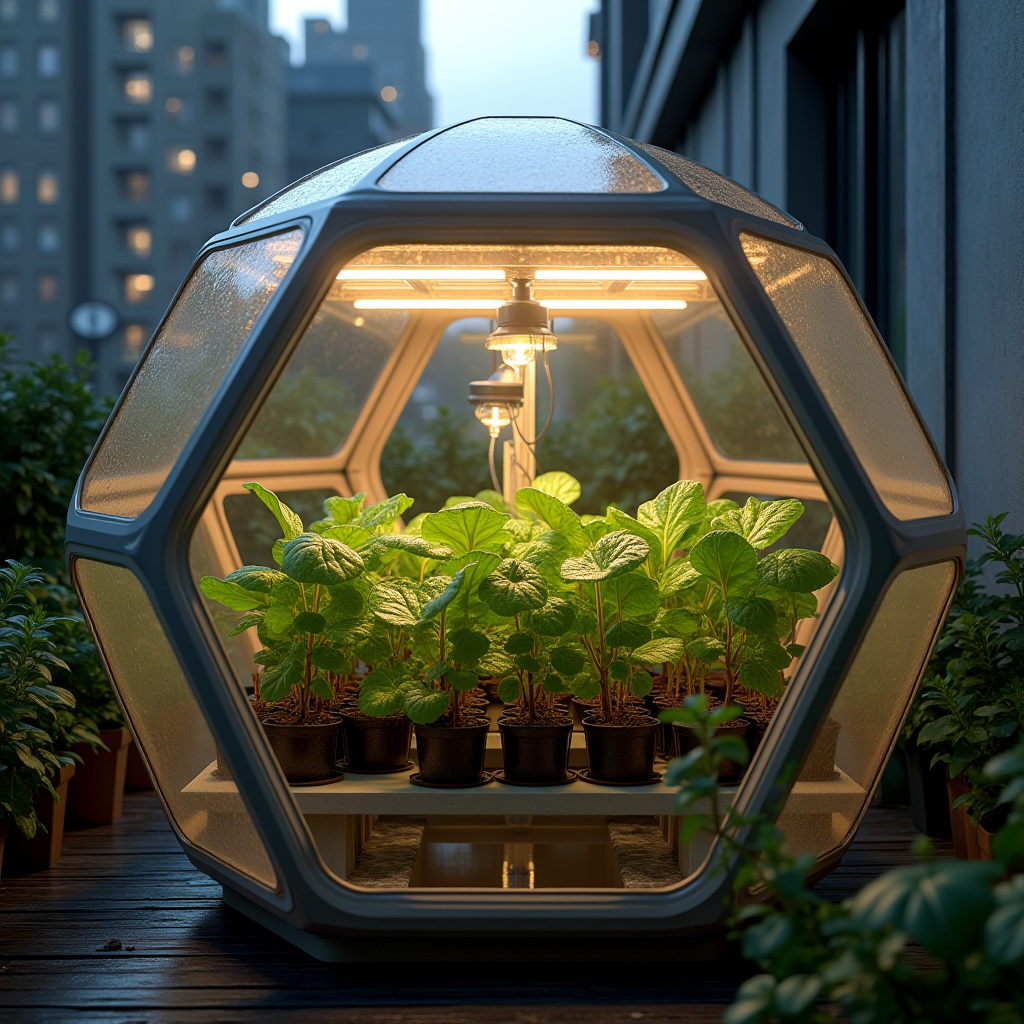
The compact geodesic dome farm showcased for Expo 2025 takes the opposite approach: almost everything stays in the loop. Water is recaptured, climate is tamed, and CO2 is treated like the valuable input it is, not an accidental byproduct. You do not need a dome or a six-figure controls package to borrow the same logic.
This guide translates that closed-loop mindset into apartment, tent, and rooftop-ready hydroponic design, with a focus on DWC, Kratky-style setups, and small aeroponic or high-humidity systems.
The Problem: Your "Indoor Farm" Is Leaking Resources Everywhere
Most small hydroponic and rooftop greenhouse growers run in what I would call "accidental open-loop" mode:
- Dehumidifiers fill buckets with condensate that gets dumped down the drain.
- Grow tents sit half-zipped, spilling conditioned air and humidity into the room.
- DWC and aeroponic reservoirs slowly climb in EC as water evaporates, then get dumped entirely when the salts stack up.
- CO2 from people, pets, or bottled injection disappears out a window or fan instead of feeding plants.
- Heat from lights and pumps warms the air, then gets vented outside instead of helping maintain stable root and canopy temps.
The visible symptoms are familiar:
- Leggy, weak growth in winter because CO2 is low and temps swing from too cold at night to too hot when the lights are on.
- Root rot in DWC as warm reservoirs and high humidity collide with poor airflow and excess organics.
- Brutal pH and EC swings from topping off randomly or dumping and refilling buckets just to "reset" the system.
- Water and power bills that do not match your harvests because you are constantly heating, cooling, and dehumidifying the same air that immediately leaks away.
In a typical hydroponic setup, up to 90% less water can be used than soil farming if you recirculate properly, as highlighted in this overview of hydroponics and water efficiency. Most home growers leave a big chunk of that efficiency on the table by treating water, air, and CO2 as disposable.
Closed-loop thinking fixes that.
The Cause: Open-Loop Design In A Space That Wants To Be Closed
The Expo-style geodesic dome works because it is treated like a controlled environment system, not a fancy greenhouse. It is essentially a big grow tent with better geometry: mostly sealed, highly insulated, and designed to recapture what it produces.
Most home and urban systems do the opposite:
1. Water is treated as disposable
In a closed hydroponic system, nutrient solution is recirculated and adjusted, not thrown out, as described in this breakdown of closed hydroponic systems. At home, you probably:
- Dump DWC or aeroponic reservoirs when EC creeps up instead of managing concentration.
- Toss dehumidifier condensate even though it is essentially distilled water (with caveats we will fix in the solution section).
The result: fresh water in, nutrient-heavy water out, and no stable baseline for roots.
2. Climate is half-controlled
Closed-loop indoor farms stabilize temperature and humidity with well-insulated envelopes and precise HVAC, as noted in this guide to controlled-environment hydroponic farming. In a typical tent or small rooftop greenhouse, you get:
- Heat from LEDs or HPS lighting that builds up, then is aggressively vented outdoors.
- Cold air leaks at night from unsealed greenhouses or open windows.
- Huge humidity swings from active transpiration and intermittent dehumidification.
Plants see big day/night swings and inconsistent VPD, which hammers yield and pushes disease pressure.
3. CO2 is ignored or mismanaged
In sealed indoor systems, CO2 is treated as a feedstock. In most apartments and small domes:
- CO2 rises when people are in the room, then is flushed away with exhaust fans.
- CO2 bottles get used in unsealed tents, so most gas ends up conditioning the ceiling instead of the canopy.
If you seal too tight without dehumidification and air movement, you trade CO2 improvement for mold growth. If you vent constantly, you lose both CO2 and heat.
4. Salt and pH drift are allowed to "reset" via waste
Closed-loop hydroponic systems survive by tightly managing nutrient solution chemistry over time, with careful monitoring of EC and pH, as emphasized in this review on nutrient solution management strategies. Home DWC and aeroponics often rely on dumps and refills instead of control. That means:
- High EC as water evaporates or plants preferentially uptake certain ions.
- pH drift that leaves you chasing numbers instead of steering them.
Every full dump wastes nutrients and water, and you never really learn how your system behaves over a full crop cycle.

The Solution: Design Your Small-Space System Like A Mini Closed-Loop Dome
You do not need to be perfect. You just need to leak less.
Below is how to adapt Expo-style closed-loop logic to an indoor tent, balcony, or rooftop greenhouse using DWC, Kratky, or small aeroponic systems.
1. Safely reclaim dehumidifier condensate
Dehumidifier water is basically low-mineral condensate that often contains:
- Dust and spores from room air
- Metals or plasticizers from coils and reservoirs
Used raw, it is not guaranteed food-safe. But with basic treatment, it is excellent top-up water.
Safe workflow for using dehumidifier condensate in hydroponics:
- Use a clean collection container with a lid, dedicated only for condensate. No dirty mop buckets.
- Coarse pre-filter: Run it through a simple sediment or carbon filter pitcher to remove particles and some organics.
- Optional but ideal: Pass it through an inline carbon filter or small RO system if you are running sensitive crops or dense DWC/aeroponics.
- Disinfect: If contamination is a concern, dose the top-up water with a food-safe oxidizer (like 1-2 ppm hydrogen peroxide or a commercial hydroponic water sanitizer) and let it sit for 30 minutes before use.
- Use for top-ups, not full fills: Mix with your usual source (RO or low-EC tap) for make-up water to dilute any unknowns.
This keeps your water loop tighter, especially in sealed tents or domes where the same water is constantly evaporating and condensing.
2. Manage EC and salt buildup in DWC and aeroponics
Closed-loop systems cannot rely on full dumps to fix mistakes. You need a plan:
Set target EC and pH
- Most leafy greens in DWC do well at EC 1.0-1.8 mS/cm and pH 5.5-6.2, as outlined in many hydroponic guides such as this closed-loop hydroponics overview.
- Fruit crops usually run higher EC (2.0-3.0), but in small, poorly buffered systems it is safer to stay toward the low end to avoid salt stress.
Top up with plain water, not more nutrient
- When water level drops in a DWC bucket or aeroponic reservoir, but EC climbs, plants are taking water faster than nutrients.
- Top up with clean water (your treated condensate + RO/tap mix) until EC drifts back toward your target.
Use partial drains instead of full dumps
- Every 1-2 weeks, drain 25-50% of the reservoir and refill with fresh nutrient at your target EC.
- This lets you correct ion imbalance without wasting all the solution.
Keep root zones oxygenated and cool
- Aim for 18-22°C reservoir temps in DWC. Above 24°C, root rot risk jumps fast.
- Use adequately sized air pumps and stones for DWC, or reliable spray manifolds in aeroponics; poor oxygenation turns mild EC/pH issues into root disasters.
3. Seal grow tents and small domes intelligently
You want a mostly closed shell that allows controlled exchange, not a plastic bag with no fresh air. Think "sealed but managed":
- Seal light leaks and big gaps in tents or small domes with tape and proper duct gaskets to stop uncontrolled airflows.
- Run active air circulation inside (oscillating fans) so no corners stay wet and stagnant.
- Use a dedicated intake/exhaust or mini-split to control temperature while keeping airflow predictable.
- Size your dehumidifier to your canopy: in a sealed tent, you will need it far more than in a vented one.
The goal is to mimic controlled-environment agriculture logic from commercial operations, scaled down to a tent or balcony, as discussed in this primer on indoor hydroponic cultivation.
4. Handle CO2 without inviting mold
CO2 is only useful if everything else is stable. Ignore it until you can hold:
- Daytime temps roughly 20-26°C for leafy greens (a bit warmer for fruiting crops)
- Relative humidity in the 50-70% band with good air movement
Once that is in place:
- Use the room first: People, pets, and cooking already raise background CO2 in apartments. A mostly sealed tent in a lived-in room can sit at 600-800 ppm without a bottle.
- If you add CO2 via cylinder or generator, do it in a nearly sealed environment with:
- Continuous air movement over leaves
- Dehumidification to keep RH from creeping above 75%
- A simple CO2 meter so you are not guessing and overshooting
- Avoid enriching in wet, cool spaces like under-lit basements where surfaces stay clammy. High CO2 + high RH + poor air movement = mold.
5. Reuse heat to stabilize winter grows
Your lights and pumps are mini heaters. In winter, that is free energy.
- Move reservoirs inside the conditioned envelope when possible. A DWC tote inside a tent will sit closer to air temperature and avoid cold-night crashes.
- Recycle exhaust air back into the living space in winter rather than dumping it outdoors, as long as humidity stays under control.
- Insulate rooftop greenhouses around the base and any exposed reservoirs to reduce heat loss overnight.
Geodesic domes naturally reduce heat loss via shape and surface-area-to-volume ratio. At small scale, you can mimic that with well-insulated tents, reflective film, and covered reservoirs so the heat you generate sticks around long enough to help your plants, not your power company.
Evidence: What Closed-Loop Logic Looks Like In Numbers
You do not need a research lab, but you should anchor your system changes to a few key metrics. These ranges come from the same controlled-environment and hydroponic literature that underpins commercial closed-loop systems, including overviews of indoor hydroponics and closed-loop nutrient cycling such as this guide to closed-loop systems in indoor farming and this article on sustainable nutrient cycling.
Target ranges for small-space DWC and indoor systems
- pH: 5.5-6.5 for most crops, sweet spot 5.8-6.2 for leafy greens.
- EC:
- Leafy greens and herbs: 1.0-1.8 mS/cm
- Fruit crops (tomato, pepper): 2.0-3.0 mS/cm, but stay lower on small, warm reservoirs.
- Root-zone temperature (DWC, aeroponics): 18-22°C.
- Air temperature:
- Day: ~20-26°C for greens, 22-28°C for fruiting crops
- Night: avoid drops larger than 5-7°C
- Relative humidity: 50-70%, with consistent airflow.
- Photoperiod:
- Leafy greens: 14-18 hours of light
- Fruiting crops: 12-16 hours, depending on cultivar and intensity
Closed-loop performance goals for small urban systems
As you move toward a closed-loop design, track:
- Water use: Aim to cut total top-ups per month by 30-50% via condensate recovery and reduced venting.
- Dump frequency: Move from weekly full reservoir changes to biweekly or monthly partial drains with steady EC/pH control.
- Climate stability: Keep daily temp swings under 4-5°C inside tents or domes, and RH swings under 15-20 percentage points.
- Yield per watt: Track grams of fresh mass per kWh. As you reuse heat and stabilize climate, that number should climb.
The Expo geodesic farm shows what is possible when you tightly integrate structure, climate, and nutrient loops. Your version might be a 1 x 1 m tent over a DWC reservoir on a balcony, but the physics do not care about scale. Seal more, waste less, measure more, and your plants will respond with shorter cycles, tighter internodes, and much better flavor.

As an Amazon Associate, I earn from qualifying purchases.