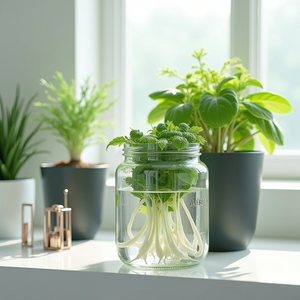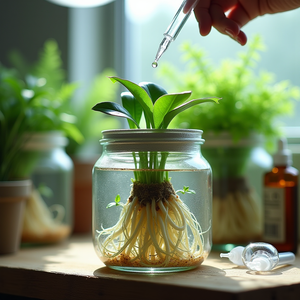
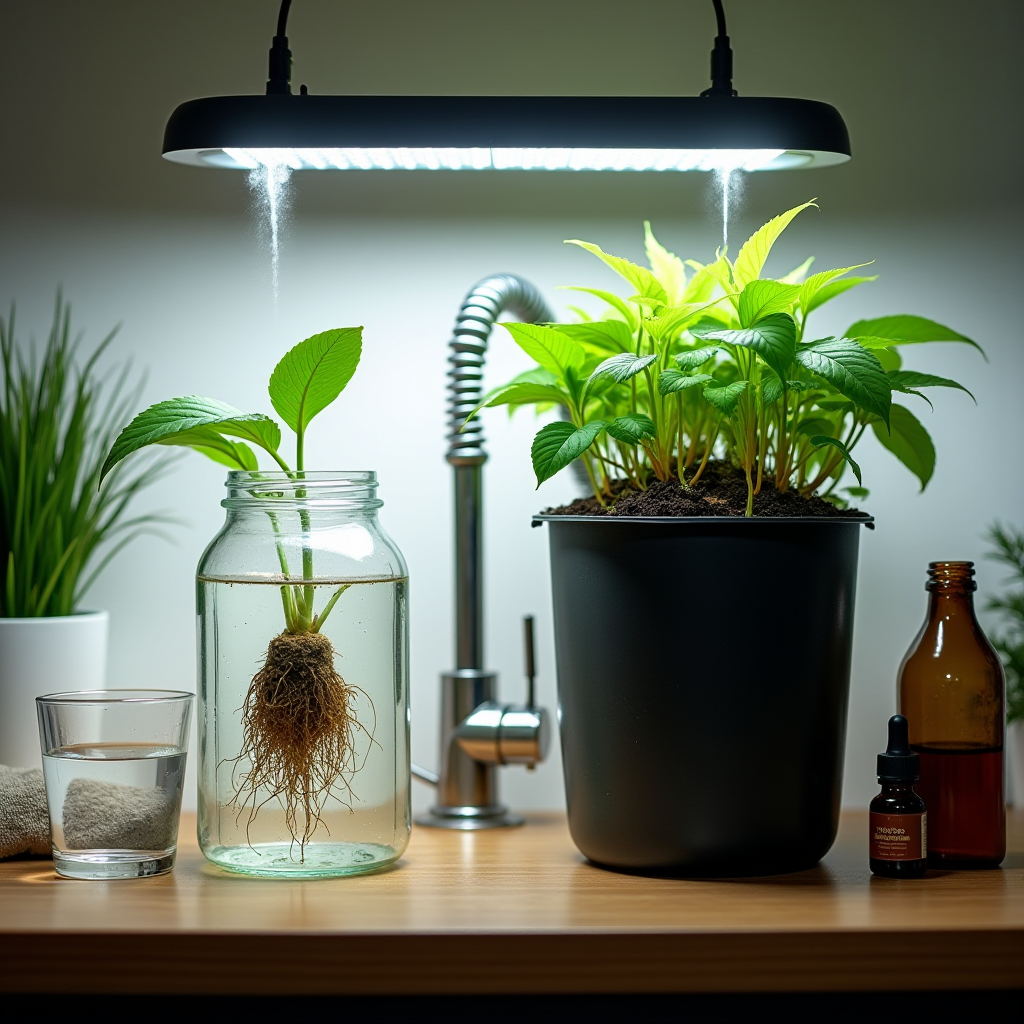
If your Kratky lettuce keeps clawing and your DWC basil gets crispy tips, it is probably not your nutrient brand - it is your source water writing checks your roots cannot cash. Dial the water first and passive systems get boringly stable and wildly productive.
The problem
Kratky and small DWC tubs are notorious for pH drift, tip burn, and calcium-magnesium swings. Leaf edges brown, new growth twists, EC jumps around, and you end up chasing pH daily. Sound familiar?
The real cause
- Unknown alkalinity (KH): Too much carbonate hardness locks your pH high. Too little and it free-falls. Either way, nutrients go out of range.
- Hardness and imbalance: Tap water can add random calcium, magnesium, sodium, and bicarbonate that your nutrient recipe did not account for.
- Chlorine or chloramine: Disinfectants can irritate roots and suppress beneficial biology, and chloramine does not off-gas like chlorine.
- Zero-mineral RO with no rebuild: Pure RO is great - until you forget to add back Ca and Mg or a tiny buffer. Then pH whipsaws and tip burn shows up.
In hydroponics, the best water is low in dissolved solids and near neutral so you control what is in the solution, not your tap. That baseline is highlighted in this overview and echoed in this guide.
Tap vs RO for small-space Kratky and DWC
- Reverse osmosis (RO): Delivers very low EC and removes most chlorine, chloramine, and hardness so nutrients and pH behave predictably - ideal for passive setups, as discussed in this RO vs tap comparison.
- Tap water: Can work if it is soft and dechlorinated, but quality varies and dissolved minerals often push pH up and cause lockout, as noted in this water quality explainer.
Quick rule: If your tap water comes in with noticeable EC and you battle rising pH, switch to RO or a RO-tap blend. If you already run RO and see pH instability or tip burn, you likely need Cal-Mag and a small alkalinity buffer.
Key chemistry - what to measure and why
- pH: Keep nutrient solution roughly 5.5-6.5 for most leafy greens and herbs. pH controls nutrient availability, so monitor and adjust, as covered in this guide.
- EC/TDS: Indicates total dissolved nutrients. Lower starting EC gives you full control - RO or distilled are ideal baselines, per this overview.
- Alkalinity (KH): The carbonate-bicarbonate buffer that resists pH change. Too high makes pH hard to bring down. Too low allows pH swings. You want just enough buffer for stability without locking pH up, as discussed in this water choice primer.
- Chlorine vs chloramine: Chlorine can be aerated off or carbon filtered. Chloramine is persistent and needs proper carbon filtration or neutralizers before use, as noted in this chloramine-focused article and the RO vs tap comparison.
Conditioning playbook
If you must use tap
- Dechlorinate first: Run through a good activated carbon filter. Chlorine can off-gas with aeration in 24 hours, but chloramine will not - use carbon or a neutralizer, as discussed here.
- Test baseline: Measure pH, EC, KH, and hardness. If EC is already high and pH wants to sit above 7, nutrients will be harder to manage (source).
- Blend if needed: A 50-50 mix of tap and RO can reduce minerals while keeping some buffer.
- Adjust pH after nutrients: Add nutrients to target EC, then adjust pH into 5.5-6.2.
If you use RO (recommended)
- Remineralize with Cal-Mag: RO has almost no Ca or Mg. Add a Cal-Mag per label to provide these essentials and improve pH stability, as emphasized in this comparison and this water guide.
- Add a small buffer: RO’s KH is near zero. A tiny amount of buffering (for example, potassium carbonate or a hydroponic pH up that adds carbonate) helps prevent sudden pH swings (reference).
- Then mix nutrients: After Cal-Mag and buffer, add base nutrients to your target EC. Final adjust pH to 5.6-6.0 for greens and herbs.
Kratky-specific setup
- Start stable: Because the reservoir is static, stability up front matters. Use RO, add Cal-Mag, add a small KH buffer, then nutrients.
- Set and drift: Set pH ~5.7-5.9. Allow a natural drift to ~6.2 and correct only if it trends out of 5.5-6.5. pH availability windows are outlined in this explainer.
- Top-offs matter: Top up with the same conditioned water you started with, not straight tap. This maintains EC and KH consistency.
DWC-specific setup
- Go low EC baseline: Start with RO plus Cal-Mag so you can steer nutrients precisely (source).
- Buffer lightly: A small KH keeps pH from pinballing without locking it high (reference).
- Track pH and EC: Check daily in small tanks. Keep pH in the 5.5-6.5 band and adjust gently as needed, per these fundamentals.
Fast troubleshooting by symptom
- pH keeps rising: Your tap’s KH is probably high. Move to RO or blend with RO. Lowering alkalinity improves control (source).
- pH keeps crashing: RO with zero KH and no buffer. Add a small carbonate-based buffer (reference).
- Tip burn on new leaves: Often calcium availability. Ensure Cal-Mag was added when using RO and keep pH in range (overview).
- Leaves pale between veins: Magnesium deficiency is common with pure RO. Add Cal-Mag per label (RO vs tap guide).
- Root stress after water change: Suspect chloramine in tap. Use a carbon filter rated for chloramine or a neutralizer before mixing nutrients (chloramine article).
Evidence-based guardrails
- Target pH: 5.5-6.5 for most greens and herbs. Keep it in range for nutrient availability (source).
- Baseline water: Lower EC and near-neutral source water gives you the cleanest slate - RO or distilled are ideal, as noted in this guide.
- Chloramine handling: Do not rely on off-gassing. Use carbon filtration or neutralizers before filling systems (reference).
- RO + Cal-Mag: RO gives control and Cal-Mag restores essentials for growth and pH stability (comparison).
Get the water right and the rest gets easy: fewer corrections, better uptake, and bigger harvests from the same square feet. Start with the cleanest water you can, add back only what plants need, and give your pH just enough backbone to stay put.