Beat Summer Heat in Sealed Grow Rooms: HVAC/VPD, Dehumid Sizing & Reservoir Cooling for Hydroponics (2026 Guide)
1. Common summer mistakes in sealed hydro rooms
“If the AC is big enough, the room will be fine.” That belief is why so many sealed grow rooms crash as soon as summer humidity and heat arrive.
In a sealed, fan-filtered, or AC-controlled room, the weak links are almost never the nutrient bottle or the strain. They are:
- Under-sized or poorly controlled HVAC that cannot handle the actual heat load from lights and equipment.
- No real plan for the latent load (moisture) created by plant transpiration.
- Ignoring how VPD changes when temperature spikes and RH floats.
- Warm, exposed reservoirs that creep over 22–24 °C and drive root stress, pathogens, and pH drift.
As Oklahoma State Extension and USDA hydroponics resources both hammer home, hydroponics is all about control: solution chemistry, environment, and root zone. Summer in a sealed room stress-tests all three at once.
Let’s walk through the biggest summer mistakes I see in indoor DWC, Kratky, NFT, and recirculating systems, and then tighten everything up before the thermometer climbs.
Mistake 1: “Winging it” on HVAC sizing
Most growers buy an AC based on room size, not actual watts of heat in the space. That works for a bedroom, but not for a sealed grow loaded with LEDs, pumps, and dehumidifiers.
Every watt that goes into a closed room eventually turns into heat. That includes:
- Lights (LED, CMH, HPS)
- Pumps, fans, controllers, air stones
- Dehumidifier and even the AC unit itself (inefficiencies dump extra heat)
If you do not convert those watts to a sensible heat load in BTU/hr, you are guessing. And guessing fails as soon as outdoor temps and humidity rise.
Mistake 2: Ignoring plant-driven latent load (moisture)
Plants are living humidifiers. In a sealed room, every gram of water they transpire has to go somewhere. If it is not removed by a dehumidifier or AC coil, it just sits in the air and drives RH into the 70–90% range.
In summer, ambient outdoor humidity rises. Sealed rooms leak a little. Intake filtration, door openings, and tiny cracks all become moisture entry points. If you sized your dehumidifier based only on winter conditions, summer will expose it fast.
Mistake 3: Treating VPD charts as fixed targets
VPD charts are guides, not laws. A lot of growers aim for “perfect” VPD while forgetting that:
- High light intensity and warm leaves increase transpiration even if VPD looks ideal on paper.
- Heatwaves can push leaf temperature above air temperature, changing the real VPD at the leaf surface.
- Young plants and stressed roots cannot handle the same VPD deficit as established, healthy plants.
Dialing in VPD for summer is less about chasing a single number and more about staying within a safe range that prevents tip burn, wilting, and pathogen bloom.
Mistake 4: Letting reservoirs ride room temperature
In sealed rooms, the reservoir is often the last thing people insulate. Big mistake.
Most hydroponic crops are happiest with solution temperatures around 18–22 °C. Above about 24–25 °C, oxygen solubility drops and root disease pressure climbs. Warmer rooms and direct light on reservoirs can push you over that line every afternoon.
As noted in this summer prep guide from Emporium Hydroponics, preventing solution overheating is usually cheaper and more reliable than trying to fix it with expensive chillers after the fact.

2. Why these failures happen in sealed grow rooms
Heat: converting watts to BTU/hr for real HVAC sizing
In a sealed hydroponic room, you are not just cooling air. You are continuously removing the heat that every device dumps into that air. The physics is simple:
- 1 watt of electrical power ≈ 3.41 BTU/hr of heat.
To estimate your sensible heat load:
- Add up all device wattages in the room: lights, dehumidifier, pumps, fans, controllers, heaters (if any), CO₂ equipment.
- Multiply the total watts by 3.41 to get BTU/hr.
Example for a 1.2 × 2.4 m (4 × 8 ft) tent:
- LED lights: 2 × 480 W = 960 W
- Dehumidifier (rated draw): 500 W
- Pumps, fans, air: 140 W
- Total: 1600 W × 3.41 ≈ 5456 BTU/hr
Now add at least 20–30% headroom for summer ambient, insulation losses, and any future upgrades. That puts you at roughly 7000 BTU/hr. A “5k” window unit will look fine in winter and fold in July.
As many hydroponic guides point out, including USDA CEA resources, properly sizing environmental equipment upfront is cheaper than fighting it with band-aids later.
Humidity: plant transpiration and latent load
Latent load is the energy required to remove moisture from air. In grower terms: how much water your dehumidifier has to pull every day.
Plants can transpire 2–5+ L per square meter of canopy per day under strong light. In a dense leafy crop in DWC or NFT, it is very easy to push 15–25 L/day in a modest room at peak veg and early flower.
Every liter of water the plants move from your reservoir to the air equals 1 kg (1000 g) of moisture. A dehumidifier rated at “20 L/day” at 30 °C and 80% RH will remove less water at cooler, drier conditions. That is why dehumidifiers that looked fine in winter suddenly seem weak in summer, when the room runs warmer and your plants transpire harder.
If you do not base dehumidifier sizing on canopy area and plant stage, you end up with runaway RH, especially in sealed rooms where you are not dumping air outside.
VPD: when “perfect” becomes too aggressive
VPD (vapor pressure deficit) is the difference between how much water the air can hold and how much it is actually holding. It controls how hard plants transpire.
In summer, three things tend to happen in sealed rooms:
- Leaf temperature rises above air temperature under LEDs.
- Dehumidifiers run more often, drying the air more aggressively.
- Growers crank lights to make up for any perceived slowdown.
That combination can push the real leaf-surface VPD much higher than your chart suggests. The visible outcome: curled edges, crispy tips, and sudden EC jumps in DWC or recirculating systems as plants dump water faster than nutrients.
Reservoirs: why “room temp” water becomes lethal in summer
Hydroponic solution buffers temperature changes, but it also soaks up every extra watt in the room. In summer, especially with black or uninsulated tanks, reservoirs:
- Warm up during the light cycle and never fully cool at night.
- Act as heat batteries under tents sitting in hot apartments or garages.
- Drive lower dissolved oxygen and faster pathogen growth.
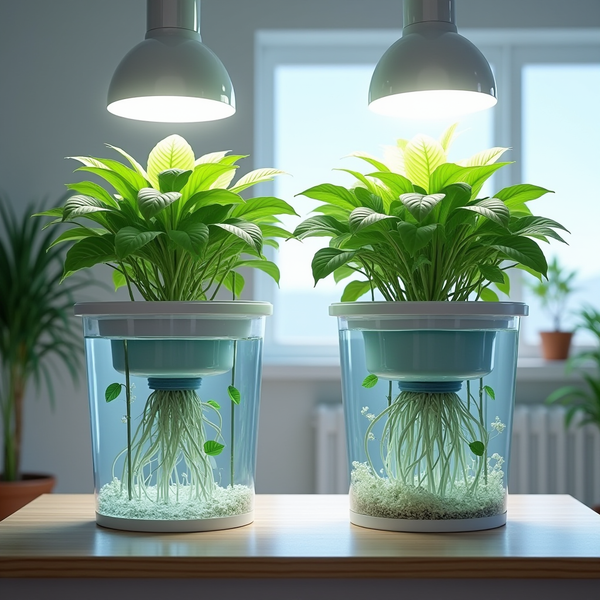
Systems like DWC, RDWC, and NFT are especially at risk. Kratky tubs and buckets also heat soak hard if they are shallow, dark-colored, or directly under lights.
Extension resources like OSU’s hydroponics fact sheet emphasize temperature and oxygen at the root zone for a reason. Letting the solution float near room temperature is fine in a 20 °C basement. It is a recipe for slime at 28 °C in summer.
3. How to fix your sealed grow for summer: HVAC, VPD & reservoir control
Step 1: Recalculate your HVAC load before it gets hot
Do this once, capture it in your grow log, and summer prep will get easier every year.
- List all electrical loads in the grow: lights, dehumidifiers, pumps, fans, air stones, controllers, heaters, CO₂ gear.
- Calculate total watts. Use actual draw, not just “equivalent” or marketing numbers.
- Convert to BTU/hr: multiply total watts by 3.41.
- Add 20–40% headroom for summer ambient, poor insulation, and future equipment.
If you are on the edge, do not rely on “max fan speed and hope.” In sealed and semi-sealed rooms, it is almost always better to slightly oversize the AC and use a good controller than to undersize and cook your plants for 4 hours every afternoon.
Step 2: Shift your lighting schedule to off-peak hours
One of the simplest “HVAC upgrades” for sealed rooms costs nothing: change when the lights run.
- Flowering photoperiod: run lights at night, e.g. 7 pm to 7 am.
- Vegetative photoperiod: push at least 70–80% of the light-on hours into the coolest part of the day.
This reduces overlap between outdoor peak heat and your make-heat devices. It also reduces strain on dehumidifiers, because cooler night air increases AC dehumidification efficiency.
If you live where power costs spike in the afternoon, night cycles also protect your energy bill.
Step 3: Size dehumidification from canopy and crop stage
Instead of guessing, estimate plant transpiration like this:
- Measure or estimate canopy area (m²).
- Multiply by a transpiration rate based on crop and stage. For leafy greens in active veg, use 3–4 L/m²/day as a ballpark in a strong-light room. Vine crops or fruiting crops can be higher.
- Multiply canopy area × L/m²/day to get total liters/day your dehumidifier must remove.
Example:
- Canopy: 1.5 m × 1.5 m = 2.25 m².
- Transpiration rate: 3.5 L/m²/day in late veg.
- Daily water removal needed: 2.25 × 3.5 ≈ 8 L/day.
Then check your dehumidifier’s L/day rating at realistic conditions. Many units are quoted at 30 °C and 80% RH. Your room may run 26 °C at 55% RH, where performance drops. A good rule of thumb in sealed rooms: have at least 30–50% more dehumidifier capacity than your estimated peak transpiration, so you are not running at 100% duty cycle all day.
Important: if you use AC for dehumidification, understand it primarily removes water when it is actively cooling. Once the setpoint is reached and the compressor cycles off, humidity can climb quickly. That is why most sealed rooms need both AC and a dedicated dehumidifier.
Step 4: Set realistic VPD targets for summer
Do not chase high VPD just because charts say it boosts growth. In hot weather, you want a VPD that keeps stomata open without boiling your plants.
In practical terms for most indoor hydro crops:
- Propagation / seedlings: 0.6–0.9 kPa.
- Veg: 0.9–1.1 kPa.
- Early flower / fruit set: 1.0–1.2 kPa.
- Late flower (if applicable): up to 1.3–1.4 kPa if roots are strong and temps are controlled.
In summer, bias slightly toward the lower end of those ranges if:
- Your leaf temps are more than 2 °C above air temps under lights.
- You see fast EC spikes in DWC or NFT despite stable dosing.
- New growth shows marginal burn while RH appears “good” on paper.
If your controller supports it, use leaf temperature to calculate VPD instead of air temperature. This gives a more accurate picture of how hard the plant is actually working.
Step 5: Protect and cool your reservoirs without over-buying chillers
You do not always need a chiller. You do need to stop cooking the root zone.
Practical steps for DWC, RDWC, NFT, and deep Kratky setups:
- Get reservoirs off the floor if the slab bakes in the sun. Use foam board or rubber mats.
- Insulate tanks with foam board or reflective wrap. Pay attention to the side facing lights or hot walls.
- Keep all reservoirs out of direct light. Use lids, covers, or shade panels.
- Minimize heat transfer from pumps by using efficient pumps and, where possible, external rather than submerged pumps for larger RDWC systems.
- Add cool water at top-off rather than letting temps climb, but stay within a reasonable daily swing (2–3 °C max).
If your insulated, shaded reservoir still climbs above 22–24 °C regularly, then a chiller or a coil loop tied to a cooler water source becomes justified. But solve insulation and exposure first; they are cheap wins.
For Kratky buckets and totes, a simple white-painted lid, foam underlay, and keeping them out of direct radiant light can shave several degrees off solution temperature.
4. What to watch long-term: metrics, trends & early warning signs
Key metrics to log through summer
Heat and humidity problems rarely arrive without warning. The warning just hides in the data you are not logging.
Track these daily or at least several times per week:
- Air temperature (lights on and off).
- Relative humidity (RH) and calculated VPD.
- Leaf temperature (IR thermometer or sensor if available).
- Reservoir temperature in each system (DWC, Kratky, NFT supply).
- pH and EC of each reservoir, at the same time daily.
- Dehumidifier water output (L/day) and duty cycle (how often it runs).
As noted in hydroponic production summaries, consistent monitoring is one of the main differences between hobby grows that limp through summer and commercial operations that hit target yields year-round.
Early warning signs your environment is slipping
Watch for these patterns as temperature and humidity rise:
- Rising reservoir temperature week over week, even if air temps look “fine.”
- EC rising faster than usual in DWC/NFT, indicating water loss outpacing nutrient uptake.
- pH drifting faster, especially upward in warm systems with lots of root mass.
- White roots shifting to cream, then tan, plus a mild off smell.
- Dehumidifier or AC running almost constantly and still failing to hit setpoints.
These are your cues to act now, not next week.
Practical long-term upgrades for sealed rooms
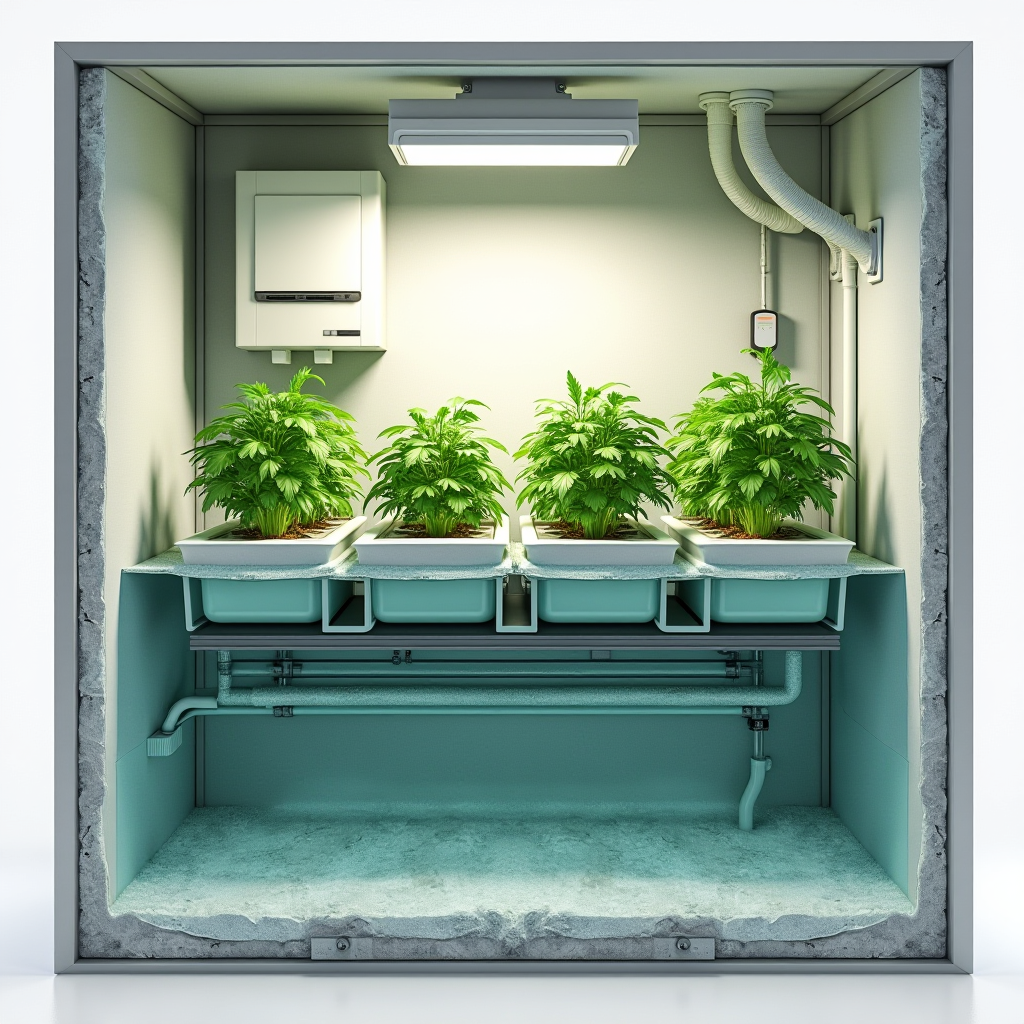
- Improve insulation and sealing in the grow space to reduce heat gain and humidity leaks.
- Add a dedicated environmental controller that coordinates AC, dehumidifier, and fans with VPD targets.
- Standardize lighting schedules to off-peak hours for all sealed rooms.
- Standardize reservoir insulation: every new system gets insulated from day one.
- Design future system expansions (extra tables, RDWC lines, NFT tiers) with HVAC and dehumidifying headroom in mind.
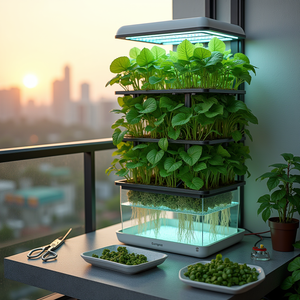
For balcony or small indoor setups using simple Kratky totes or compact DWC buckets, the same logic applies on a smaller scale: reduce heat load, limit moisture buildup, protect the nutrient solution, and keep VPD in a safe range.
Hydroponics works because it is controlled. Summer just raises the stakes. If you treat HVAC, dehumidification, VPD, and reservoir temperature as part of your nutrient recipe, your sealed room will cruise through the hottest weeks instead of fighting them.

As an Amazon Associate, I earn from qualifying purchases.