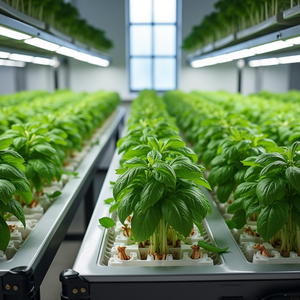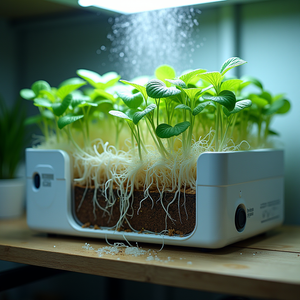
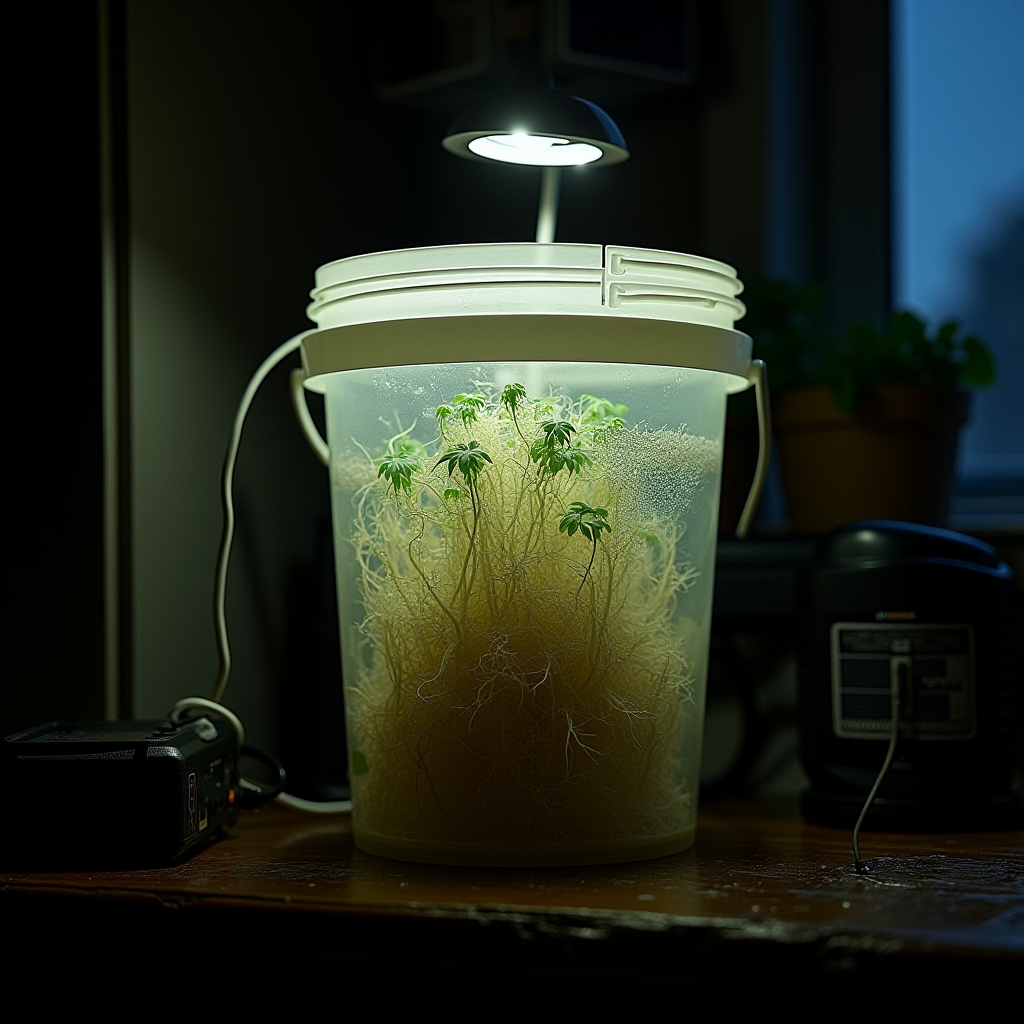
When The Grid Blinks, DWC Roots Suffocate
Winter storms, grid stress, Cyber Week power-station sales - it all makes for great marketing, but terrible conditions for Deep Water Culture and aeroponics. If your lights cut for a few hours, plants sulk. If your air pump stops, roots crash fast.
In DWC and aeroponics, the reservoir is your plant’s lungs. No airflow means dissolved oxygen drops, roots suffocate, pathogens move in, and a healthy canopy can turn into a wilted mess in a single afternoon. A solid backup power plan is not a luxury feature. It is crop insurance.
This guide walks you through how to size backup power for air pumps and other critical hydroponic loads so your system can ride out short and multi-hour outages without gimmicks, risky additives, or panic.
The Real Problem: Oxygen, Not Just Electricity
In soil, roots can tolerate short dry periods because there is a lot of trapped air. In DWC and aeroponics, roots depend on electricity-driven systems to breathe:
- DWC - Air pumps and stones inject oxygen into a relatively still reservoir.
- Recirculating DWC / RDWC - Pumps move water plus aeration; both usually die in an outage.
- Aeroponics - High surface area roots rely on constant misting. When pumps stop, roots quickly dry and suffocate.
When power drops, aeration stops. Dissolved oxygen (DO) can fall from a healthy ~7-8 mg/L to root-killing levels in less than an hour in warm nutrient solution. Hydro growers are warned that even a few hours without power can cause damage or kill plants, because every core life support component - pumps, heaters, timers, controllers - is electric as noted in this guide.
For DWC and aeroponics, aeration is the first and most critical load to protect. Lights and even circulation can wait. Roots cannot.
Step 1: Decide What Absolutely Has To Stay On
Before you think about watt-hours and battery specs, you need a clear priority list. In a hydro outage, you are not running a full grow room. You are running plant life support.
Priority 1: Air To The Roots
- DWC / RDWC - Air pump(s) feeding stones or diffusers in each bucket or the main reservoir.
- Aeroponics - High-pressure or low-pressure mist pump; any small recirculation pump if it directly impacts root wetting.
These should be on backup power 100% of the time. If your budget is tight, build your system so the air pump is low wattage and easy to back up.
Priority 2: Control & Monitoring
- Environment controller / timer (if very low draw)
- Wi-Fi camera or sensor hub (optional but useful)
These are nice to have but not essential. If runtime is short, drop them. You can manually check on plants with a flashlight.
Priority 3: Temperature Management
- Heaters - Big power hogs. Usually too demanding for small UPS systems.
- Chillers - Very high draw. Not realistic on a modest backup unless you have a large battery or generator.
For most small and home systems, heaters and chillers are generator or whole-house battery loads, not UPS loads. You manage short outages with insulation, lids, and keeping reservoirs off cold floors.
Priority 4: Lights (Only If Runtime Allows)
LED grow lights consume far more power than air pumps. For outages under 4-6 hours, plants can handle a dark period. Do not waste precious battery on lighting unless you have large capacity and your air is already covered.
Step 2: Measure Your Real Power Draw
If you want your backup to work during a storm rather than just look good on paper, you need real numbers.
1. List Your Critical Devices
- Air pump for DWC (e.g. 8 W)
- Extra air pump / backup pump (e.g. 4 W)
- Mist pump for aeroponics (e.g. 30-60 W intermittent)
- Controller / timer (e.g. 3-5 W)
Check the label on each device for watts (W). If you only see amps (A), multiply by 120 V (North America) or 230 V (EU) to get watts: W = V × A.
2. Use A Plug-in Power Meter
Labels lie. Real draw can be 20-40% different from nameplate values. A cheap watt meter gives you the actual continuous power draw of each pump and device. Add those up for your total critical load in watts.
Step 3: Convert Watts To Watt-hours (Your Runtime Currency)
Battery and portable power station capacity is usually given in watt-hours (Wh). Runtime is simply:
Runtime (hours) ≈ Battery capacity (Wh) × efficiency / Load (W)
Most systems are only 80-90% efficient due to inverter and conversion losses as discussed here. A safe rule is to multiply by 0.8 for AC loads.
Example: Basic DWC Air Backup
- Air pump: 10 W total (several buckets manifolded from one pump).
- Target runtime: 8 hours (overnight storm.)
Required Wh (ideal) = 10 W × 8 h = 80 Wh.
Adjust for efficiency: 80 Wh / 0.8 ≈ 100 Wh.
So a small UPS or portable power station with 100 Wh usable capacity can handle this outage. In reality, choose 150-200 Wh to account for battery aging and cold temperatures.
Example: Aeroponics With Intermittent Pumping
- Mist pump: 40 W when running.
- Duty cycle: 1 min ON, 4 min OFF (20% runtime.)
- Average load: 40 W × 0.2 = 8 W.
- Target runtime: 6 hours.
Required Wh = 8 W × 6 h = 48 Wh. Adjusted: 48 / 0.8 ≈ 60 Wh.
A 150 Wh unit again gives plenty of buffer, and it lets you add a small backup air pump for redundancy.
Step 4: UPS vs Portable Power Station For Hydro
You have two main options for keeping pumps alive during an outage: a classic computer-style UPS, or a modern portable power station.
UPS (Uninterruptible Power Supply)
Pros:
- Instant switchover - no interruption when the grid fails.
- Built-in surge protection and automatic voltage regulation.
- Designed to sit quietly under a desk or in a grow closet.
Cons:
- Shorter runtimes for the price compared to large LiFePO4 stations.
- Batteries age faster if run hot or deeply discharged often.
- Limited capacity scaling.
UPS sizing follows the same load and runtime math used in home systems and IT setups. Many UPS calculators ask for VA and watts to estimate runtime as shown here. For pumps and controllers, sizing by watt-hours is usually simpler.
Portable Power Stations
Pros:
- Often higher capacity in a compact box.
- Good efficiency and LiFePO4 chemistry on many modern units.
- Built-in display of remaining runtime, USB ports for sensors, etc.
- Can recharge from grid, solar, or generator.
Cons:
- Most do not switch automatically when power fails (unless used with a transfer switch or auto-start relay).
- Some have noisy fans; check for quiet models if the unit lives in your grow room.
Portable power is ideal if you want one unit to cover multiple roles: running pumps during an outage, powering tools outdoors, or serving as camping backup. Hydro-specific backup is just one more job.
Step 5: Set Up Automatic Or Fast Transfer
Switch time matters. DWC plants can tolerate a brief blip. Aeroponics systems with small root chambers dry out quicker. Aim to restore aeration within 1-5 minutes for safety.
Option A: UPS Directly On Air Pump(s)
- Plug air pump and any essential controller into a UPS.
- Plug UPS into the wall outlet.
When the power fails, the UPS instantly takes over. This is the simplest and most reliable solution for critical loads as suggested for hydroponic systems that must remain powered during outages in this article.
Option B: Portable Power Station With Manual Transfer
- Keep the power station charged and near the grow.
- Use a dedicated power strip for all critical loads.
- During an outage, unplug the strip from the wall and plug it into the power station.
This works if you are home and awake. The key is to practice the swap so you can do it quickly, even in the dark.
Option C: Automatic Transfer With Power Station
Some power stations offer passthrough or can sit behind a small transfer switch. If you wire your air pump circuit through that switch, the station can take over when the grid fails. Always follow electrical codes or hire an electrician if tying into household circuits.
Step 6: How Long Do Roots Really Have?
Plant survival time in an outage depends on:
- Solution temperature - Warmer water holds less DO and consumes it faster.
- Root mass - Big plants strip oxygen faster.
- System type - DWC roots are submerged; aeroponics roots are exposed and dry out.
Growers and hydro guides routinely warn that a few hours without electricity can severely damage or kill plants in pump-driven systems as noted here. In practice:
- DWC - At 18-20°C (64-68°F), healthy reservoirs may give you 1-3 hours before serious stress, less if water is warm and roots are dense.
- Aeroponics - Roots can dry and collapse in under an hour, especially in warm, dry air.
Anything longer than a quick grid burp should trigger backup power or an emergency oxygen/flooding plan.
Step 7: Quick Drills For Outage Readiness
You do not want to be calculating load while the wind is howling and the lights just went out. Run simple drills to prove your setup actually works.
Drill 1: Simulate A One-hour Outage
- Pick a time when you are home.
- Unplug your grow room from the wall.
- Let the UPS or power station take over as planned.
- Verify that all critical loads (air, mist) stay on.
- After one hour, check reservoir temperature and root condition.
Log how much battery percentage you used. That gives you a concrete runtime estimate instead of guesswork.
Drill 2: Maximum Outage You Can Handle
- Start with a fully charged backup.
- Run your critical loads until the battery hits 20-30%.
- Record total runtime.
Do the math backward: if your air system uses 10 W and you ran for 12 hours before hitting 30%, your usable capacity is roughly 10 W × 12 h = 120 Wh. That tells you how long you can ride out real storms.
Drill 3: What If You Are Not Home?
Ask yourself:
- Does your backup switch automatically?
- Will it last long enough to cover your typical local outages?
- Do you have monitoring (cameras, smart plugs) that can alert you if pumps stop?
You do not need a smart home to grow hydro successfully, but an automatic UPS and a cheap Wi-Fi camera watching the reservoir can save entire crops.
Step 8: Low-tech Tricks To Stretch Backup Runtime
Backup power buys you time. You can stretch that time further with a few design tweaks:
- Use efficient pumps - Replacing a 25 W air pump with an efficient 8-10 W model can triple runtime on the same battery.
- Oversize diffusers - More porous stones deliver more oxygen per watt of air.
- Insulate reservoirs - Cooler water holds more oxygen. Use foam boards under and around DWC totes.
- Reduce plant density - Fewer, bigger plants are often safer than a packed root mat that strips DO instantly.
- Cover reservoirs tightly - Minimizes heat gain and contamination during outage conditions.
Combining these reduces total oxygen demand and extends how long your backup can keep roots alive.
Why Not Just Add “Oxygen Boosters”?
In a panic, it is tempting to dose hydrogen peroxide or gimmicky “oxygen booster” additives instead of solving the core issue. They can temporarily increase oxygen or suppress pathogens, but they do not replace continuous aeration and can damage roots or beneficial microbes if overdosed.
Bigger picture: a one-time bottle fix will never beat a well-sized battery and a 10 W air pump that never stops.
Planning Checklist: Hydro Outage Survival In 30 Minutes
Here is a fast workflow you can follow today:
- List critical loads (air pump, mist pump, minimal control).
- Measure watt draw with a meter.
- Choose a target runtime (e.g. 4-8 h for typical storms).
- Calculate required Wh = W × hours / 0.8.
- Pick hardware: small UPS for plug-and-forget, or portable power station for multi-use and longer runtimes.
- Wire critical devices into a single power strip or circuit for clean transfer.
- Run outage drills to validate real-world runtime.
- Optimize your system with efficient pumps, better diffusers, and insulated reservoirs.
A bit of math and one extra box under your DWC tote can be the difference between tossing a crop and barely noticing the next storm.
Bottom Line
Hydroponic systems are incredible at converting electricity and nutrients into dense, fast growth. The trade-off is simple: when power stops, so do the roots.
By prioritizing air pumps, sizing backup power in watt-hours, choosing the right mix of UPS and portable stations, and rehearsing your outage plan, you turn a scary blackout into a minor inconvenience. Your plants keep breathing, your roots stay white, and winter storms become just another variable in a dialed-in hydro setup.