Aquaponics DWC for Leafy Greens: Fish-Safe pH and Nutrient Supplementation (Iron, K, Ca)
If your aquaponic raft bed is serving you yellow, floppy lettuce, it is not "just how aquaponics is" - it is your pH and nutrients quietly kneecapping the system.
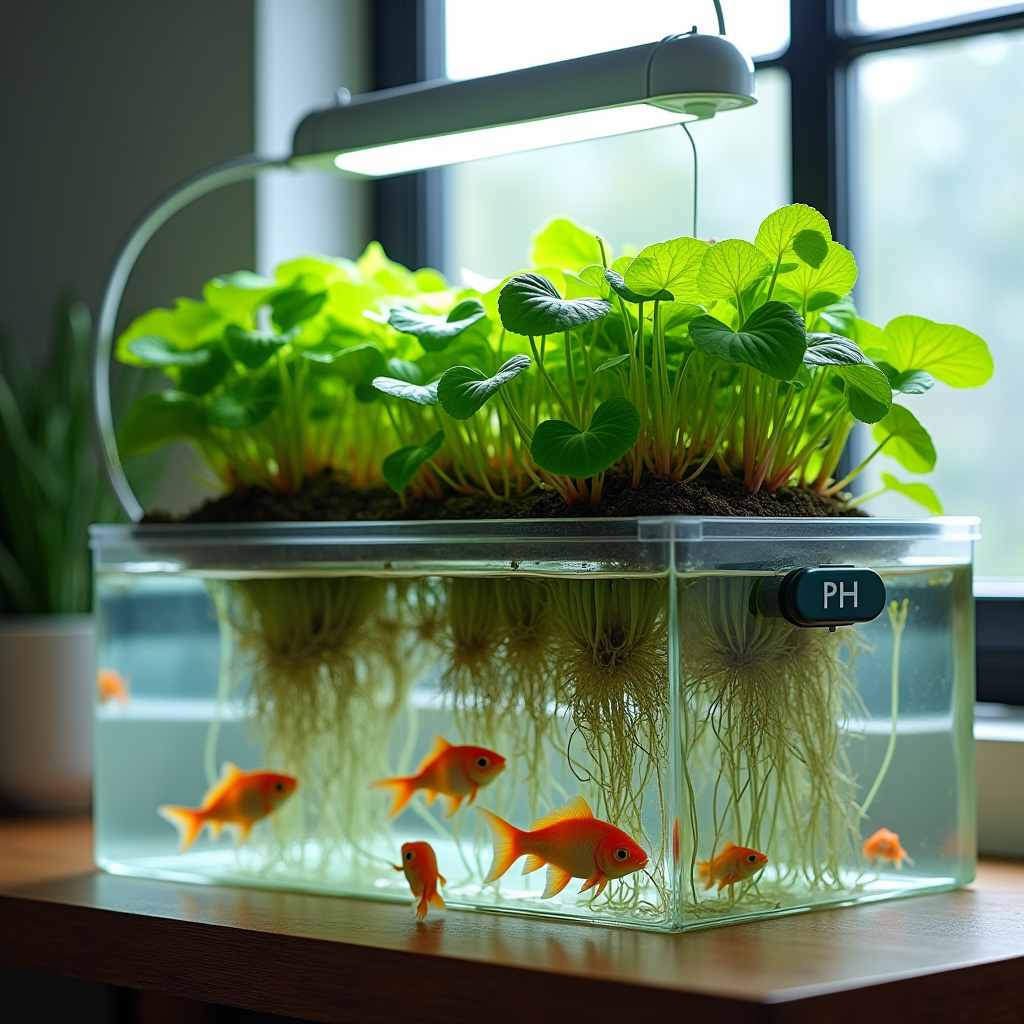
Deep water culture (raft) aquaponics can push leafy greens fast and hard, even indoors or on a balcony. But you have to play referee between fish, bacteria, and plants. Fish want stable, gentle water. Lettuce wants slightly acidic, mineral-rich solution. Your job is to hit the overlap without crashing either side.
This guide focuses on exactly that: fish-safe pH control, choosing the right iron chelate, and safely adding potassium (K) and calcium (Ca) so your aquaponic DWC stops producing chlorotic sadness and starts turning out thick, dark-green heads.
The Problem: Yellow lettuce, weak growth and "stuck" rafts
Most new aquaponic DWC growers hit the same wall:
- New leaves come in pale or yellow with green veins (classic iron chlorosis).
- Outer leaves show burnt edges or interveinal yellowing (typical potassium issues).
- Butterhead and romaine stay small and tight instead of bulking up in 3-4 weeks.
- pH slowly creeps up into the high 7s, but dropping it risks the fish.
- EC (if you measure it) sits low and flat even when you are feeding the fish well.
In a standard hydro DWC, you would simply crank nutrients, drop pH to 5.8-6.0, and watch the plants rebound. In aquaponics, that move can stress or kill your fish and beneficial bacteria. So a lot of growers under-dose supplements, baby the pH, and accept weak, chlorotic greens.
The good news: you do not need to choose between healthy fish and healthy lettuce. You just need to work with the realistic targets for both:
- pH compromise: 6.4-6.8 is a solid sweet spot for leafy greens and most freshwater species, as echoed in practical aquaponics guides like this nutrient balance guide.
- Iron, K and Ca supplementation: fish feed + bacteria do not fully cover these for fast greens, so you must top them up in a fish-safe way, as discussed in this aquaponics nutrients overview.

The Cause: Aquaponics runs lean, high pH, and low on iron, K and Ca
In raft aquaponics, you are basically running a low-EC, biologically active DWC. Compared to bottled nutrient DWC, three key differences matter for leafy greens:
1. Fish-safe pH is higher than ideal plant pH
Lettuce in pure hydro DWC is happiest around pH 5.8-6.2. In aquaponics, most growers sit closer to pH 6.4-7.0 so that:
- Fish gills are not irritated by acidic swings.
- Nitrifying bacteria stay efficient and stable, which several aquaponics management articles like this plant management guide stress.
The trade-off: micronutrients like iron and manganese become less available above pH ~6.5. Without help, your lettuce shows iron chlorosis even if total iron in the water is technically "there".
2. Fish feed does not fully cover iron, potassium or calcium
Fish feed is designed to grow fish, not lettuce. In practice:
- Iron is often present but locked up or precipitated at neutral pH, so plants cannot grab it efficiently.
- Potassium is frequently short, especially in systems relying on general fish pellets, as highlighted in nutrient overviews like this nutrient management breakdown.
- Calcium may be low if your source water is soft, or may be present but the pH and bicarbonate profile make it less available.
Fast-growing lettuce, bok choy and basil are greedy. In a small indoor or balcony raft, the ratio of plant biomass to fish biomass is often high, so deficiencies show fast.
3. KH and buffering are usually an afterthought
As bacteria convert ammonia to nitrate, they naturally pull pH down over time. Many growers fight this with reactive pH up/down instead of a proper buffer system. Without enough carbonate hardness (KH):
- pH can crash quickly after a heavy feeding or water change.
- Every supplement (especially acids) swings the system too hard.
Stable KH lets you park pH in the 6.4-6.8 range and keep it there, which is exactly the compromise leafy greens and fish will tolerate.
The Solution: Dialling in fish-safe pH, KH, iron, K and Ca for DWC greens
You do not need to run lab-grade analytics to fix aquaponic DWC. You just need a tight routine around four things:
- pH and KH (buffering)
- Iron (chelated and fish-safe)
- Potassium (for leaf bulk and stress tolerance)
- Calcium (for leaf strength and tip-burn prevention)
1. Target ranges for indoor and balcony aquaponic DWC
For leafy greens like lettuce, basil, pak choi and herbs, practical targets from aquaponics field experience and resources such as this plant health guide look like this:
- pH: 6.4-6.8 (do not chase 5.8 like regular hydro; protect your fish and bacteria).
- KH (carbonate hardness): roughly 3-6 dKH for small systems. Enough to resist rapid pH swings, not so high that pH is forced above 7.2.
- Temperature: 18-24 °C for lettuce; above ~24-25 °C, lettuce can get leggy and bitter even if nutrition is perfect.
- EC: usually 0.6-1.2 mS/cm in a well stocked, balanced raft system. Aquaponics runs lower EC than bottled hydro, as reviewed in research on nutrient solution strategies like this study on nutrient management regimes.
Stick those on a sticky note near your tank. Everything below is about steering your system into that window.
2. Buffering pH with fish-safe KH sources
Instead of constantly dosing pH up/down, use buffers that feed the plants at the same time:
- Potassium bicarbonate (KHCO3) - boosts KH, nudges pH up a bit, and supplies potassium. Fish-safe in moderate doses and commonly used by growers as both pH buffer and K source.
- Calcium carbonate (CaCO3) or crushed coral - slow-release buffer in filters or a mesh bag, useful if your water is very soft and you need more Ca and KH.
Practical approach:
- Measure pH and KH weekly.
- If pH is trending below 6.4 and KH is under ~3 dKH, add a small measured dose of potassium bicarbonate, wait a few hours, then re-test.
- Avoid big jumps; 0.2 pH units per day is a good safety limit.
3. Iron: which chelate is actually fish-safe and effective?
Iron is the number one micronutrient deficiency in aquaponics. You will see it first in new leaves: pale yellow with sharp green veins, while older leaves stay relatively okay. Since neutral pH locks up standard iron, chelated forms are the go-to. The key is choosing the right chelate for your pH band and system:
- Fe-EDDHA: Very stable up into alkaline pH, but can stain water deep red and is more aggressive chemically. In small indoor systems this can look alarming and is often overkill if you are already in the 6.4-6.8 range.
- Fe-DTPA: A strong middle-ground chelate that stays available up to around pH 7.5. This is a solid choice for raft aquaponics running near neutral.
- Fe-EDTA: Common and cheap, but loses effectiveness above pH ~6.5, exactly where many aquaponic systems sit. It can still work in slightly acidic systems but is not ideal if your pH creeps up.
Fish safety depends mainly on dosage. Typical safe ballpark rates many growers use are around 1-2 mg/L (ppm) of iron added every 2-4 weeks, but always start at the low end and watch fish behavior. Dose into a high-flow area of the sump or fish tank, never directly onto fish or plants.
Checklist to keep iron dialled in:
- Run your system at 6.4-6.8 pH.
- Add Fe-DTPA in small, measured doses, aiming for 1 ppm increments.
- Watch new leaves for color over 7-10 days before re-dosing.
4. Potassium: greening up leaves without nuking fish
Potassium drives overall leaf health, water regulation, and stress resistance. In aquaponics, you can safely raise K with a few tools:
- Potassium bicarbonate: As above, it boosts KH and K together. Especially handy if you battle late-stage leaf burn on older leaves.
- Potassium sulfate (K2SO4): Does not change KH but adds pure K and sulfate. Useful if your pH and KH are already in range and you just need more K.
Practical dosing strategy:
- Add in small, incremental doses to the sump or high-flow zone.
- Wait at least 24 hours between K raises so you can watch fish behavior.
- Keep total EC in check; if EC rises sharply but growth does not improve, back off.
If you want a belt-and-suspenders approach, you can also foliar spray a diluted potassium-rich solution (made from a fish-safe source) on leaves in the evening. That bypasses root-zone fish exposure, but you still have to avoid runoff back into the tank.
5. Calcium: stopping tip burn and floppy leaves
Calcium shows up as tip burn, especially in fast-growing lettuce under bright light. Edges crisp, centers look okay, and it is easy to mistake this for "too much light". In aquaponics, the issue is often:
- Soft source water (low Ca to begin with).
- High humidity and low airflow around the leaf canopy, so Ca transport in the plant is sluggish.
Fish-safe Ca options for DWC aquaponics include:
- Calcium carbonate / crushed coral: In a mesh bag in the filter line or sump, slowly releasing Ca and raising KH.
- Calcium hydroxide (hydrated lime): Very strong; can be used in micro-doses to gently raise Ca and pH, but must be handled carefully because it can spike pH fast.
For small indoor and balcony systems, a mix of a little crushed coral and a light, occasional dose of potassium bicarbonate is usually enough to keep both Ca and KH in a good range without scary swings.
6. A simple weekly routine for indoor/balcony aquaponic DWC
Put this on repeat:
- Check pH and KH - adjust with potassium bicarbonate if pH is drifting below ~6.4 and KH is low. Add or remove buffering media (crushed coral) if pH is stubbornly high or low.
- Check EC - if EC is very low (<0.6 mS/cm) and plants look hungry, increase feed rate slightly or consider a small K/Ca bump. If EC is high but plants are chlorotic, iron is your first suspect.
- Inspect new leaves - yellow new growth = iron; edge burn / marginal necrosis = potassium; tip burn under strong lights = calcium plus airflow issue.
- Top up iron with Fe-DTPA at low dose if new growth is pale.
- Check fish behavior after any supplement dosing - if fish are gulping, hiding, or stressed, stop dosing and do a partial water change.

Evidence: What research and field practice say about pH, nutrients and yields
We are not guessing here. Both research and long-running commercial aquaponics operations line up with the practical targets above.
- pH and nutrient availability: Aquaponics nutrient management writeups, such as this overview on balancing fish waste and plant needs, emphasize keeping pH in a narrow band around neutral to balance fish health with micronutrient availability. Too high, and iron, manganese and others lock out; too low, and fish and bacteria suffer.
- Supplementation is normal, not cheating: Multiple educational articles and association materials, like this aquaponics nutrient management PDF, note that iron, potassium and calcium supplementation is commonly required, especially in leafy green production.
- Stable feeding and nutrient regimes improve yields: Research on aquaponic nutrient regimes, such as this study on nutrient management and water quality, shows that consistent feeding and controlled nutrient additions boost water quality, seedling establishment and final yield in vegetables and herbs.
For the indoor and balcony grower running a small raft or DWC trough, the takeaway is simple:
- Run your raft between pH 6.4 and 6.8 with at least moderate KH.
- Make iron chelation part of your routine, not an emergency fix.
- Expect to add K and Ca periodically, especially if your tap water is soft.
- Use EC, pH and leaf color as your dashboard instead of guessing.
Do that consistently and your aquaponic DWC moves from "cute experiment" to a reliable salad factory: thick roots, dark green leaves, and harvest windows that look much closer to dialled-in hydroponic DWC, without sacrificing your fish.
As an Amazon Associate, I earn from qualifying purchases.