Most 3D‑printed hydroponic parts fail in the exact ways growers can’t afford: they seep, they grow slime in the layer lines, and they crack after a few cleaning cycles.
It is not the printer’s fault. It is how we design, slice, and finish the parts.
In 2026, hobby and microfarm growers are printing everything from NFT channel ends to DWC lids and drip manifolds. But most guides stop at “use PETG, crank up the walls, job done.” That is not enough if you are recirculating nutrients in your living room or classroom and you need parts that are leak‑tight, cleanable, and as food‑safe as a home setup can reasonably be.
This guide focuses on what actually matters in the grow room:
- Choosing and treating filaments for safer nutrient contact
- Designing parts that do not leak at real pump pressures
- Making printed surfaces clean‑in‑place (CIP) friendly with PAA, H₂O₂, and bleach
- Translating flow, slope, and geometry into NFT, DWC, Kratky, and drip performance
We will stay practical: wall thicknesses, O‑ring grooves, thread choices, and when you should not print a part at all.
1. Common mistakes with 3D‑printed hydroponic parts
1.1 Relying on raw PLA or PETG and calling it “food‑safe”
Most “food‑safe” 3D printing advice leaves out two realities:
- Filaments often include pigments and additives that are not certified for food contact.
- Layer lines and micro‑gaps are perfect biofilm traps.
As Prusa’s food‑safe printing guide points out, FDM parts are inherently more porous than molded plastic. Even if the base resin fits regulatory frameworks like 21 CFR 177, the printed object is not automatically compliant equipment.
In hydroponics that means two things:
- Nutrient solution can creep through layer lines and pinholes.
- Bacteria, algae, and biofilms can colonize the rough internal surfaces.
Raw printed plastic is fine for prototypes, jigs, and dry parts. It is a liability for long‑term manifolds, NFT interiors, and anything you plan to CIP aggressively.
1.2 Designing parts that only seal on “perfect” prints
Many 3D‑printed manifolds and adapters assume zero elephant’s foot, no warping, and perfect circularity. Real prints are never that tidy. The result is:
- Manifold threads that leak as soon as you hit real pump pressure.
- Press‑fit barbs that crack when you finally get the tube on.
- NFT channel ends that wick a slow, constant drip onto your floor.
Growers often crank infill to 100 % and add walls but ignore the interface geometry and gasket strategy. That is why systems look fine on day 1 and start weeping at the seams by day 10.
1.3 Ignoring CIP chemistry and temperature
Cleaning printed parts like they are glass or PVC is another common mistake. Hot alkaline detergents, strong bleach solutions, and repeated peracetic acid cycles can chew up marginal materials and uncured coatings. PLA in particular softens near 55–60 °C and can suffer hydrolysis over time in warm, wet environments. PETG holds up better, but strong oxidizers will still age it.
If your NFT or DWC loop relies on weekly CIP cycles, you cannot treat material and coatings as an afterthought. You will see crazing, micro‑cracks, and eventually surprise leaks.
1.4 Printing the wrong parts instead of leveraging off‑the‑shelf hardware
The fastest way to a leaky system is re‑inventing components that already exist in NSF‑listed plastics and standardized threads. Many DIY builds print:
- Reservoirs and large NFT gullies instead of using food‑grade totes or PVC channels.
- High‑pressure pump manifolds instead of adapting to off‑the‑shelf PVC or polypropylene fittings.
- Complex valves that never quite seal or clean out properly.
Your printer is best used to bridge between proven parts: adapters, manifolds at moderate pressure, lids, trays, and mounts. Not for full replacement of components that are cheap, standard, and already designed to handle flow and CIP.
2. Why these mistakes happen (and the real constraints)
2.1 Confusion between “food‑contact capable” and certified food equipment
There is a big difference between a resin that could be used in food applications and an assembled part that meets food equipment standards. Standards such as NSF/ANSI 51 and the FDA’s materials regulations in 21 CFR 177 focus on composition, extraction limits, and surface cleanability.
Your home 3D printer cannot realistically deliver a fully compliant part, but you can move in that direction by:
- Using filaments based on resins commonly used in food packaging, like PET‑based PETG or polypropylene.
- Avoiding brass nozzles that may contain lead, and using stainless nozzles instead, as discussed in this guide.
- Sealing or isolating layer lines in all nutrient‑wetted areas.
The goal is not legal certification in a hobby system. It is to reduce contact with questionable additives and to make surfaces easier to sanitize.
2.2 Underestimating real pump pressure and mechanical stress
A small hydro pump might only be rated at a few meters of head, but that is plenty to find every micro‑crack in a manifold. Designers often test parts with a gentle faucet fill or gravity flow, then install them under pump pressure in a loop with temperature swings and chemical cleaning. Weeks later, layer‑to‑layer adhesion and interfaces are stressed enough that seepage begins.
The same goes for mechanical loads. A 3D‑printed NFT end plate carrying the weight of a full channel of lettuce plus a bit of twisting or sagging is already stressed. Add CIP cycles and mild chemical attack and you have creep and cracking.
2.3 Treating CIP chemicals as “one‑size‑fits‑all”
Clean‑in‑place is essential if you want consistent yields and fewer root disease problems. A rinse plus a quick bleach flush is common practice, but 3D‑printed parts react very differently from smooth PVC or stainless steel.
Repeated exposures to strong bleach, hot alkaline detergents, and concentrated peracetic acid will attack susceptible materials and some epoxies. That is why choosing PETG or PP over PLA and selecting a potable‑water‑rated epoxy is important if you plan regular CIP cycles.
2.4 Overconfidence in fine tolerances from hobby FDM printers
A well‑tuned printer can hold decent tolerances, but there is always variance. Tiny deviations matter when you are dealing with BSPP or NPT threads, O‑ring compression, or thin‑walled hose barbs. Over‑tight fits will either not assemble or will crack after a few weeks. Under‑tight and you are chasing leaks with wraps of PTFE tape and random sealants.

3. How to fix them: material, design, print, seal, and clean
3.1 Choose the right filament for hydro use
PETG vs PLA for reservoirs and manifolds
PLA is easy to print and dimensionally accurate, but it is a poor long‑term choice for nutrient‑wet parts:
- Softens around 55–60 °C; dark PLA near a sunny window or grow light can deform.
- Prone to hydrolysis and embrittlement in warm, wet environments.
- Less tolerant of repeated hot or aggressive cleaning cycles.
PETG is far better for hydroponic duty:
- Higher temperature resistance, so reservoirs and manifolds maintain shape in typical grow rooms.
- Better chemical and water resistance than PLA.
- Commonly used for food bottles in its base resin form.
For anything that will hold or continuously contact nutrient solution - reservoir lids, manifolds, NFT adapters, drip distribution blocks - default to PETG. Reserve PLA for dry brackets, sensor mounts, and non‑structural covers.
Beyond PETG: PP, HDPE, ABS/ASA, and nylon
- Polypropylene (PP) and HDPE: excellent chemical and moisture resistance, widely used for food and chemical containers. Harder to print (warping, poor bed adhesion) but ideal when dialed in.
- ABS/ASA: tougher and more heat resistant than PLA but more porous when printed. If you use it, consider solvent smoothing and/or epoxy sealing for wetted zones.
- Nylon: strong but absorbs water, which can shift dimensions and weaken threads in wet service.
Whichever plastic you choose, treat the printed part as a porous substrate that needs finishing in nutrient‑wet applications.
3.2 Design for sealing, not for “perfect fit”
Wall thickness and infill
For NFT/DWC manifolds, pump headers, and adapters:
- Use 3–4 perimeters minimum.
- In critical pressure zones, use 80–100 % infill with a simple pattern (e.g. grid).
- Bump extrusion multiplier slightly to reduce internal voids, then confirm no over‑extrusion issues.
This gives you solid walls to seal against and more tolerance to minor defects.
O‑ring grooves and flats
Instead of relying on raw plastic‑to‑plastic seals, design with elastomers:
- Use EPDM or silicone O‑rings for nutrient contact.
- Design a simple gland: a flat land with a circular groove that compresses the O‑ring by roughly 20–30 % when assembled.
- Where possible, use face seals rather than tiny radial seals; they are more forgiving to print variation.
Standard O‑ring groove tables from fluid sealing handbooks are a useful reference even at hobby scale.
Thread standards: NPT vs BSPP and when to avoid printing threads
Printing pipe threads is tempting, but it is not always the best choice. Key points:
- NPT is tapered; it relies on thread deformation and sealant to seal.
- BSPP is parallel; it typically seals with a gasket or O‑ring.
Printed tapered threads can be unreliable because layer lines and slight dimensional error compromise interference and sealing. Better options:
- Print a flat‑face boss with O‑ring groove and embed a brass or plastic threaded insert.
- Or design a printed housing that captures standard off‑the‑shelf barbs, bulkheads, and unions.
If you must print threads, print them oversized, test in scrap, and always use PTFE tape or a compatible thread sealant.
3.3 Sealing printed manifolds and NFT parts
The combination of design plus post‑processing is what makes a part actually hold water and clean well.
Step 1: Mechanical clean‑up
- Trim all strings and zits from internal channels to reduce biofilm traps.
- Lightly sand flats and gasket lands to improve O‑ring contact.
- Deburr any sharp edges that could damage tubing or seals.
Step 2: Epoxy or coating
For parts in continuous nutrient contact, an epoxy or similar barrier coat is often the most practical choice. Look for two‑part epoxies rated for potable water or food contact in their cured state, such as products designed for water tanks or bar tops. As noted in Prusa’s guide, a suitable coating can make an otherwise porous part more hygienic and easier to clean.
Workflow:
- Degrease the print with a mild detergent, rinse, and dry fully.
- Mix epoxy carefully at the specified ratio to ensure full cure.
- Brush a thin, even coat on internal and external wetted surfaces; rotate to avoid pooling.
- Apply a second coat if needed, aiming for a smooth, continuous film.
- Allow the full recommended cure time before exposure to nutrients (often several days).
Step 3: Assembly sealing
- Use EPDM or silicone O‑rings wherever parts meet.
- Use PTFE tape on any threaded adapters.
- Pressure‑test with water before introducing nutrients.
A simple way to test is to cap all outlets, connect to your pump, and recirculate water for 30–60 minutes while inspecting for weeping.
3.4 Designing for CIP: geometry that actually cleans
Cleanability is as much about shape as it is about chemicals.
- Avoid dead legs: no blind pockets where flow stops. All branches should either loop back or terminate in a drainable outlet.
- Use self‑draining slopes: design NFT channels and manifolds with enough slope that they fully drain when the pump stops.
- Fillet internal corners: replace sharp interior corners with large fillets to minimize sediment traps.
- Add access points: threaded caps or removable plates on manifolds let you scrub if CIP alone is not enough.
Industrial hygienic design guidelines apply surprisingly well at hobby scale, even if you cannot match the finish of stainless steel.
3.5 CIP chemistry that printed parts can survive
A practical CIP routine for PETG‑based NFT/DWC systems:
- Rinse with clean water to remove bulk nutrient and root debris.
- Wash with a mild alkaline cleaner or food‑grade detergent at lukewarm temperature for 15–30 minutes of circulation.
- Rinse thoroughly until conductivity is close to source water.
- Sanitize with either:
- Hydrogen peroxide: gentle on plastics, widely used in hydro to reduce biofilms.
- Dilute bleach (for example, 100–200 ppm free chlorine) or peracetic acid, used sparingly and with good ventilation.
Always follow a sanitizer with a thorough rinse and, if you use chlorine, consider a short run with fresh water plus a small amount of sodium thiosulfate to neutralize any residual chlorine before refilling with nutrients.
4. What to watch long‑term: flow, leaks, UV, and when not to print
4.1 NFT channel design: flow rate, slope, and root behavior
For 3D‑printed NFT channel components, you want a nutrient film that is thin, continuous, and oxygen‑rich. Typical starting points per channel:
- Flow: around 0.5–2 L/minute for small hobby channels, up to 2–4 L/minute for longer or denser runs.
- Slope: roughly 1–3 % (1–3 cm drop per meter of channel).
Printed components that affect this:
- Inlets should diffuse the incoming jet so the first plants are not blasted.
- Outlets should include a weir or standpipe that sets the maximum film depth and avoids full‑pipe flow.
- Supports should lock in slope and prevent sagging that creates puddles or dry spots.
Keep internal surfaces as smooth as possible and avoid unnecessary ribs or sharp steps that catch roots. You want a uniform film, not waterfalls.
4.2 DWC and Kratky: lid design, light control, and structural stability
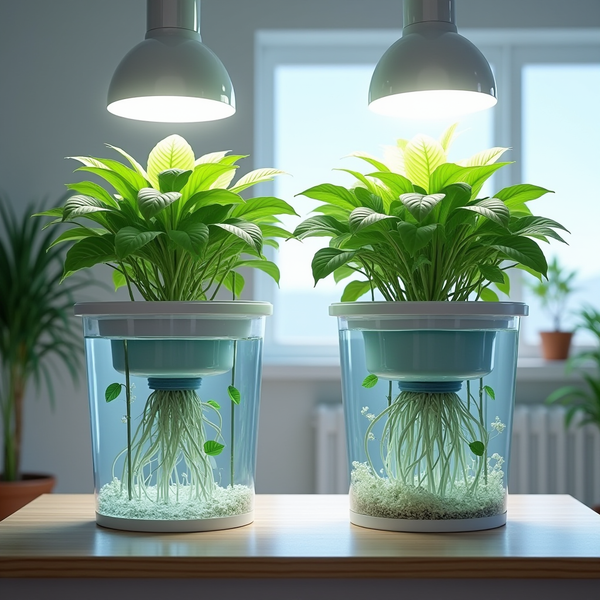
For DWC and Kratky, the heavy lifting is done by the reservoir itself. Use robust, food‑grade totes or buckets and let your printer handle the interface:
- Lids that hold net pots, clone collars, or seedling plugs with a snug, light‑blocking fit.
- Grommets and bushings for airline and power cord entries that prevent light leaks and abrasion.
- Cable and tube management so lines do not crank on fittings or pinch roots.
In Kratky jars and tubs, printed collars and blackout covers help manage light intrusion and keep the air gap stable as water drops. In DWC, printed air manifolds let one pump feed multiple buckets without a tangle of adapters.
4.3 UV, heat, and color choice
Sunlight and high‑intensity grow lights will degrade many filaments over time. For parts exposed to strong light:
- Prefer ASA or UV‑stabilized PETG if exposure is heavy.
- Use opaque, light‑blocking colors for anything in nutrient contact to reduce algae.
- Consider painting or wrapping external surfaces for UV protection if the system is on a bright balcony or near a window.
Temperature is also a slow killer. Keep nutrient solutions in the 18–22 °C range when possible. This is good for roots and gentler on printed parts and coatings.
4.4 Monitoring leaks and stress points
Once the system is running, check printed parts routinely at:
- All hose connections and barbs.
- Threaded transitions between printed and off‑the‑shelf fittings.
- High‑stress zones such as NFT end plates and drip manifolds mounted under tension.
Look for small salt deposits or dampness. These are early warning signs that a seal is failing or a micro‑crack is forming. Fixing it early is far easier than dealing with a mid‑cycle flood.
4.5 When not to print the part
Finally, be honest about what should stay off‑the‑shelf:
- Full reservoirs: use food‑grade totes or drums instead of giant printed tanks.
- High‑pressure pump outlets: adapt to PVC or polypropylene manifolds, then print low‑stress distribution blocks.
- Critical shut‑off valves: buy tested valves and print brackets or handle extensions instead of the valve itself.
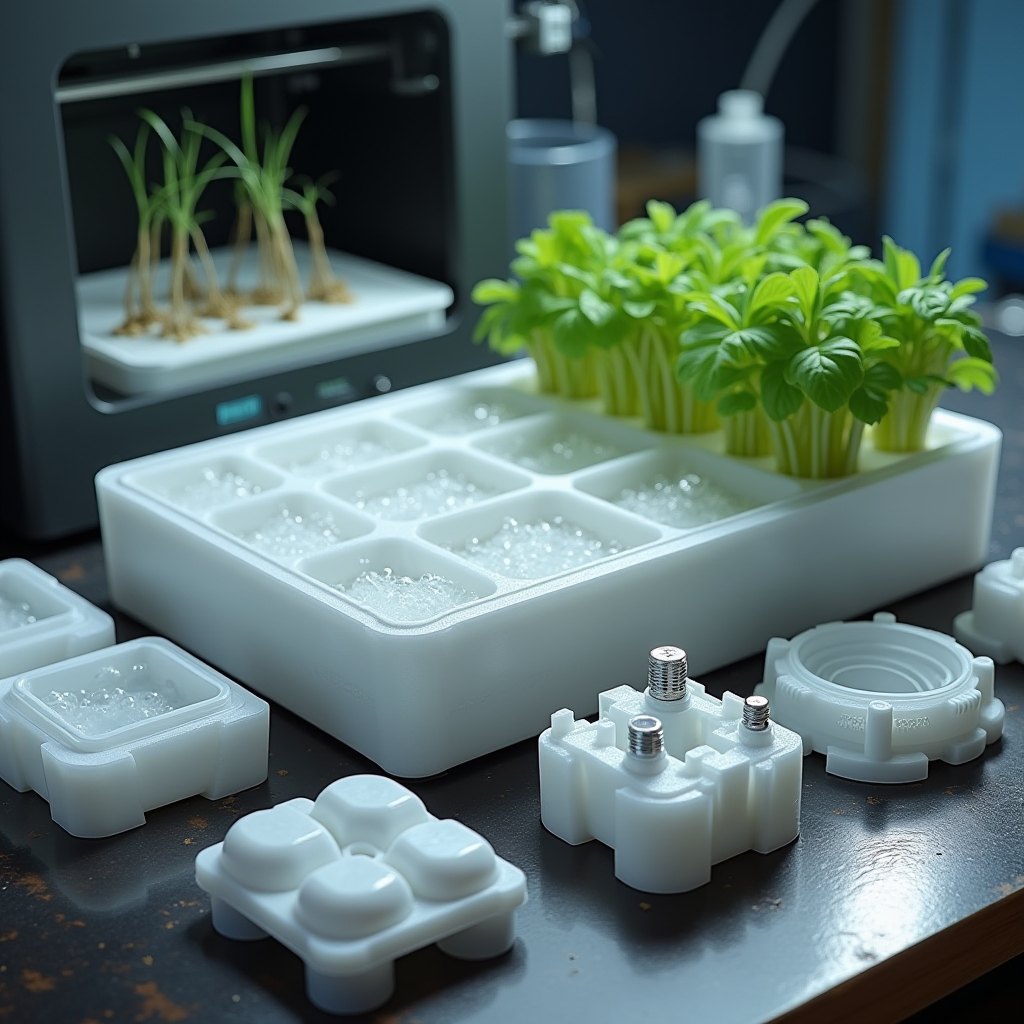
Use your printer where it adds unique value: custom manifolds at modest pressure, tailored NFT ends, seedling trays, net pot arrays, adapters, and mounts that tie your system together.

Putting it all together: practical printable parts for NFT, DWC, Kratky, and drip
NFT examples
- End plates with integrated weirs: PETG, 4 walls, 80–100 % infill, O‑ring sealed to standard PVC or ABS channels, epoxy‑coated internally, designed for 1–3 % slope and easy drainage.
- Feed manifolds: central PETG header feeding multiple channels with barbed hose stubs; use EPDM O‑rings and PTFE‑taped threaded inserts rather than fully printed NPT threads.
- Channel spacers and supports: PLA or PETG, keeping correct slope and spacing under load.
DWC examples
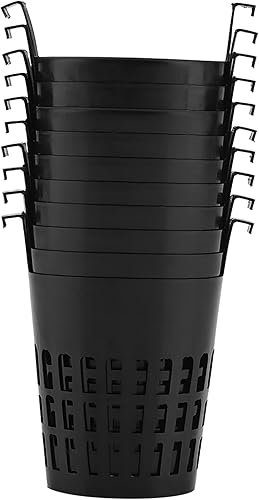
- Bucket lids: PETG discs with properly sized holes for net pots or clone collars, light‑blocking and stiffened with ribs.
- Air distribution manifolds: PETG blocks or tubes that split one pump outlet to multiple buckets with even flow, fully epoxy‑sealed in the wet path.
- Sensor mounts: brackets that hold pH and EC probes in the return stream without trapping air or debris.
Kratky examples
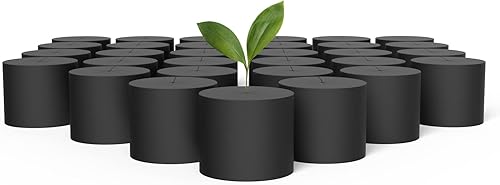
- Jar collars and blackout sleeves: PLA or PETG parts that hold net cups over mason jars and block light at the neck to prevent algae.
- Seedling lids: thin PETG plates with multiple small net cup holes to start many plants in a single container before transplant to NFT or DWC.
Drip system examples
- Low‑pressure manifolds that distribute flow from a pump to multiple drip emitters; design with smooth internal paths, generous wall thickness, and EPDM O‑ring face seals.
- Clip‑on emitters or drip rings for buckets and channels that snap around standard tubing sizes.
If you design, print, seal, and clean with these hydro‑specific constraints in mind, 3D‑printed components stop being the weakest point in your NFT, DWC, Kratky, or drip system and become one of your biggest advantages.
As an Amazon Associate, I earn from qualifying purchases.